


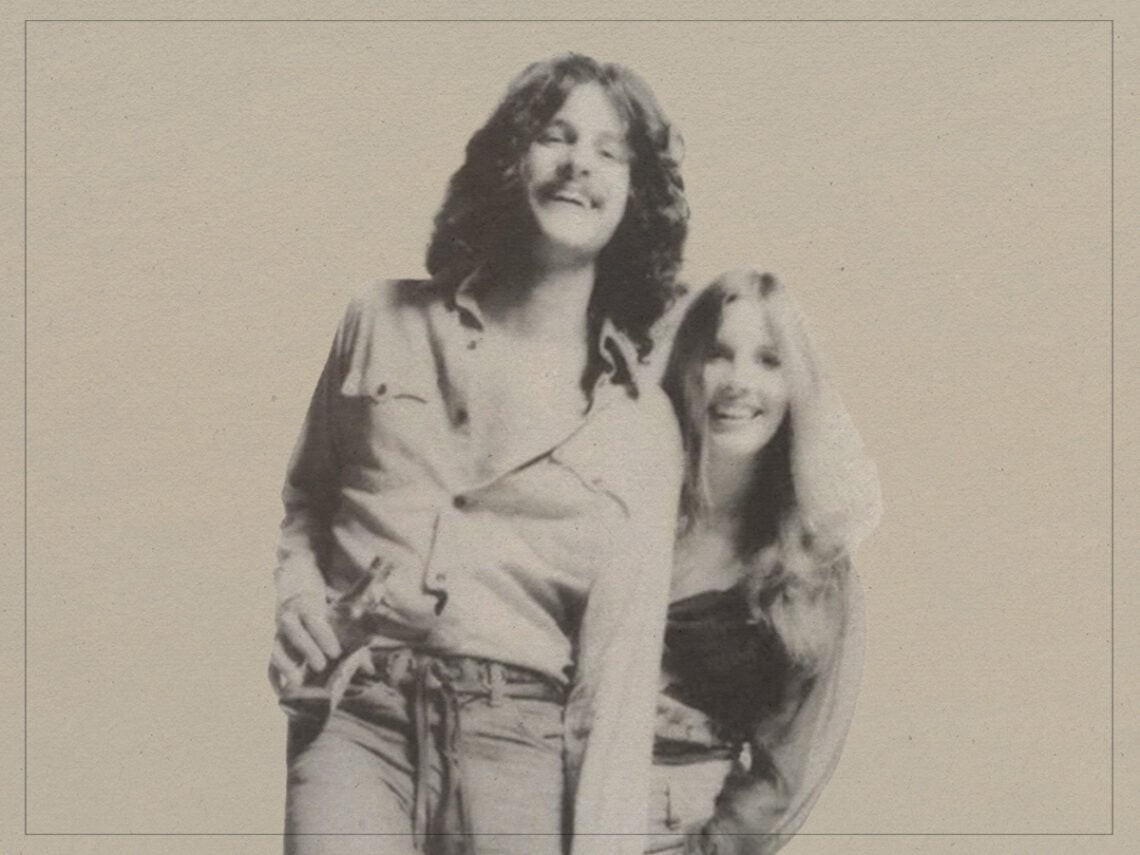
The five words in 1979 that really made Lindsey Buckingham check out of Fleetwood Mac

In Dante’s Inferno, the Italian writer Dante Alighieri lays out the nine circles of hell, the ninth being the making of Fleetwood Mac’s Rumours.
Embroiled in affairs, addiction, divorce, displacement, and harmonised pop-rock, the making of the 1977 masterpiece sounds so gruelling that it can give the weak-stomached reader a second-hand panic attack. Professor Brian Cox has even decreed that – far exceeding the chemical megastorms of Jupiter – the Record Plant, Sausalito, circa the spring of ‘76, is the most unstable environment ever observed in our solar system.
So, if Buckingham could survive that and happily keep swinging, then which five measly words eventually made him leave? In retrospect, his departure is often deemed an inevitable emotional response. But that doesn’t quite add up. Rumours was the apex of the band’s turmoil, so why wouldn’t he simply have said ‘Sayonara’ after the payday of the release and subsequent global tour and be done with it?
Well, simply put, because he could stomach the stress and instability provided the art was still to his taste. At some point in 1979, he heard a phrase that suggested Fleetwood Mac’s chaos was no longer in pursuit of artistic ambition, and the days when integrity trounced the tribulations were coming to an end. The words were as simple as they were sharp: “You can’t do that again”.
The beginning of the end for Lindsey Buckingham
“The hugeness of it all” hadn’t bothered him too much when he felt like the music justified the turmoil. In fact, he even thought it was beneficial in some ways. “The voyeurs and the care that many of our fans had invested in Fleetwood Mac was exciting and enabling,” he told The Star Telegram.
On another occasion, he even admitted that the drama imbues Rumours with an embellishing quality. “It’s equally interesting on a musical level and as a soap opera,” he happily admitted. But he was a serious musician, and the progressive sound of the band had to come first. That’s why he took immense pride in their 1979 follow-up, Tusk.
Buckingham had taken on lead orchestration duties, acting as a de facto producer alongside Ken Caillat and Richard Dashut for the album. He pushed the group in a new direction and later reflected that its radical sound was “the moment that validates everything”. It even made Rumours better, positioning it as a dramatic cultural juncture rather than a prefigured pantomime.

As Buckingham reflected, “If we had tried to make Rumours II, it would have been the beginning of what others expected us to do.”
They decided not to play to the gallery and made a far more experimental album. “By subverting that expectation, it allowed me to say, ‘This is what’s important to me’,” he later opined.
But, even though it sold in excess of four million copies, it didn’t sustain the same level of success as Rumours, and that rang alarm bells. “When [Tusk] didn’t sell 60 million copies, the record company said, ‘We want you to produce, but you can’t do that again.’ For me, that was the line in the sand – you gotta follow your instincts and try to grow.”
Buckingham translated that cutting remark as a preclusion to growth and artistic progress. He now saw Fleetwood Mac as a commercial engine of income, and while he was still happy to be part of that in a more passive sense for a while, he signalled his soft departure by following Tusk with an ambitious solo record.
He went into 1982’s Mirage less inspired than he might have been, having already put all his effort into his debut solo album, Law and Order, the year before. Hot on the heels of that release, he managed to squeeze Go Insane in between Mirage and Tango in the Night with the Mac, and it was increasingly clear to the group where his passions lay.
Commercial fortunes might have returned to the band before he departed soon after Tango in ‘87, but this spike in sales almost correlated directly with his dissatisfaction. Those five words, “You can’t do that again,” in relation to the validating moment of his entire career, still rang in his head… begging the question: how might have Fleetwood Mac sounded in the 1980s had they never been uttered?
