


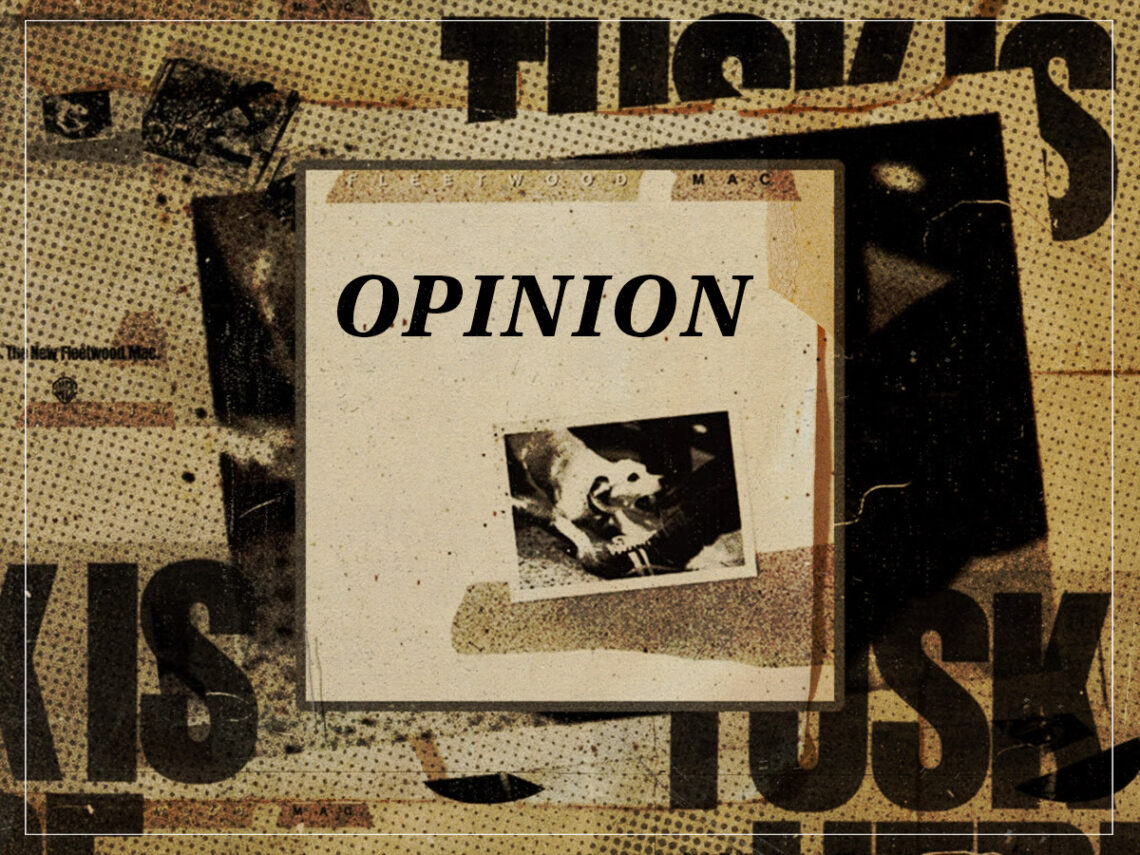
Hear Me Out: ‘Tusk’ is Fleetwood Mac’s very own ‘White Album’

In 1979, Fleetwood Mac released Tusk, a strange and swollen double album that seemed confused by itself as it tried to hold so many different influences, ideas and personal states in one tracklist. In 1968, almost ten years prior, The Beatles shared the White Album, a 30-song heavy record that marked the beginning of the end for the band. While worlds apart in sound and born from different scenes, Tusk exists as Fleetwood Mac’s White Album on an emotional and historical level.
After 1977’s Rumours shot Fleetwood Mac to legendary status, all eyes were on their follow-up. During the release of the records, they’d made no secret that the songs on Rumours were born out of intense personal drama within the group and a storm of emotional carnage that they were all wrapped up in. “We were too open about who we were and what we were doing – probably very naive,” Mick Fleetwood said upon reflection, decades after his band aired their dirty laundry but in their lyrics and in the press.
That insight into the behind-the-scenes tumult only mounted the pressure more. Not only were there hoards of fans simply eager for new music from the group who were now established as a leading light in the ‘70s rock scene. But they also wanted an update. They wanted ‘Dreams’ volume two or for Lindsey Buckingham to launch another attack like ‘Go Your Own Way’. No doubt the group could have delivered that, but instead, Tusk, just like the White Album, is reflective of a band trying to hold it together as the chaos bubbles and threatens to blow.
When The Beatles were making their mammoth 1968 record, the cracks were well and truly showing. Across the album, John Lennon and Paul McCartney were splintered, and their collaborative relationship faded along with their personal one. It seemed as though all four band members marched off into their own corners, writing their own songs and being caught up in their own influences. Lennon was getting deeper into drugs and hazy, psychedelic tunes, bringing tracks like ‘Across The Universe’ and ‘Dear Prudence’ to the table. McCartney was leaning into his more narrative-driven pieces, writing stories like ‘Martha My Dear’ or ‘Rocky Raccoon’. George Harrison was undeniably starting to gear up for an exit as his biggest contribution, ‘While My Guitar Gently Weeps’, found the sound his solo debut would ride on. And, as always, Ringo Starr was there.
The fact of the 30-song wide tracklist is the ultimate display of the state they were in: a total stalemate. No band member would compromise and allow their song to be cut, nor would they collaborate long enough to figure out a cohesive sound or spirit for the release. So the result, really, is messy. While undeniably great and important in musical history, the White Album is a tangle of tunes and influences and mismatched ideas from a band that wouldn’t, or couldn’t, work together anymore.
Looking at Tusk, that same conclusion can be drawn. After Rumours had torn the band’s couples apart and poured salt in all the wounds, the attempt to work together again in the aftermath of that led to collaborative carnage once more, but in a different way. While Rumours saw them all throwing lyrical vitriol at one another, at least it was done in a collective eye of the storm as all members seemed hyperfocused on that record, on one another and in turn, creating a tight and cohesive album as they existed in the same mood. Tusk, on the other hand, is scattered. Stevie Nicks is delivering the follow-up that fans probably wanted with emotive songs like ‘Sara’ and ‘Storms’. Christine McVie shares more beautiful ballads like ‘Over and Over’. Even the album’s title track feels somewhat like a continuation of ‘The Chain’ as a big swelling consideration of the state of the group.
But just as how Lennon and McCartney had splintered, the divide between Stevie Nicks and Lindsey Buckingham sent the album into disarray. While Nicks wanted to keep doing what she was doing, Buckingham was on a whole different energy. “He was a maniac,” producer Ken Caillat said. “The first day, I set the studio up as usual. Then he said, ‘Turn every knob 180 degrees from where it is now and see what happens.’ He’d tape microphones to the studio floor and get into a sort of push-up position to sing. Early on, he came in and he’d freaked out in the shower and cut off all his hair with nail scissors. He was stressed.”
At the time, Buckingham tried throwing various influences into the mix, including a new fascination with post-punk. It wasn’t an interest that the rest of the band shared, meaning that the guitarist’s tracks exist in one realm, Nicks’ in another, and McVie in her own. According to John McVie, Tusk “sounds like the work of three solo artists,” which is exactly what critics have historically said about the White Album, both being created at a time when the band was falling apart, leaving only isolated musicians tossing their songs together at the end.
