


The fetishisation of 7-Eleven: Why has a convenience store become a travel obsession?

There are plenty of reasons to travel, and food ranks top amongst them, such that when you look back at your trip memories, there’s nearly always a favourite meal in there, or something weird and unique that you ate, being your fondest thought.
Asia has some of the best food on the planet, and whether you’re in Japan, South Korea, Taiwan or Thailand, there’s incredible, fresh, vibrant cuisine to sample. However, if you’re a travel content consumer on YouTube, TikTok or Instagram, then you’ll know there’s a recurring shop in all of those countries that has caught travellers’ imaginations.
Over recent years, we’ve seen 7-Eleven gain a cult following, going through a journey from being the humble corner shop, to mass-market fodder for travel videos, and has now become fetishised by westerners obsessing over toasties and onigiri, but the place is not a new breed. The global convenience store chain was founded nearly a century ago, in 1927, in Dallas. It grew outward, and there are now stores in 20 countries across North America, Europe, Asia, the Middle East and Oceania, with plans to expand into another ten countries before the end of this decade.
These convenience stores are traditionally places you stop into on the way to somewhere else, whether that’s work or the pub. What has made 7-Eleven stand out from other convenience stores is that, as well as selling drinks, food and smokes, they are uniquely tailored to the country that they’re in. In this new world of social media, we’ve seen the store become a cultural touchpoint, showcasing local tastes and standing as a relatively budget-friendly option to explore a new country’s food, thus unexpectedly becoming a legitimate tourist destination in its own right.
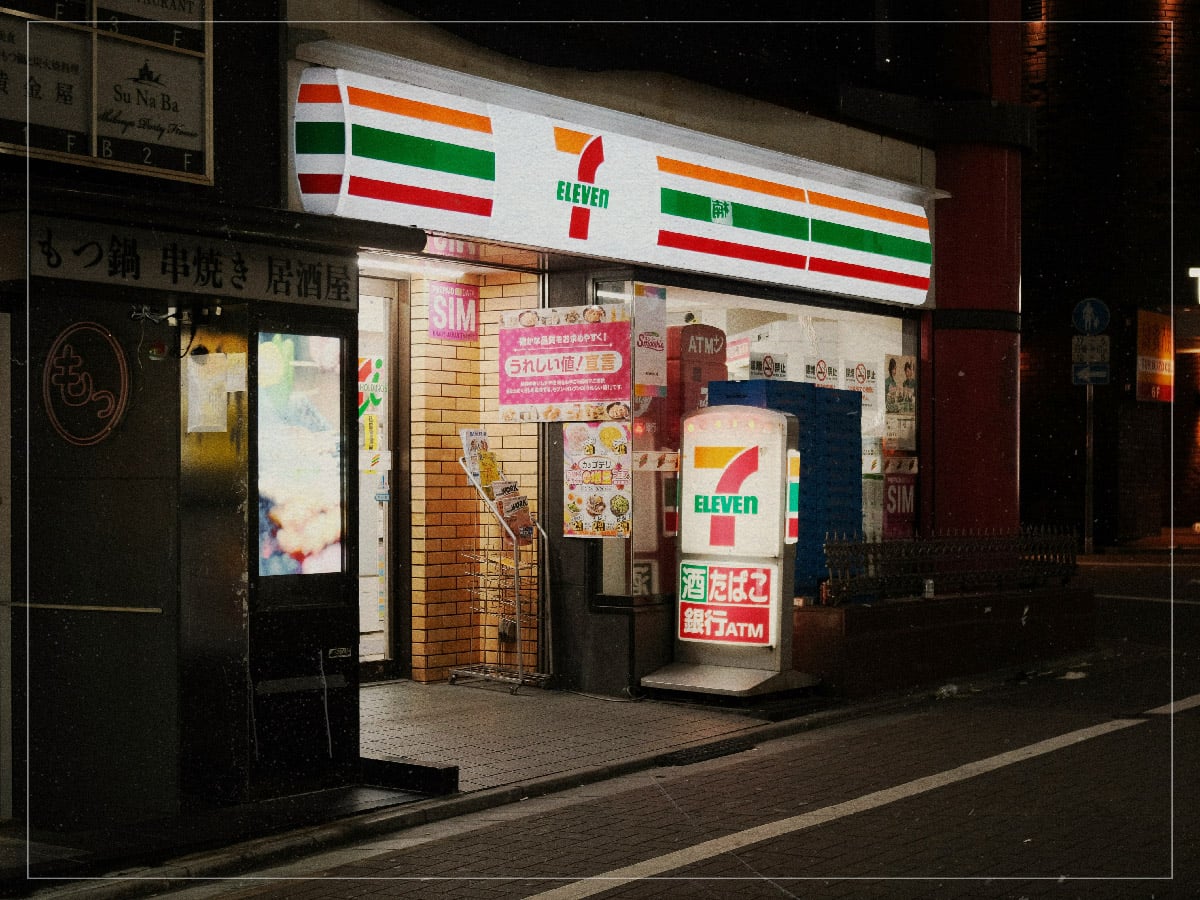
These are far from the corner shops run by bossmen in the UK; no walls of vapes, jazz mags and a hot food counter with grub that’s been sat under the lights for days. They also have more fun and exciting products than your average Tesco Express or Sainsbury’s Local. Ask anyone for their recommendations for Japan, and without doubt, somebody will tell you to go to a 7-Eleven. There are over 22,000 in the country, with convenience stores, known by the Japanese as konbini, an institution, with other brands such as Lawson and FamilyMart ever present too.
As well as all the usual 7-Eleven staples, such as bill payment and post services, it’s the food and drink which really gets people talking. There, the onigiri comes in a multitude of great flavours, you can get bento boxes with karaage chicken or grilled saba, and their range of sandwiches would make a British person blush, with sweet sarnies, such as strawberry and cream, incredibly popular. The menu changes with the season, with sakura-flavoured desserts everywhere after the start of cherry blossom season.
I’ll be the first to admit that the Japanese 7-Eleven is actually quite good; I ate far more chicken thighs than I’d care to admit from their hot food counter during a month in the country, but the hype is also overdone. The intersection of value and quality is where the store shines, but with the Yen having fallen in recent years, it’s not hard to find great quality food in Japan at reasonable prices. This is one of the world’s great food countries, and you really don’t need to spend all day in a corner shop.
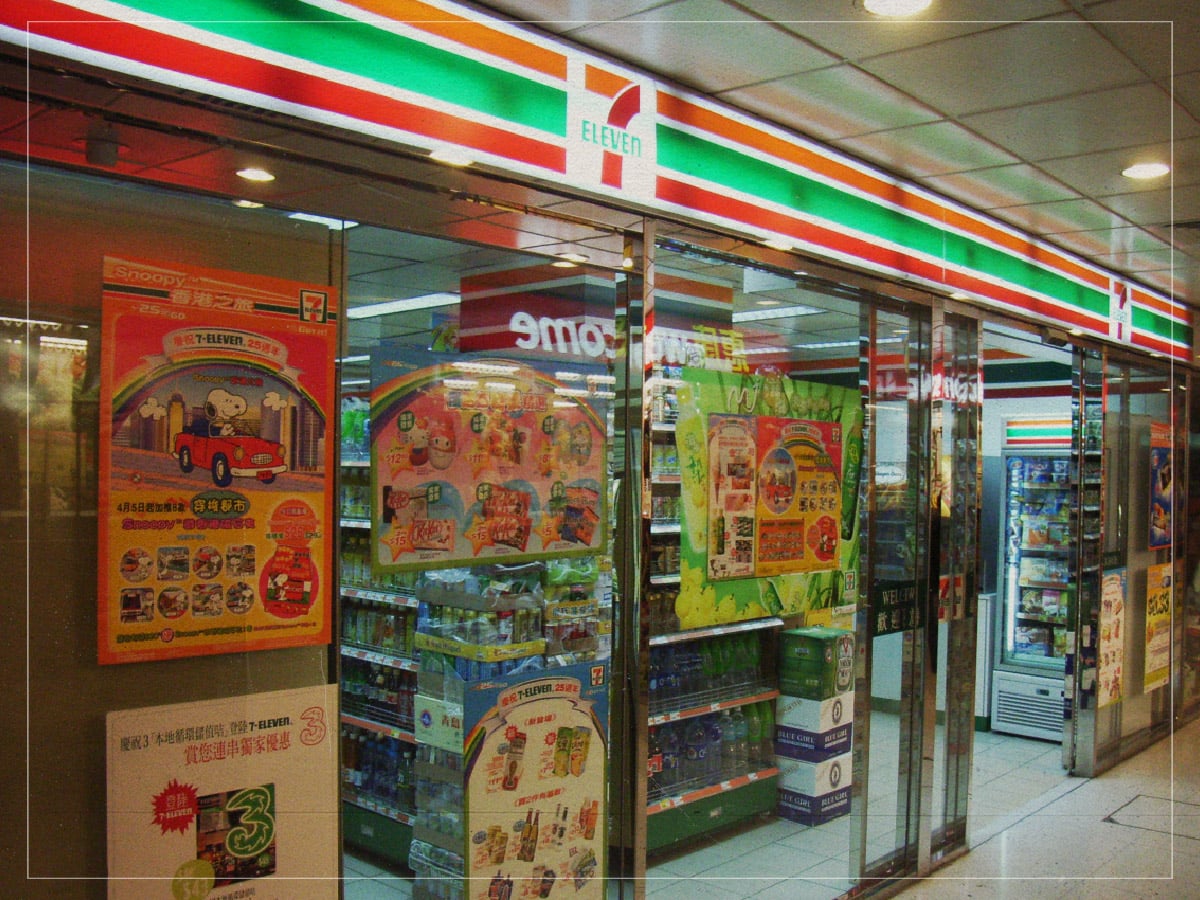
Taiwan has cha ye dan, soy-marinated eggs steeped in tea and spices, delicious lu rou fan (braised pork rice bowls) and a disconcerting amount of sweet potato, while South Korea’s kimbap rolls, bulgogi and noodle stations are the stuff of legend. However, besides Japan, the other real iconic 7-Eleven spot is Thailand, where the tom yum noodles, larb flavoured crisps and pandan desserts are much-loved, their toasties are adored and a standout, with ham and cheese, carbonara and green curry chicken becoming pop culture reference points.
It’s nearly impossible to watch a YouTube travel vlog about Thailand without seeing somebody pop into a 7-Eleven to grab a cheap toastie. The platform is awash with such content in the hundreds of thousands of views, from ‘We are only 7-Eleven for 24 hours in Thailand” to “must-try things in Thailand’s 7-Eleven”. However, it’s travel vlogger Drew Binsky that has cracked the code, with his five minute “7-Eleven in Thailand Will Blow Your Mind” video tracking up a staggering 1.5million views.
It’s not just overseas 7-Eleven stores that garner such attention, particularly on social media, with McDonald’s also experiencing a travel boom. People are fascinated by the local tweaks to brands they know and love, wherein these stores can act as a low-cost entry point to the local cuisine and culture, while also offering a safety blanket, with food more familiar to home and also carrying less risk of food poisoning.
7-Eleven is an iconic brand, and despite its American roots, it’s become an essential stop on the Southeast and East Asian tourist trails. Unlike a British bossman shop, the food is of a far higher quality: these aren’t limp sarnies and dry bhajis, and the regional optimisation is impressive. If you’re in a pinch or your wallet is empty, then I get it, but let’s enjoy 7-Eleven for what it is, not fetishise it like it’s some food mecca. In many ways, it has become a byproduct of our globalised, digital storytelling, offering an exoticism to familiarity, but beneath it all, it’s just like any corner shop at home, somewhere that we can grab a quick bite on the go.
