


Big Macs around the globe: the weird world of McDonald’s tourism

One of the best parts about travelling is experiencing the different food in every country. I know that you fondly remember at least one meal on every holiday that you’ve ever been on.
The food we eat is interlinked with our experiences anywhere we visit, whether that’s paying peanuts for mind-blowing sushi in Japan, realising they don’t actually eat prawn toast in China or eating horse in Kazakhstan.
A nation’s cuisine tells us a lot about a country. Germany’s kebabs tell us about the post-war migration from Turkey, while the Filipino’s love of Spam is linked to American military presence in the country. While most people want to try new and exciting food on their travels, there is a rising subculture of people who want the very opposite, instead interested in how McDonald’s tastes in other countries.
I’ll put my hand up, I’m not averse to eating the odd McNugget, and I understand that sometimes when you’ve been away for a while, you just want a taste of something familiar, that you recognise. However, in a world of options, and with food telling us so much about a location, I can’t help but find this phenomenon puzzling.
What I’m coining as ‘Big Mac tourism’ is big business, much like McDonald’s itself, the fast-food chain that operates in over half the countries on the planet, 119 to be exact, and has over 34,000 restaurants globally. It’s no surprise in a world driven by view counts that the universality of McDonald’s has made it easy content fodder across YouTube and TikTok. While the standard fare, Big Macs, fries, and more are available at all of McDonald’s branches, there are a variety of items that can only be found in certain countries, and sometimes even only in certain branches.
The golden arches are smart about their menus and tailor each nation’s range of choices to their taste buds, taking into account varying factors such as diets and even items that can challenge their rivals in that country. In the Philippines, they added sweet-Filipino-style spaghetti to their menu as a direct response to Jollibee.
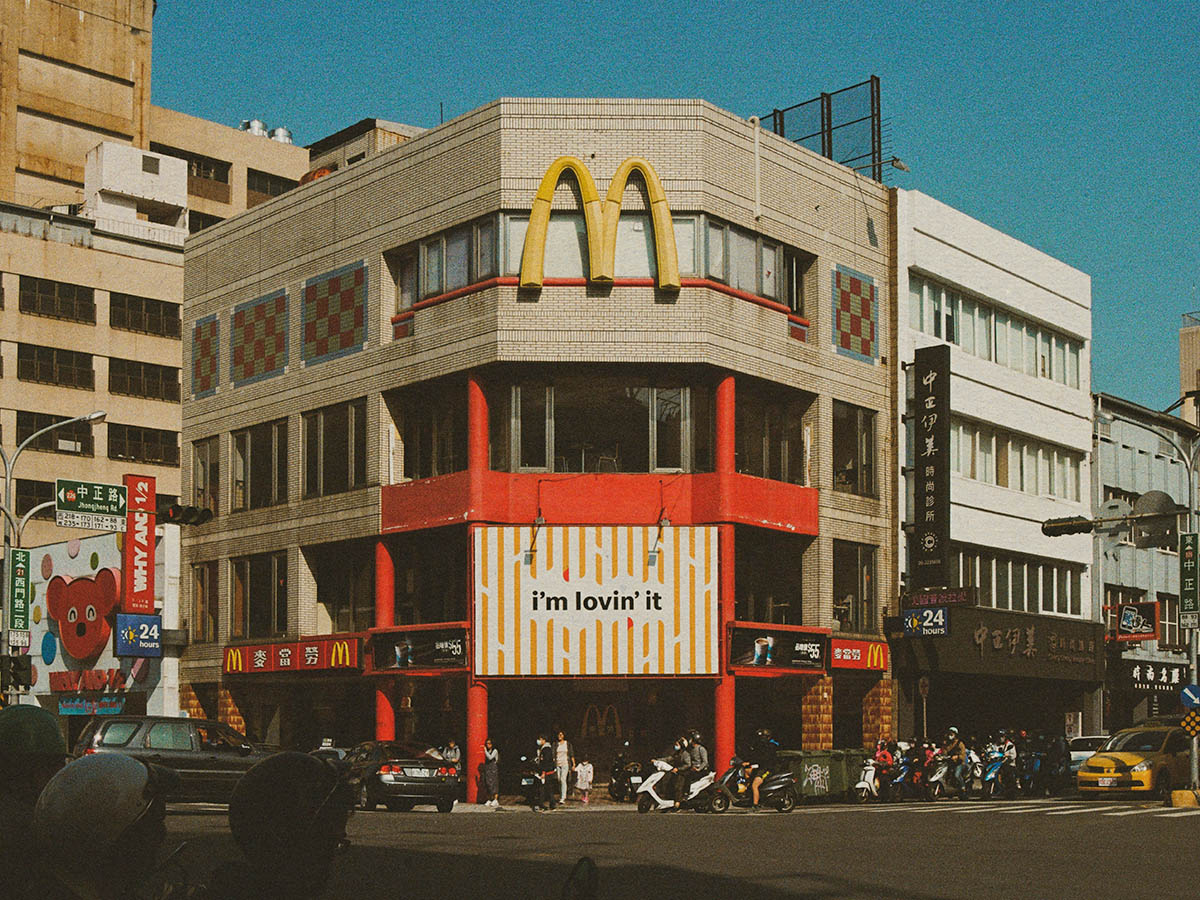
For many, it’s Japan that sets the gold standard for McDonald’s tourism, thanks to a varied menu that’s unusually to many in the West, as well as a steady range of limited-edition items. There’s the Teriyaki McBurger, featuring a pork patty and teriyaki sauce and mayo, the Ebi Filet-O, a breaded shrimp burger, and the fantastically named Samurai Mac, which seems identical to a Big Mac but with soy sauce.
There’s no beef or pork at McDonald’s in India, with the McAloo Tikki, Maharaja Mac and Masala Grill Chicken standing as iconic bites, but every country has something unique. China has the Taro Pie, South Korea the Bulgogi Burger, France the McBaguette, Spain the McIberica and Thailand the Krapao Chicken Burger.
If you’re fairly picky with your food, then perhaps overseas McDonald’s is a blessing, as you have the safety and familiarity of the favourites you know and can have a less-risky foray into local food culture via their region-specific choices. Likewise, if you’re in a hurry, at an airport or rushing between places on a holiday, then it’s a quick, cheap pit-stop that you know won’t take long, with the restaurants nearly always centrally located in big cities; McDonald’s is very much a safety net when you’re in a pinch.
There’s also a huge desire for this type of stuff online, as it’s easily digestible content that involves a brand that nearly everyone on the planet has eaten at some point. Nick DiGiovanni has over 16million views on his I Ate McDonald’s From Every Country video on YouTube, while Live The Dash, Drew Binsky and Best Ever Food Review Show have all used the brand to reach a huge amount of eyeballs online.
With a wide, varied world of food out there, it seems bonkers to me to end up in a McDonald’s at the first available opportunity, and while I appreciate the consistency and the risk-free nature of getting something you already know will be reasonable, it means missing out on one of the joys of travel. Only by sampling the local cuisine can you truly understand a city or a country, which helps you garner an idea of the DNA of the location, make links with the history and development of the country, as well as give you the chance to taste something new and exciting.
