


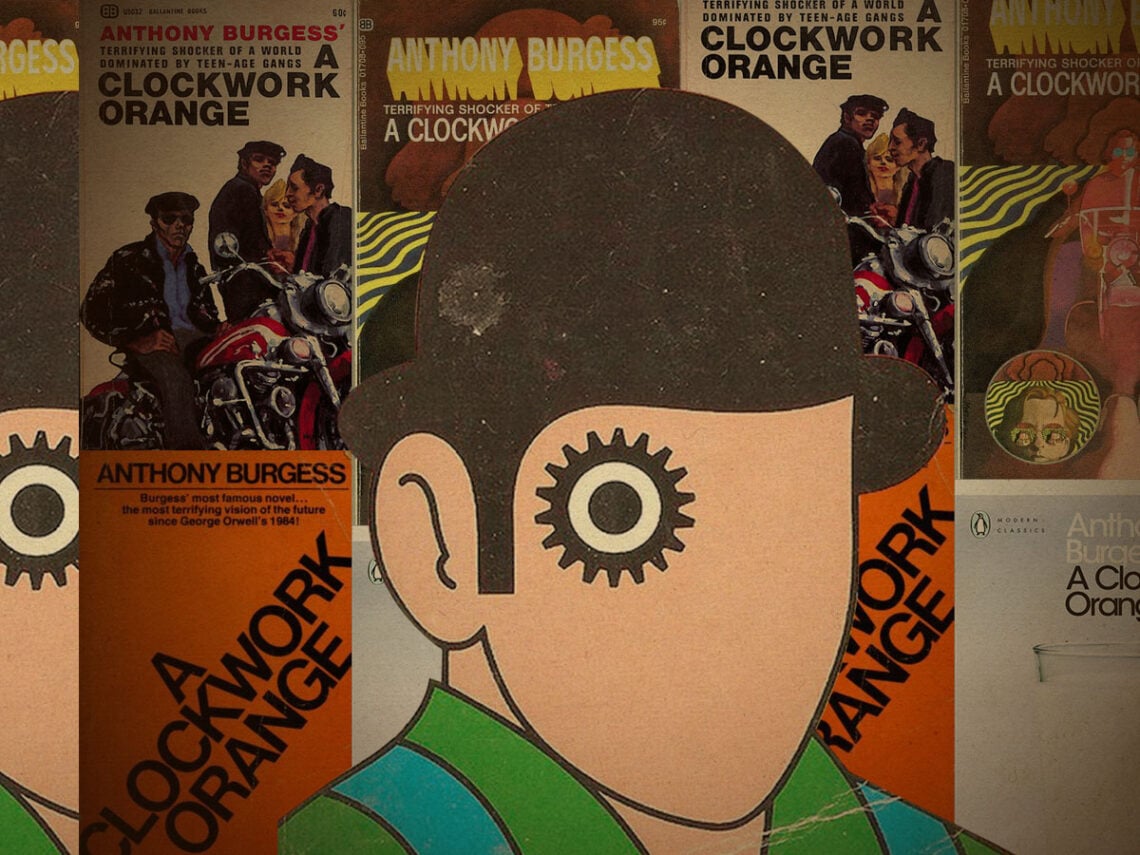
The family tragedy that inspired Anthony Burgess to write 1962’s ‘A Clockwork Orange’

While Stephen King was famously less than thrilled with the liberties Stanley Kubrick took with his cinematic adaptation of The Shining, Anthony Burgess was initially highly enthusiastic about the director’s interpretation of his own novel, A Clockwork Orange.
Despite being relatively uninvolved in the 1971 film version of his 1962 book, Burgess was impressed enough with Kubrick’s efforts to write his own personal review of the picture for the magazine Listener, calling it “technically brilliant, thoughtful, relevant, poetic, mind-opening. It was possible for me to see the work as a radical remaking of my own novel, not as a mere interpretation, and this, the feeling that it was no impertinence to blazon it as Stanley Kubrick’s Clockwork Orange, is the best tribute I can pay to the Kubrickian mastery.”
Burgess’ review was published just before Kubrick’s A Clockwork Orange went into wide distribution at the beginning of 1972. In the months that followed, the considerable controversy stirred by the film’s depictions of sex and violence, and its arguable romanticisation of anti-social behaviour, began to wear on the author, as he found himself suddenly under fire for a story and characters he’d created a decade earlier.
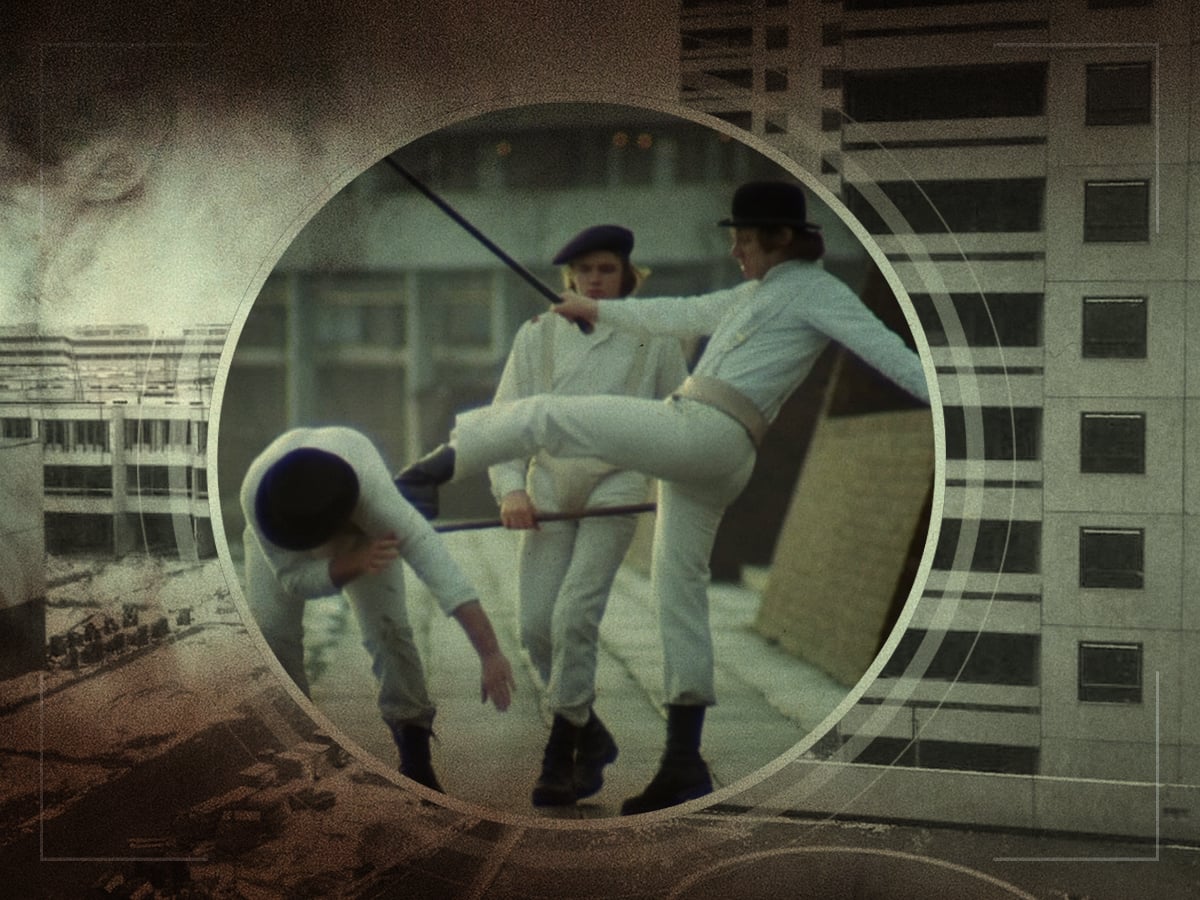
It’s a dynamic far from uncommon in cinema history, where disturbed, deranged, or despicable anti-heroes like Travis Bickle, Tony Montana, or the Joker wind up as celebrated cult heroes and dorm room poster stars, usually thanks to the charismatic performances of the actors tackling those roles. This was certainly the case with Malcom McDowell’s Alex in Kubrick’s film, whose horrific behaviour as the leader of a hooligan mob is met with a punishment that shifts the viewer’s sympathy increasingly towards our wicked narrator.
It’s a very delicate sort of nuanced storytelling to pull off, and while Burgess gave Kubrick high marks for striking that balance, the response from the general public made it clear that a lot of people weren’t coming away with the same conclusions.
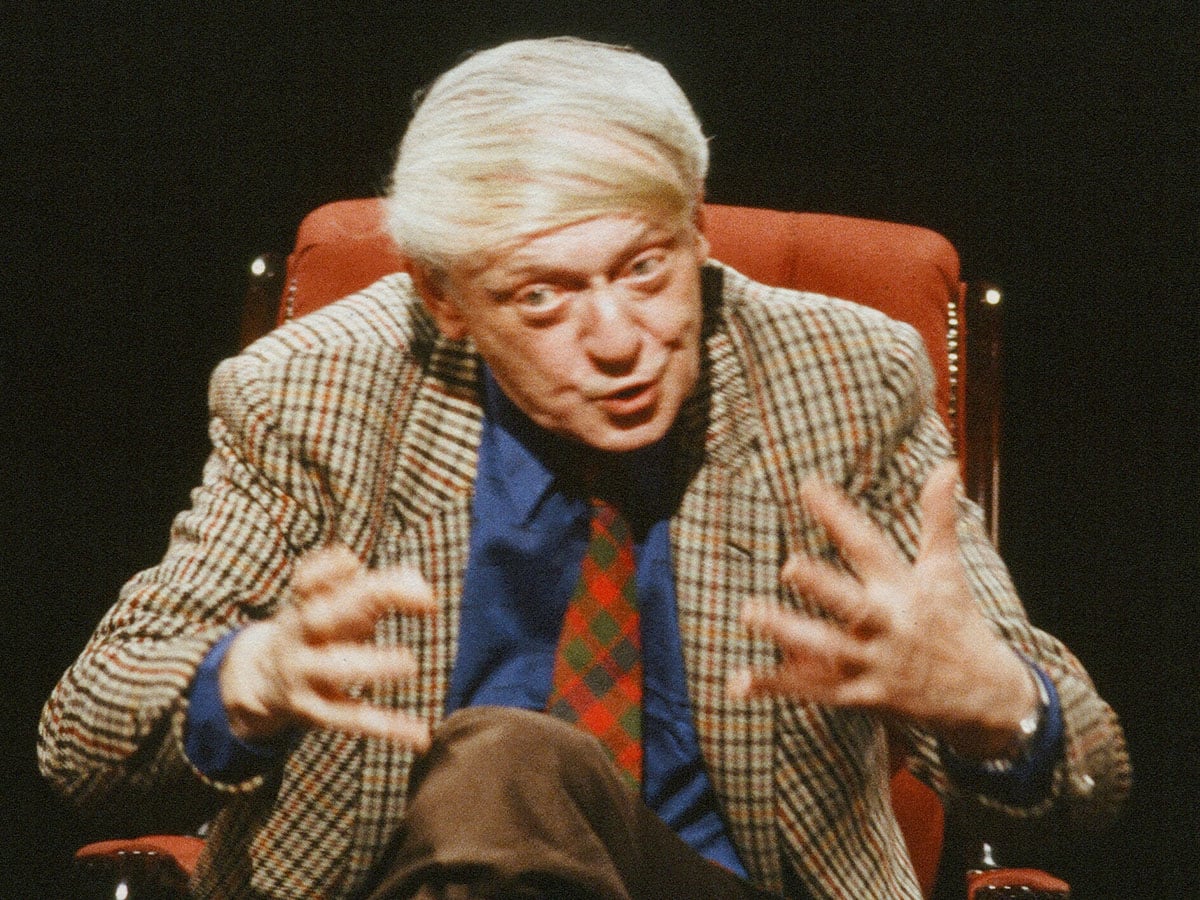
As a result, by 1974, Burgess had turned a complete 180, not necessarily panning the film, but going a step further and regretting ever writing A Clockwork Orange in the first place.
“I wrote this damn thing,” Burgess said with exasperation during an appearance on the Russell Harty Show, “I’m sick of it. You know, I’m sick of this bloody book, A Clockwork Orange. I wrote it in 1961, which is a long time ago.
“Now, a new generation has grown up since then, which apparently has been influenced by the book or by Kubrick’s film. But when I wrote it, it was an exercise in the use of words. It was an attempt to take a theme which is as old as the hills…that man ate the forbidden fruit; that man was born and is still born presumably in original sin… All I did and all [Kubrick] did was to show what people are really like; that we’re prone to evil.”
Burgess found it particularly frustrating that A Clockwork Orange was now being directly blamed for delinquent behaviour among young people, who were supposedly mimicking the “droogs” in the film. His point, and the one he was trying to express in the book, was that there was no reason to point fingers at books or films or music to explain human cruelty. Most of us, if presented with the opportunity, are pre-wired to act on our darker instincts.
“If you announced tomorrow night that there would be a sacrificial burning of heretics,” Burgess continued, “or that lions would be brought in the studio and chase the viewers out, people would be delighted. They’d far prefer that to, say, a performance of Twelfth Night or Anthony and Cleopatra.”
This bleak outlook on mankind isn’t shocking, perhaps, coming from the man who created the droogs in the first place. Burgess’ central intent of the book, however, was less about bemoaning the sins of man and more about staring it in the face, still declaring a preference for free will over authoritarian control, even when it comes to the worst and most destructive members of society.

In this way, A Clockwork Orange is actually quite similar thematically to another famous book published in the same year, Ken Kesey’s One Flew Over the Cuckoo’s Nest, in which another wisecracking rebel protagonist, albeit a far more ethically sound one, is robbed of his free will by “the system” as a supposed means of “rehabilitation”.
Stories like this certainly reflect some of the concerns about the role of the individual in the Cold War era, but whereas Ken Kesey was a 27-year-old with strong sympathetic ties to the Beat Generation (and later the hippies), Burgess was 44 when he wrote Clockwork, and didn’t necessarily see the rebellious British youth of the early ‘60s with the same sort of open heart or compassion. They were, to him, a bit more like monkeys in a zoo.
“Senseless violence is a prerogative of youth,” he wrote in the introduction to the 1987 print of A Clockwork Orange, “which has much energy but little talent for the constructive”.
This perspective was formed not just by reading newspapers or observing the clashes of the mods and the rockers who were half his age. As he explained coldly and matter-of-factly in his fascinating 1974 discussion with Russell Harty, Burgess’ understanding of gang violence was solidified nearly 20 years before he wrote A Clockwork Orange, when his first wife, Llewela Jones, also known as Lynne Burgess, was the victim of a gang attack in London.
“In England during the war, we had a great number of soldiers who were deserters,” Burgess recalled, “They were usually foreign soldiers like Americans or Poles, and they lived on their wits, and they robbed people. And my wife, she was working for the Ministry of War Transport, engaged on the vetting of the ships for D-Day [in 1944]…” She was late in leaving the office one evening when four American soldiers accosted her, attempting to rob her of her belongings, including her wedding ring, but that was the last straw for her.
Burgess continued, “This was the final enormity. I was abroad in the army, and this wedding ring meant a great deal. She screamed, and they hit her to stop her screaming, and they beat her about. She was carrying our child at the time. She lost the child. She was ill ever after and died prematurely.”
Burgess directly attributed his wife’s death to the 1944 attack, even though she lived another 24 years. In the early 1960s, Lynne even worked directly with Anthony on the translation of several French novels into English, and seemed to be an active participant in London’s literary circles. The indication from her husband, though, is that Lynne struggled with the trauma of the attack for the rest of her life, and that it contributed to her drinking to excess, a major factor in her death from liver failure at 47.
Speaking in 1974, six years after Lynne’s death, Anthony Burgess was very emotionally detached about her attack and the difficult years that followed. After describing what had happened to her, he was quick to note that it was no special case and that it could happen to anyone, adding, “However we pretend that life is all roses and honey, it can be pretty evil on occasions. And it’s no good blaming anybody except man himself. We’re all like that. Given the chance, we’ll all be like that.”
Burgess acknowledged that, while writing A Clockwork Orange, he was directly facing his own related trauma from what happened to Lynne and their unborn child, although he didn’t use the “T” word. He described the book as an attempt to “exorcise” the pain, or “drive out the nightmares” that followed the event. This helps explain why he later claimed to regret writing it, as “the danger of misinterpretation” had unexpectedly brought back some of those demons of the past.
Many people in Burgess’ situation would have taken great joy in punishing the character of Alex, the violent hooligan, in some way that feels just and in line with his crimes. But, staying true to his own principles, he still found the thought of state control, of policing through brainwashing, to be a hopeless model for stopping evil. Any reliance on the state or political figures, in fact, was wasted energy.
“Let’s be honest,” he said, “All politicians are straw men. Any man who enters politics at all does so because he has no capacity for doing anything else. They’re not evil men. They’re not good men. They’re just neutral men who deal with abstractions. They have proved they have no answers to the problems we’re going through, either the moral problems, the problems of hooliganism at football matches, the problems of rape, the problems of inflation. Therefore, the answers to these problems must lie somewhere in the individual mind. It must lie in me, in you, in everybody.”
