


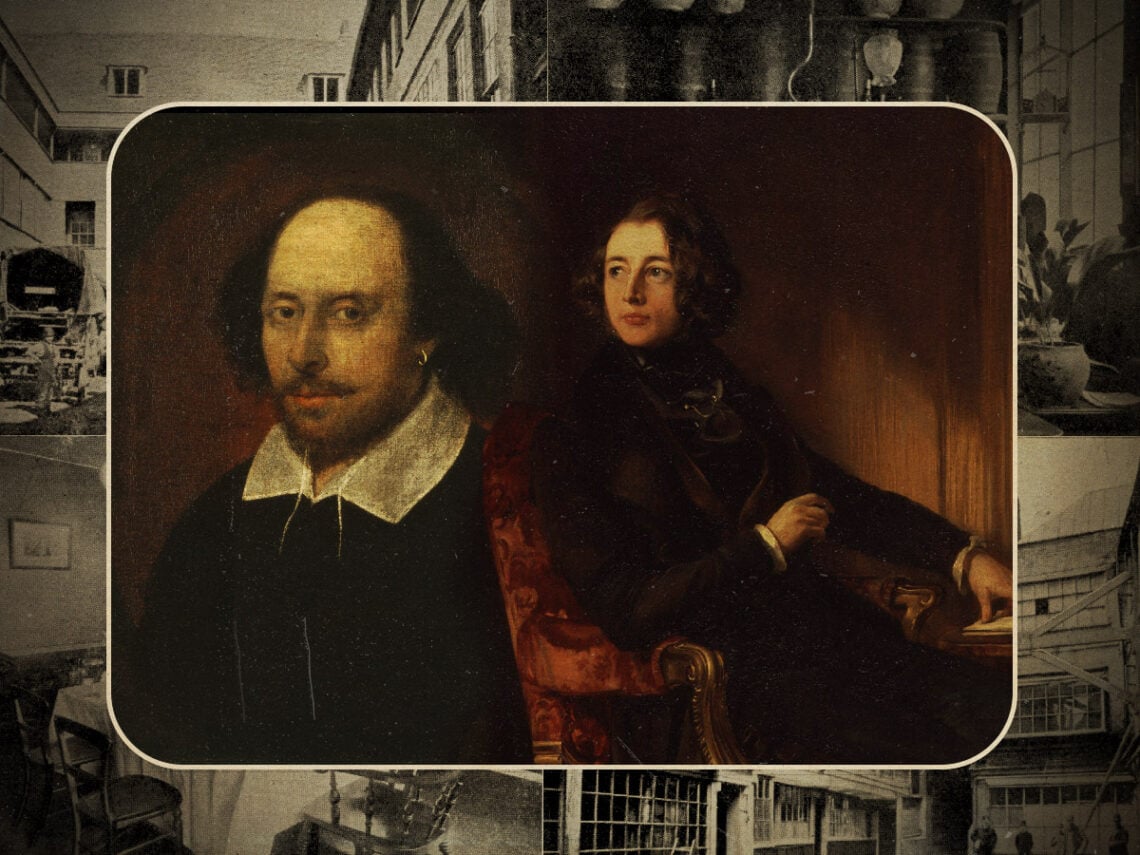
London’s literary boozers: The pub where Dickens and Shakespeare drank

Great Britain, great literature and great boozers: the three go together like pints and prose, and the UK has an incredible heritage in both the written word and the poured beer.
No single person can claim they invented social drinking, or getting bladdered, but it’s widely accepted that the first actual public houses were born in the UK. When the Romans left, their tabernae, which were restaurants with food, drink and beds, were eventually turned into alehouses, where thirsty Britons could get sozzled.
The link between alcohol and literature has been a long one, that crosses oceans, generations and styles, and with the UK having such a long heritage in both pubs and writing, it’s no surprise that some favourite haunts of our favourite writers are still alive and kicking.
William Shakespeare is, without doubt, the most famous English playwright in history, with a massive catalogue of 39 plays and 154 sonnets that have been translated into every major living language, and then there’s Charles Dickens, creator of some of the written word’s greatest characters and widely considered the greatest novelist of the Victorian era, whose writing still lives on in seminal works such as Oliver Twist, A Christmas Carol, David Copperfield, Bleak House and Great Expectations, capturing the attention of millions of readers each year to date.
Apart from being deft with their quills, Shakespeare and Dickens also loved a beer, and in fact drank in the very same pub, The George Inn, which has been located on its spot, on Borough High Street, since medieval times, although its current iteration has only been there since 1677, following a fire. This partly timber-framed beauty is now run by Greene King, but don’t hold that against it. The National Trust owns the building, and it’s got a Grade 1 listing, thanks to both its rich past, its famous southern exterior and its status as London’s only surviving galleried coaching inn.
Stepping inside The George, you’re instantly hit with a sense of storied history, as you are met with a number of small bars linked on the ground floor. The Parliament Bar was used for coach passengers to wait, while what was once the bedrooms now forms the restaurant. Then there’s The Middle Bar, formerly known as the Coffee Room, and a room that Dickens was very familiar with.
Dickens’ love for this pub is well known, and it actually appears in both Little Dorrit, when it was the coffee shop, and Our Mutual Friend. Interestingly, the pub was once immediately next to another called The Tabard, which was mentioned in Geoffrey Chaucer’s The Canterbury Tales, but has since been demolished.
Nowadays, it’s a long way from the one that Dickens and Shakespeare knew, with the Green King website boasting of the place as a “family-friendly pub where locals and tourists can experience a true taste of British hospitality”.
If you’re looking to find Britain’s next best novelist, then you’d probably be better off looking for somebody hunched over a MacBook in one of the capital’s many coffee shops than in The George. Depending on the day of the week, you’ll spot a mixture of city slickers in quarter-zips and gilets, American tourists looking for somewhere to relax after dropping £25 on some bang-average fish and chips at Borough Market, or the weekend warriors cheering on Man Utd or Liverpool on one of the pub’s many screens.
If you’re really looking for something Dickensian, then maybe it’s best to drink by the bar around closing time, just on the off chance that somebody begs the barman for one last drink, saying, “Please, sir, can I have some more?”
