


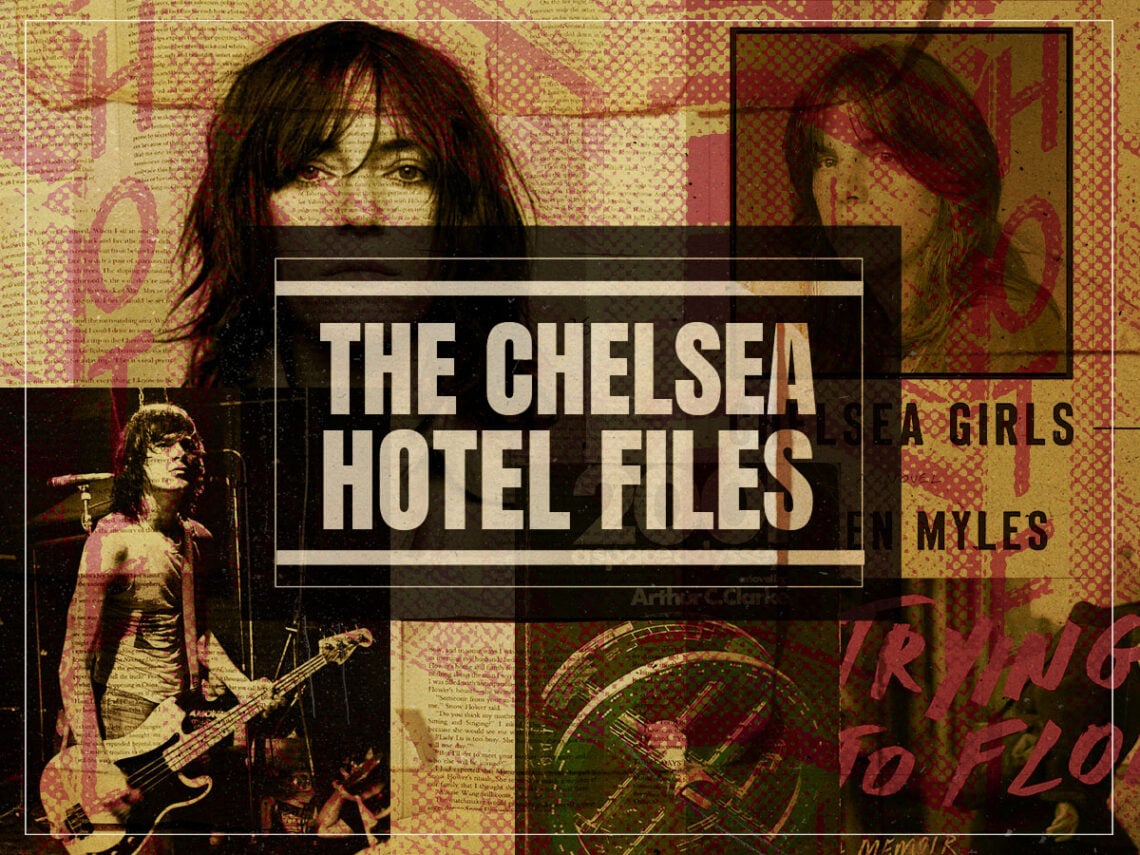
The Chelsea Hotel Files: Five essential books from the hotel

Across the worlds of music, film, art, and literature, New York’s Chelsea Hotel stands as a fascinating cultural hot spot. With so many influential artists passing through its doors, finding a cheap and inspiring place to stay, its atmosphere allowed them to create some incredible works. Spread across 12 floors and several decades, writers were, and still are, found typing away.
Amid the chaos of the art crowd, with its wild tales of affairs, antics and even fires, it might be thought that the Chelsea wouldn’t be a great environment for focused work. It’s doubtful that there was ever a moment of true peace and quiet for the residents to be alone with their thoughts. But the energy of the place seemed to have a magical quality that sparked the imagination, allowing writers to create legendary works and merely pop their heads out of their door if they needed a fresh boost of inspiration.
Mostly, the hotel is remembered as a hotspot in the 1960s and ‘70s, when the New York scene included the Beat Generation, Andy Warhol’s crowd and names like Bob Dylan, Patti Smith, Leonard Cohen and beyond. But writers have set their base in the Chelsea for decades now, even seeing the location through some of its more dark and dangerous years in the 1990s. Even in the modern day, there are still long-term residents who have made the place their home, with one young writer being raised there.
Whether they’re writing about the hotel or merely using the hotel desk to write their masterpieces, these five texts feel like essential reading. Providing a history lesson with a front row view at the Chelsea’s various residents and eras, dive into these five books written within its walls.
Five essential books written at the Chelsea Hotel:
Just Kids – Patti Smith
For a gateway text into the world of the Chelsea Hotel, turn to Patti Smith’s Just Kids. Her 2010 memoir details her relationship with artist Robert Maplethorpe, a man who proved to be her creative soulmate as the two built their careers together, from down-and-out beatniks to beloved forces. But amongst that story, the Chelsea Hotel stands as the most important setting as the pair lived their during their early years together.
No one has managed to articulate the atmosphere of the hotel quite like Smith does here. She perfectly captures the way that the resting place was not only a creative hub, buzzing with artists but was also a sanctuary. She describes the ways the residents cared for each other and regularly came together in the face of hardship or tragedy. From her position amongst New York’s vibrant scene, surrounded by figures like Allen Ginsberg, Andy Warhol, and others, her remembrance for Maplethorpe is extended into a vast remembrance for her whole generation. Just as much of a history lesson as it is a stunning piece of prose, this is the perfect place to start for anyone looking to learn about the hotel.
Chelsea Horror Hotel – Dee Dee Ramone
However, after Smith and her class of artists left the hotel in the 1970s, things started to get dark. The place fell into total disarray with roach infestations, major repairs needed and then a huge dose of bad press as Sid Vicious killed his girlfriend, Nancy Spungen, in one of the rooms. From that moment on, an ominous cloud gathered over the Chelsea.
By the 1990s, the hotel was a hotbed for drug addicts and dark tourists still looking for the murder site. But amongst it, there was Dee Dee Ramone. This strange little novel is part memoir, recounting Ramone’s daily goings on as he lived at the Chelsea, and part spirally, drug-crazed horror. Sat among the carnage of the place, long after the joy had left the building and all that remained was haunting energy, Ramone becomes convinced that he lives in the room where Sid killed Nancy and is slowly driven mad as ghosts of punks past visit him. Published only a few months before his fatal overdose, Ramone’s novel is a wild look at the hotel’s more unsavoury years.
Trying To Float – Nicolaia Rips
While the Chelsea is more commonly known by the artists and celebrities that came and went, there were – and still are – residents that made it their permanent home. On the upper floors of the hotel, the rooms were converted into apartments, which people held as their long-term address. Just ask Nicolaia Rips; she was raised there.
Published in 2016 when Rips was only 17, this memoir details her youth spent growing up amongst one of the most famous cultural landmarks. It’s a beautifully written look into the lesser talked about community that existed within the hotel and the way that its energy of sharing, caring and looking out for each other endured amongst its long-term residents. Naturally, having grown up in such an inspiring surrounding, Rips is an inspired writer, and this book has matured beyond her years.
Chelsea Girls – Eileen Myles
Even though the Chelsea had a reputation for being wild and chaotic, full of artists and drugs and crazy goings on, there was always a more endearing side. Just as Patti Smith touches on in her book, the hotel existed as a kind of care marketplace, where the residents traded food and labour like a currency. They looked out for each other, in sickness and in health, as they attempted to make their way in the difficult climate of New York City.
That’s exactly the energy that colours Eileen Myles’ essay collection, Chelsea Girls, but mostly the book’s titular essay. During her own years living at the hotel, Myles cared for poet James Schuyler, who was a peer of the city’s beat legends like Frank O’Hara. As he got old and sick, Myles writes of the moving experience of caring for this older gay writer as a young lesbian writer. It connected her to the grand and beautiful history of lesbians stepping up to care for gay men, especially during the AIDs crisis, but also provides a microcosmic example of the way that Chelsea Hotel residents looked out for one another.
2001: A Space Odyssey – Arthur C. Clarke
While plenty of books have been written about the Chelsea, even more were written within its walls. Writers like Allen Ginsberg, Jack Kerouac, William S Burroughs, Arthur Miller, Dylan Thomas and hoards more all took up residency there. With cheap rent that could be paid late or traded for art, it became the perfect place for writers to hold up and get to work, providing them a space to experiment.
That’s precisely what Arthur C. Clarke did. At first, Stanley Kubrick wanted Clarke to work at his office so he could oversee the project, with the story being written as both a screenplay and a novel. But quickly, Clarke retreated to the Chelsea, where he borrowed from conversations with fellow writers like Ginsberg, Burroughs and Miller to hash out this incredible, vast sci-fi world. Hidden away in his hotel room, he would bash out 2000 words a day amidst the inspiring atmosphere. While the book has nothing to do with a hotel in New York, it couldn’t have been made without the unique energy of the place and still stands as one of the most remarkable creations to leave its hallowed halls.
