


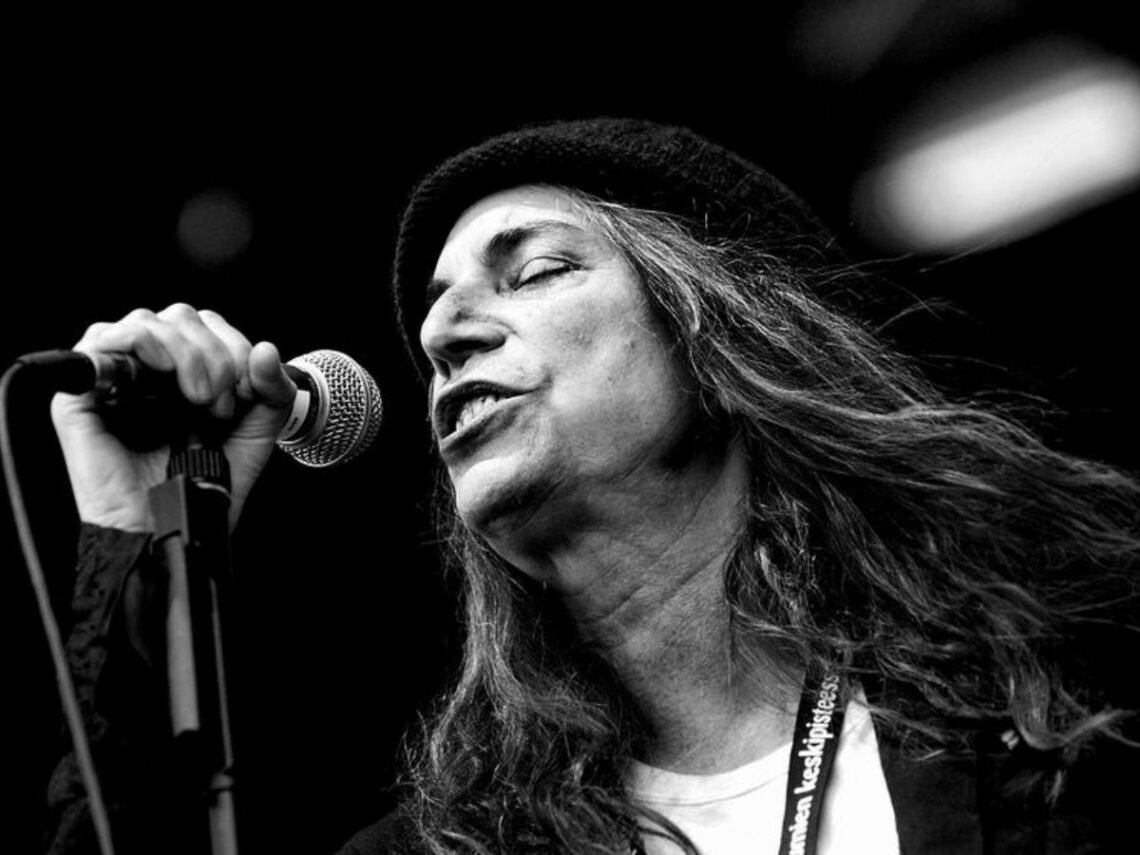
‘Just Kids’: A novel that defines Patti Smith’s greatest work

All good art deals with the heart rather than the mind. Even though it might be easy for people to put the next logical steps into making their craft, a passion for any work usually helps define their grand statement to the world. Although Patti Smith had already made phenomenal works of art in album form, one of her spellbinding masterpieces came from when she turned to the written word.
Then again, Smith didn’t need to work outside of music a day in her life if she didn’t want to. Even if her legacy had been confined to albums like Horses, she would still be considered one of the most significant artistic figures of the modern age. With the release of her novel Just Kids, Smith painted a vivid portrait of the road that got her to where she is today.
Because Just Kids is far from the tired musician biographies that every artist seems to have out now. Instead of the lavish rock stars that want to pore over all the petty drama they experienced in their prime, the best moments that Smith finds have to do with the negative space. Throughout the book, Smith seldom talks about the ins and outs of recording Horses or her eventual marriage to Fred ‘Sonic’ Smith, focusing more on her inherent bond with the creative people around her.
From the first few pages, it’s easy to see a woman slowly becoming an artist, taking the building blocks of everything around her and spinning them into something beautiful at every turn. While Smith waxes poetic about the legends of her time, like Janis Joplin and Jim Morrison, one of her greatest muses comes when discussing her relationship with Robert Mapplethorpe.
Known as the photographer who captured the provocative images of her album covers, Mapplethorpe is practically the second lead in the story, accompanying Smith on her journey as a lover before coming to terms with his sexuality throughout the book. While most of the book dwells on Smith finding her feet, she never loses the creative spark for making art when discussing Mapplethorpe’s impact on her life.
As she moves through various living spots around New York City, like the Chelsea Hotel, the reader is put into the same position as Smith, knowing she has to do something worthwhile to live up to her idols, from Arthur Rimbaud to Jimi Hendrix. While many passive rock fans will recognise names like Blue Oyster Cult or Lou Reed sprinkled throughout, Smith’s story is more about the human connection between her favourite artists rather than the surface work.
Like any human connection, though, Smith knows that time is always fleeting, as evidenced by the many losses in the book. From visiting Jim Morrison’s gravesite in Paris to tending to Mapplethorpe when he was dying of AIDs, Smith never loses the sense of urgency that she had in her early years, feeling the need to document every facet of her life lest any moment of beauty fade away around her.
Even though Smith doesn’t shy away from heavy subject matter, the book also has a sense of childlike innocence. As the title implies, every page feels like Smith slowly changing from an innocent child to the adult artist she was always destined to be. Like all childhood lessons, though, Smith knows that that sense of innocence is worth cherishing rather than something to grow out of. The grown-up world may seem cold and calculated at every turn, and preserving that sense of empathy is one of the core foundations of what makes life worth living.
For instance, when discussing Mapplethorpe’s death, Smith treats it with reverence rather than despair, knowing that his great work will last far beyond his memory. Much like his desk gets passed on to the next generation, Mapplethorpe’s work has given new artists tools to unleash their emotions.
While most rockstars might like to revel in the idea of making a book about the ins and outs of their career, Smith wasn’t looking to make any tell-all about her life in the early punk scene. From day one, Smith was proud to be a writer, and even without all of the caustic instrumentation, Just Kids is the cries of an artist in touch with her humanity, trying to get anyone listening to embrace their humanity as well.
