


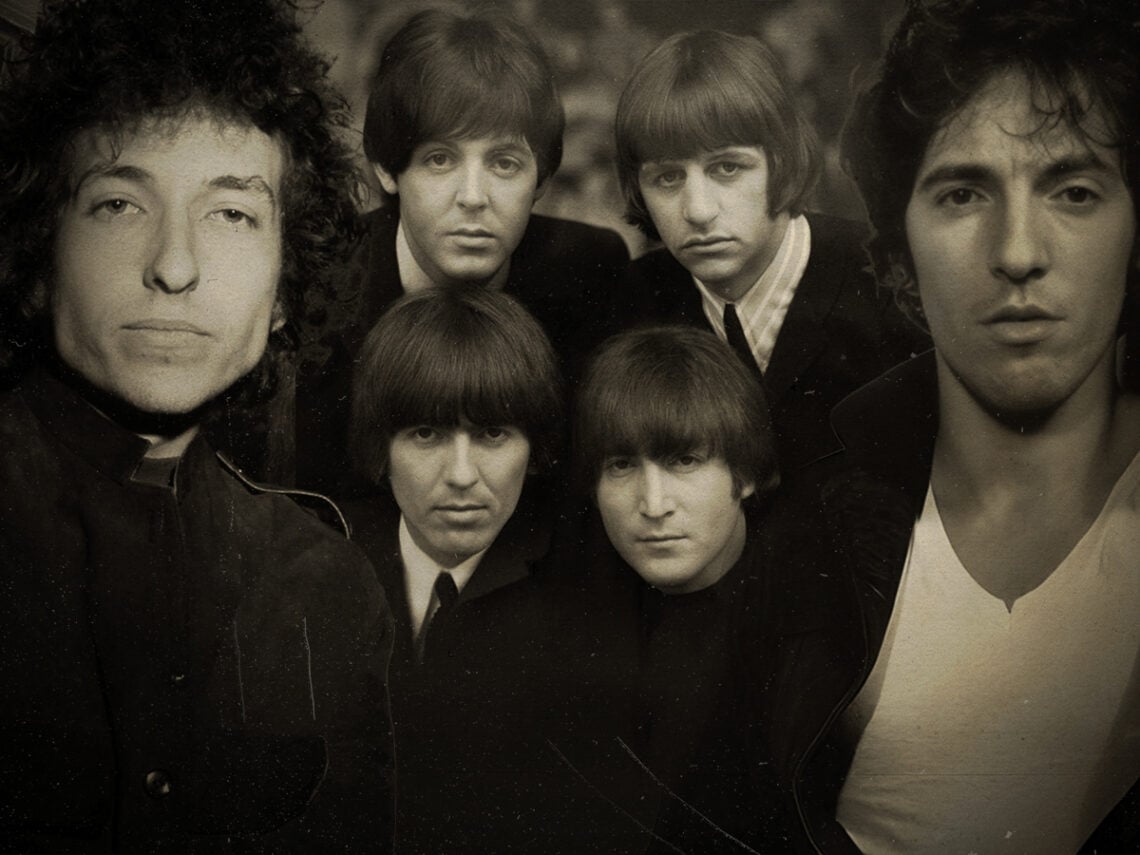
The Beatles classic from 1963 that Bob Dylan and Bruce Springsteen agreed was their greatest: “Just outrageous”

As a Parisian mob broke through a barricade during one of the many skirmishes of the French Revolution in 1848, the politician Alexandre-Auguste Ledru-Rollin is said to have yelled, “There go the people. I must follow them, for I am their leader.”
The Beatles portrayed a similar sentiment as they clambered onto the stage at the Cavern Club night after night in their youth. All told, they’re said to have performed 790 shows among ‘their’ people before 1962 came to a close. Whether it was in Hamburg or Halifax, they had their finger firmly pressed to the pulse of the proletariat as the 1960s swung into view.
So, by the time that they landed in America, a mere 77 days after the assassination of President John F Kennedy, when they emerged from Pan Am Flight 101 with their arms aloft, they looked every bit like Ledru-Rollin, joining a mob and jostling to the front. In truth, they had already positioned themselves as potential leaders of a youth culture revolution in-waiting thanks to a procession of early hits hailing from the far side of the pond.
So, to the American masses, these four young lads from Liverpool shone like a beacon of hope the moment that they set foot on US soil. Chief among these early hits that had helped to whip up a storm of anticipation was a rollicking pop gem that seemed to tap into the thirst for liberation spilling over the bubbling stove pot of pent-up passions in the States.
“It was a Friday in early February when we touched down,” Paul McCartney recalls in his photography book 1964: Eyes of the Storm, “And it felt like thousands – and later, through television and The Ed Sullivan Show – millions of eyes were suddenly upon us, creating a picture I will never forget.”
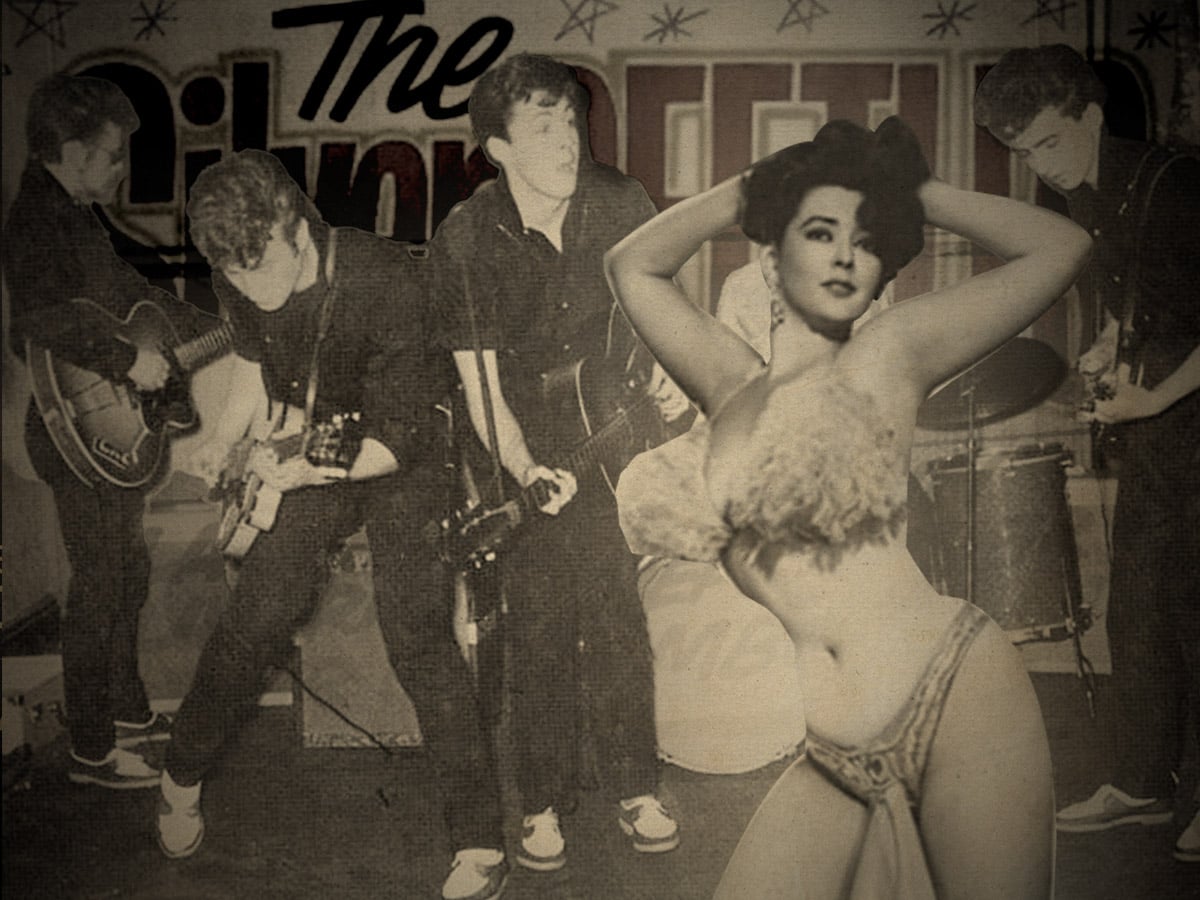
At first, they feared that they would “just fizzle out as many groups do”, but they had too firm a grasp on the zeitgeist to allow that. “We were in the vanguard of something more momentous, a revolution in the culture,” McCartney recalls. Helping to stir up that momentum was the invention of the pill, and all the appetite for eroticism that it brought with it.
As McCartney puts it, “Although we had no perspective at the time, we were, like the world, experiencing a sexual awakening. Our parents had fears of sexual diseases and all sorts of things like that, but by the middle of the 60s, we’d realised that we had a freedom that had never been available to their generation.”
‘I Want to Hold Your Hand’ played into this in a manner that was perfect. Innocent enough for widespread mainstream radio play, but gritty enough to rouse passions, it rose to number one on both sides of the Atlantic and secured its status as the era’s darlings with a radical undertone.
It is easy to dismiss it as tepid in retrospect, but that would deny the subtle context that was clearly decoded upon release. “There was an eroticism behind it all,” McCartney said of the Fab Four’s cheeky early work, “If I’d heard myself use that word when I was seventeen, there would have been a guffaw. But eroticism was very much a driving force behind everything I did.”
As he explains in the book, The Lyrics, “You know, that was what lay behind a lot of these love songs. ‘I want to hold your hand’, open brackets, [and probably do a lot more!].” That bracketed wink struck Bruce Springsteen like a ray of warm sun through a window on a cold day. He was far from alone.
There’d been a whiff of this liberation before, but perhaps the revolution didn’t need a King but rather boys in amongst the mob, instead. As Springsteen explained, “I saw Elvis on TV, and when I first saw Elvis, I was nine, but I was a little young, tried to play the guitar, but it didn’t work out, I put it away. The keeper was in 1964, ‘I Wanna Hold Your Hand’ on South Street with my mother driving,” Springsteen once told Rolling Stone.
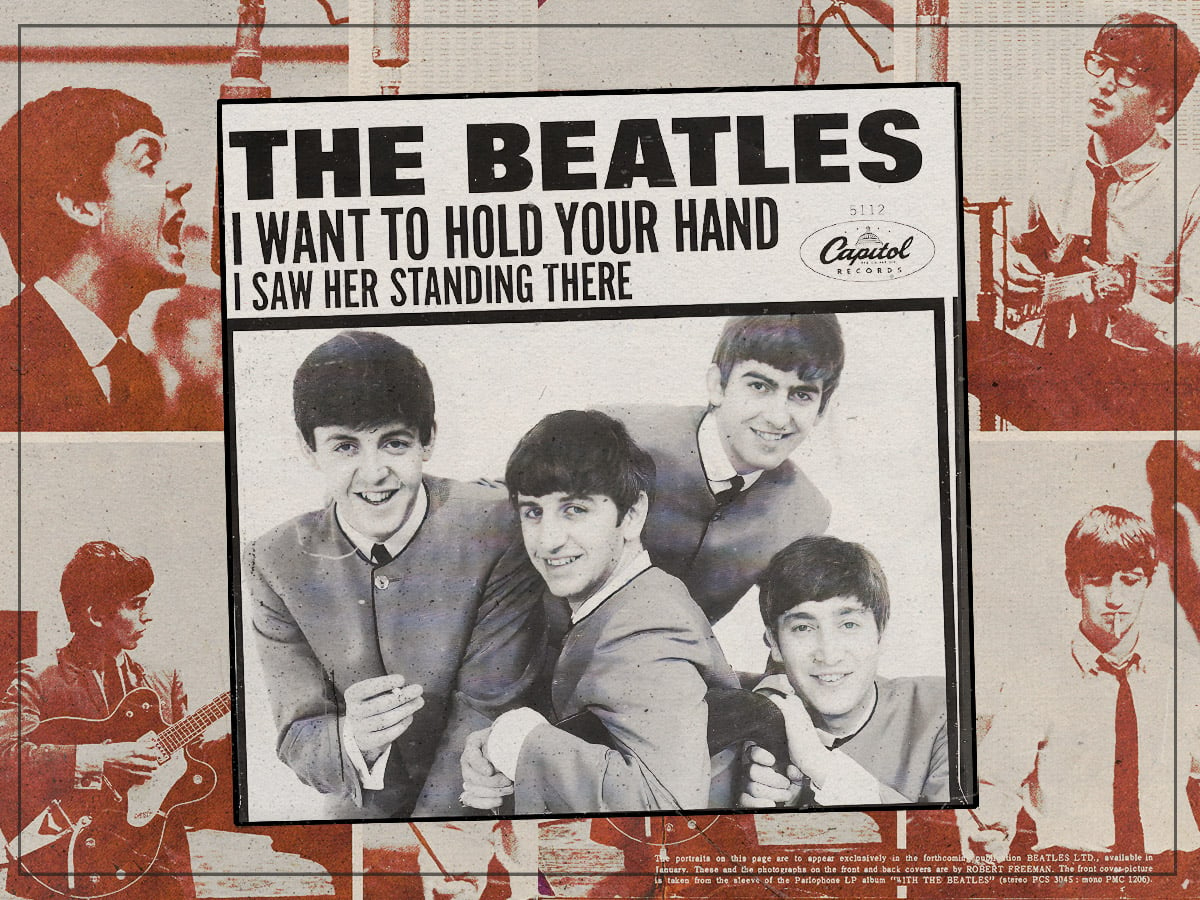
He was struck by the rawness of it all. As the first song where The Beatles used a four-track recorder, it was sharp and subsuming, like plunging into a cold pool on a stuffy day. Bruce’s mind was blown, along with his indifferent teenage cool. “I immediately demanded that she let me out,” he recalls.
Continuing, “I ran to the bowling alley, ran down a long neon-lit aisle, down the alley into the bowling alley. I ran to the phone booth, got in the phone booth and immediately called my girl and asked ‘Have you heard this band called The Beatles?’ After that, it was nothing but rock ‘n’ roll and guitars.”
The song has stuck with him ever since. When he was citing the records he couldn’t live without for Desert Island Discs, from the Fab Four’s repertoire, he opted for this classic simply because, as he put it, “That just changed the course of my life”. Millions of others would say the same. Bob Dylan being one of them.
When asked by NME to pick his favourite Beatles song, the original vagabond recognised that although his own folk was perhaps ahead of his mop-topped British counterparts when it came to depth and meaning, their visceral sound had found a way to vitally defibrilate the dormant spirit of youthful passions at the perfect moment. The mob were charging, and in charming semaphore, the Fab Four were pointing the way.
“They were doing things nobody was doing,” he told NME of the song. “Their chords were outrageous, just outrageous, and their harmonies made it all valid… I knew they were pointing the direction of where music had to go.” The latter was perhaps the most pertinent point when it came to Dylan and Springsteen’s love for the song.

It was simple and direct, but it was somehow new, and that newness felt as though it would reshape society. Dylan was hungry for his own scene in Greenwich Village to move beyond the same old folk songs from hundreds of years ago, and Springsteen was starving for a break from the weary banality of a home plagued by discomforting silence.
Suddenly, ‘I Want to Hold Your Hand’ came along and collapsed the distance between performers and their audience. A single shared impulse that The Beatles were simply putting a beat to was arising. As keen purveyors of what the people want (and what they need), Dylan and the Boss, recognised the song (as they still do), as a spark when history – usually slow and second-hand – was immediately at hand.
That set the tone for the revolution. In itself, the song might not have been the most daring, but it clearly presented a corny analogy to polemics written half a century later, which took the hand of the masses and led them towards the more radical reaches of counterculture.
Springsteen later said in a keynote speech when reflecting on their early influence in his teenage years, “They’re a lot cooler than me, but they’re still kids. There must be a way to get there from here.” He got there. And in many ways, the Fab Four ushered the world towards Dylan.
As the philosopher Mark Fisher once said, “The Beatles basically trained people to expect things to get more and more experimental the more popular they got.”
That began with the pop and fizz of the populist hit, ‘I Want to Hold Your Hand’, and that’s why the daring duo of Dylan and Bruce still belovedly revere it.

Never Miss A Beat
The Far Out Beatles Newsletter
All the latest stories about The Beatles from the independent voice of culture.
Straight to your inbox.