


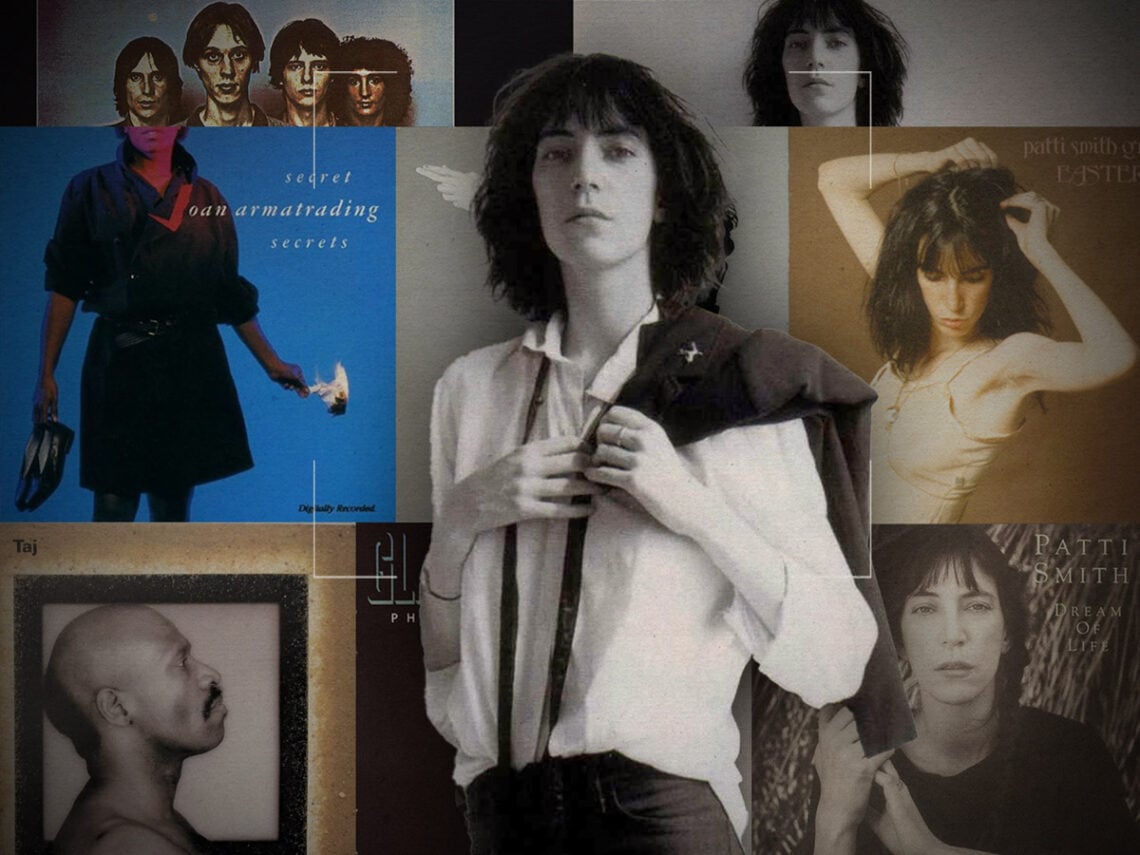
The remarkable album covers photographed by Robert Mapplethorpe

“Much has been said about Robert, and more will be added. Young men will adopt his gait. Young girls will wear white dresses and mourn his curls. He will be condemned and adored. His excesses damned or romanticised. In the end, truth will be found in his work, the corporeal body of the artist. It will not fall away. Man cannot judge it. For art sings of God, and ultimately belongs to him.”
Taken from Patti Smith’s 2010 memoir Just Kids, her first book that looks back on her friendship with the late photographer Robert Mapplethorpe, who passed away in 1989 from complications related to HIV/AIDS at 42, we can trace his growth from a young man growing up in a Catholic household on Long Island to becoming a renowned, and controversial, photographer, known for capturing New York’s queer BDSM subcultures, often on black-and-white film.
Smith wrote Just Kids as a promise to Mapplethorpe, one that was made when he was on his deathbed, during their final conversation, when he asked her to write their story. Outside of his photography that would later make him one of the art world’s most proudly provocative forces, Mapplethorpe is also immortalised through Smith’s lens. In both mediums, photography and the written word, we learn of Mapplethorpe’s true self, and in the former, we learn that he blended personal emotion and intuition with a larger outlook on the society that surrounded him.
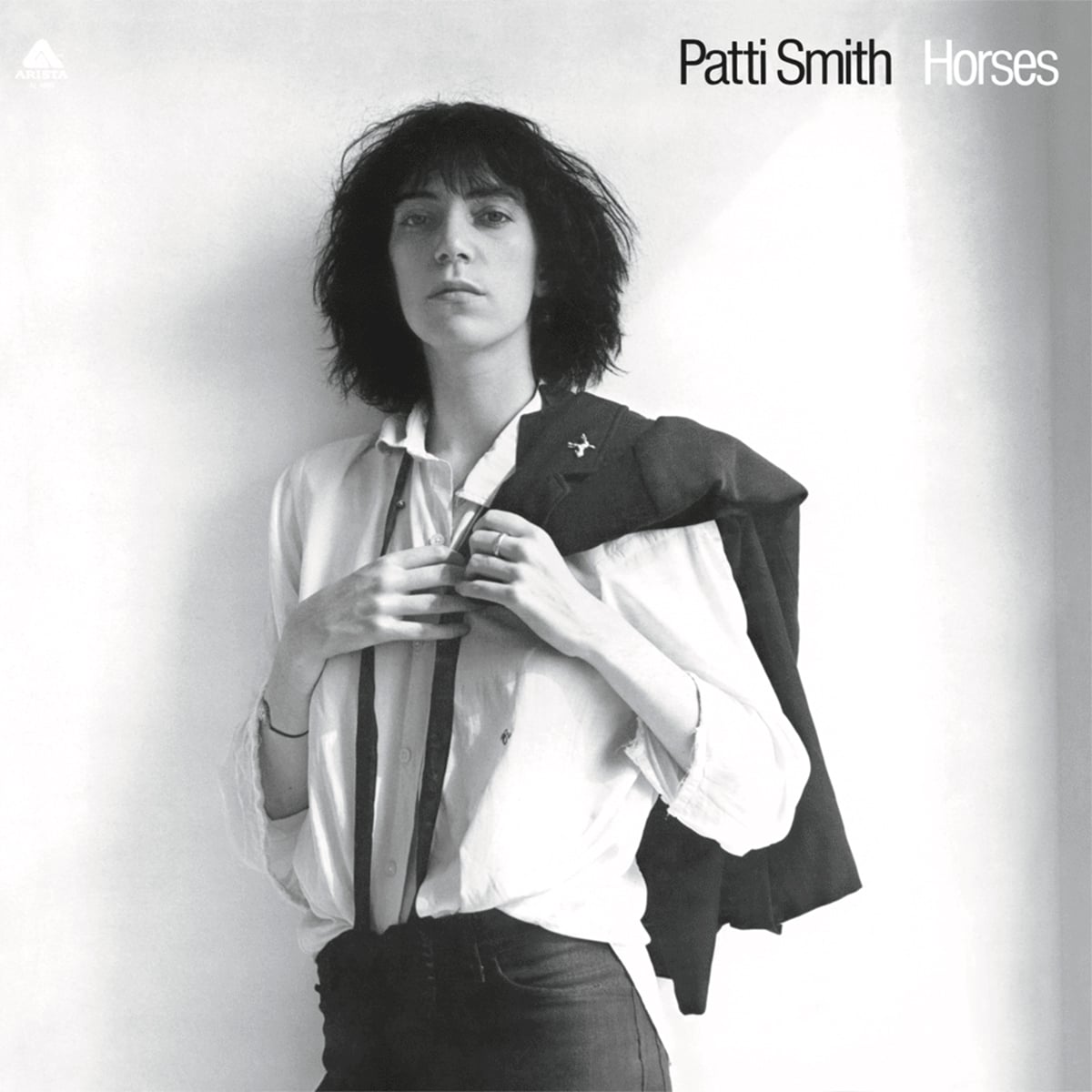
In turn, the artist also utilised his talents to immortalise Smith, producing some of his best-known works with her as his subject. Perhaps most famously, he photographed the cover of her 1975 debut album, Horses, showing her standing in a white button-down shirt and black trousers, a black coat over one shoulder. In this photo, she embodies androgyny and power in a way that few artists (especially women in rock) had done before.
As Robert Heimall (the designer of the Horses cover) told me for the Horses oral history: “[Smith] came to me with about five or six photographs from Rob and gave me some of the music. I thought that picture just nailed everything, at the time: Patti, Mapplethorpe, the music, the scene.”
Mapplethorpe would photograph Smith for three more of her album covers: 1978’s Easter, 1979’s Wave and 1988’s Dream Of Life, the first photograph being the only of the four to appear in colour. He also captured the photo of Smith used for the 1988 single ‘People Have The Power’, a black-and-white shot of her with braided hair, wearing a black coat and looking away from the lens.
Smith was not Mapplethorpe’s only muse when it came to album covers. He is the man behind the lens for one of punk’s other most famous album shots: Television’s 1977 debut, Marquee Moon. In his vision, lead singer Tom Verlaine stood slightly in front of his bandmates, his right hand clasped as if he were in mid-sentence. Guitarist Richard Lloyd took Mapplethorpe’s contact prints to a print shop in Times Square and, after a few tries, the band acquired a slightly altered version of the photograph that they used as the cover.
On the fringes of the punk and art scenes in New York, as they often overlapped, Mapplethorpe met the performance artist Laurie Anderson and would eventually photograph her in 1987. These images were used two years later, for her 1989 album, Strange Angels. For the cover, Anderson chose one where her eyes are closed, her hair is styled in spikes, and she wears a patterned shirt; and for the album’s single, ‘Babydoll,’ she chose an image where she stares upwards, as though she were thinking of some unnamed question.
Speaking with the Chicago Tribune in 1989, regarding how she was compelled to be an artist because of the vocation’s lack of rules and embrace of freedom, she mentioned Mapplethorpe and the scrutiny he received. “So I found it fascinating when congressmen waved photographs of Robert Mapplethorpe`s work (his erotic photographs of nude men) around the House and Senate floors,” she said, “Here are these men who are looking at other men as sex objects, and that was quite difficult for them to do.”
Mapplethorpe, sadly, would not see Anderson’s album in real time, as he passed away months before its release. His work continued to be seen posthumously, not only in regards to numerous gallery and museum exhibitions, photobooks and monographs, and films, but on album covers, too. One was Scissor Sisters’ 2010 album Night Work, which uses a photograph of his from 1980 of dancer Peter Reed’s buttocks, thus causing quite the controversy.
Speaking with Digital Spy, guitarist/bassist Del Marquis expressed, “I’ve always been a fan of Robert Mapplethorpe, and I really love the cover, but I knew that it would invoke different responses from different people… The way someone reacts to it will tell you a lot about that person. People could view it with reactionary homophobia, or they could view it as camp, or high art, or something beautiful.”
When asked if he thinks the cover is provocative, Del Marquis responded, “Yeah, because people still react in a really strange way to the sexualisation of the male form. We’re much more comfortable with the sexualisation of the female form. The cover’s been blown up on billboards all over town, and it’s really exciting for me to be driving through religiously conservative neighbourhoods and seeing this giant gorgeous clenched man’s ass!”
Throughout his tragically short life, Mapplethorpe worked against accusations of obscenity and filth in pursuit of his art’s calling. He did what he felt he was meant to, which was document liberation and freedom without censorship, however provocative the results may be. As Smith described in Just Kids, “He worked without apology, investing the homosexual with grandeur, masculinity and enviable nobility… Robert sought to elevate aspects of male experience, to imbue homosexuality with mysticism.”
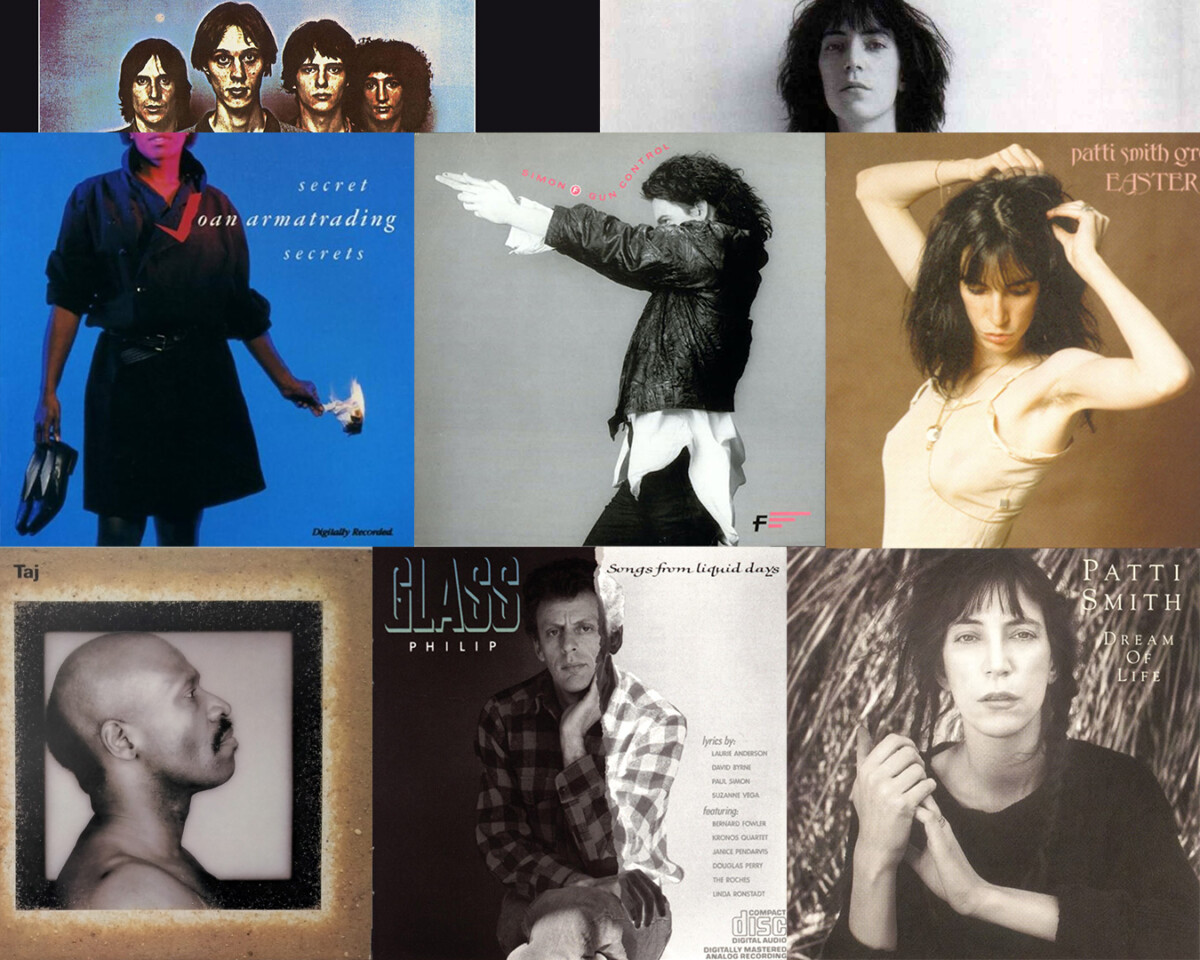
Through Mapplethorpe’s eyes, some of music’s greatest voices came to life and turned into icons. Below, see a list of all of his album cover credits.
Robert Mapplethorpe’s album cover credits:
- Patti Smith – Horses (1975)
- Television – Marquee Moon (1977)
- Tapper Zukie – Man Ah Warrior (1977)
- Patti Smith Group – Easter (1978)
- Patti Smith Group – Wave (1979)
- Slow Children – Slow Children (1982)
- Ned Sublette and the Southwesterners – Western Classics (1982)
- Joan Armatrading – Secret Secrets (1985)
- Simon F – Gun (1985)
- Taj Mahal – Taj (1986)
- Philip Glass – Songs From Liquid Days (1986)
- Patti Smith – Dream of Life (1988)
Posthumous:
- Swans – The Burning World (1989)
- Laurie Anderson – Strange Angels (1989)
- Unrest – Perfect Teeth (1993)
- Philip Glass – Music In Twelve Parts (1996)
- Kronos Quartet – Howl, USA
- Gidon Kremer, Astor Piazzolla – El Tango (1997)
- Scissor Sisters – Night Work
