


‘Language is a Virus’: How Laurie Anderson predicted the rise of reality TV

Even the leading artists in the “avant-garde” are usually distilling their ideas from a few of the wilder brains that came before them.
During her own experiments with music and visual arts in the 1980s, Laurie Anderson was simultaneously unlike anyone else, but still part of a tradition of sorts; passing down some of the wisdom she gained earlier in her life from the artists who’d help her expand her own horizons and see the world differently.
The writer William Burroughs was certainly one of those artists, as Anderson happily acknowledged on her 1986 single ‘Language is a Virus’, from her concert film Home of the Brave. The song’s title was based on a passage from Burroughs’ 1962 novel The Ticket That Exploded, in which the famed Beat author compared language to a parasitic organism from outer space, invading the central nervous system.
“Modern man has lost the option of silence,” Burroughs wrote. “Try halting sub-vocal speech. Try to achieve even ten seconds of inner silence. You will encounter a resisting organism that forces you to talk. That organism is the word.”
Anderson mentioned the Burroughs inspiration when she re-released the ‘Language is a Virus’ music video in 2024. “Dedicated to William S. Burroughs,” she said of the song. “What a wild thing for a writer to say, that language is a disease communicated by mouth. And now that we know that virus is also a language, it makes even more sense that word codes are hard to crack.”
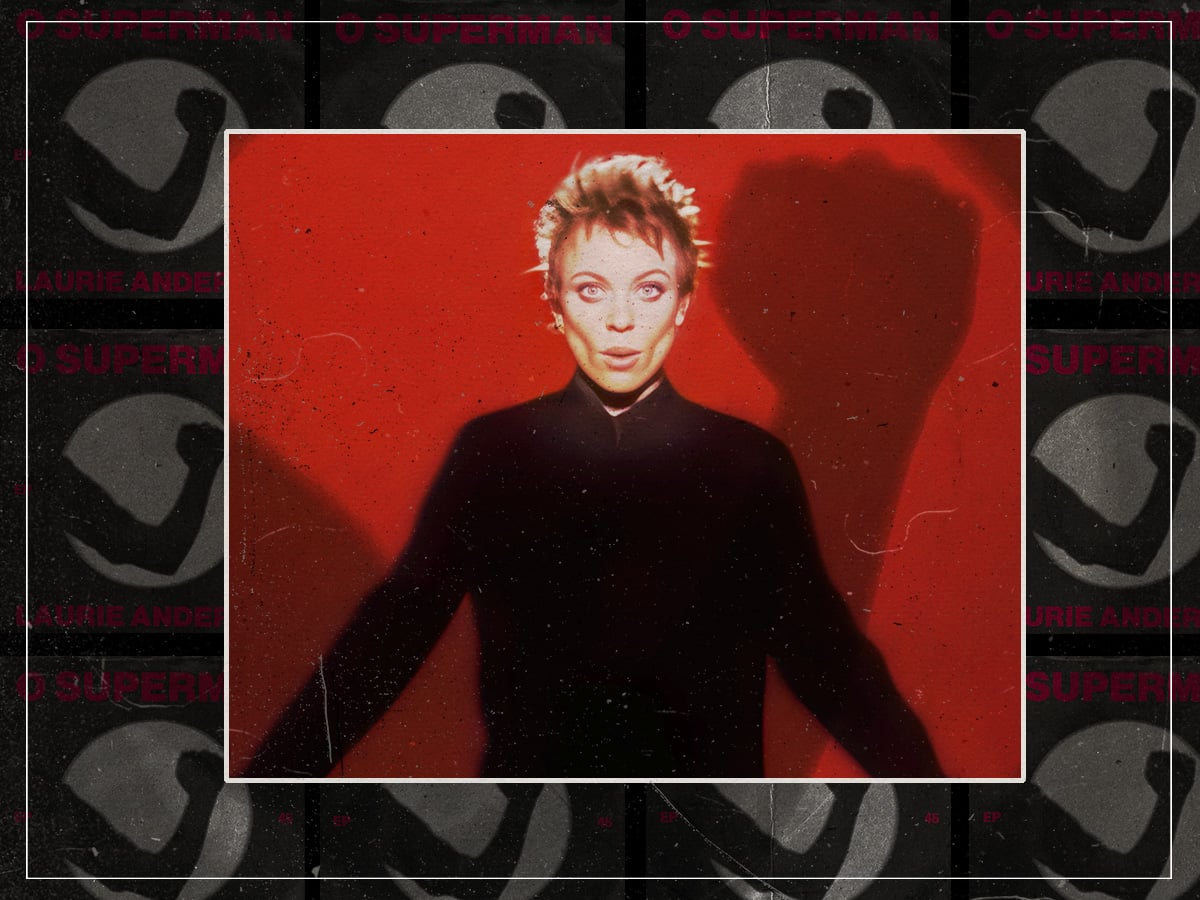
Looking back on how Anderson ran with this concept in her own lyrics on ‘Language is a Virus’, it’s hard not to see ways in which she was—whether by chance or clever analysis—also crafting a sort of satirical look at western culture’s imminent future.
There was plenty of trash for Anderson to look at in the pop culture of the world around her in the 1980s, from TV talk shows and soap operas to tabloid magazines and trickle-down economics. One particular portion of ‘Language is a Virus’, though, feels much more like a prophetic description of a phenomenon that wouldn’t really emerge until the 21st century: reality television.
More specifically, the rise of vapid reality competition programmes like Big Brother, I’m a Celebrity. . ., and Love Island are described with eerie accuracy in the fifth verse of ‘Language is a Virus.’
She sings: “Well I dreamed there was an island / That rose up from the sea / And everybody on the island / Was somebody from TV / And there was a beautiful view / But nobody could see / Cause everybody on the island / Was saying: Look at me! Look at me!”
There’s certainly a cynical perspective there that may well have been aimed more at the general populous than any yet-to-occur TV tropes. Throughout her career, though, Laurie Anderson has rarely been the type to make generic criticisms of “new things,” be it changes in artistic trends or technology.
In fact, her fascination with language as a potentially living thing has carried on into the age of artificial intelligence, as she’s happily incorporated AI into her art installations and even—to the disturbance of some of her friends—continued communicating with an AI version of her late husband Lou Reed after his death in 2013. The consistent thread has been an open-minded and optimism lurking under some of Anderson’s seemingly dark themes.
“Paradise,” as she explained in her 1986 song, “is exactly like where you are right now. Only much, much better.”
