


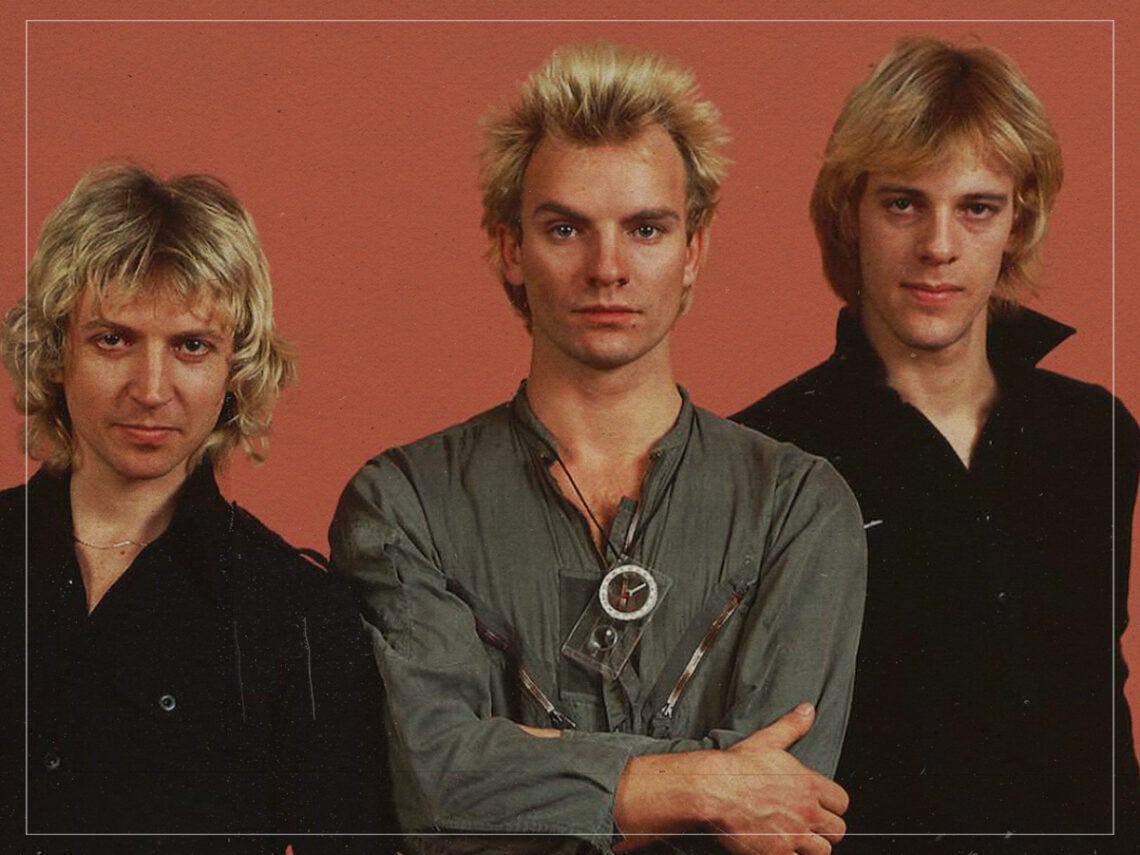
The 1980 song that convinced Sting to give up on The Police: “All hell broke loose”

Any breakup between band members is always going to end in tears for the fans. Even if it’s clear that the musicians are much happier doing their own things, it’s hard to imagine a world where they are never going to make music together again, especially when they are all at the height of their careers.
Surely they have more to give to the world during their time on this Earth, but when Sting decided that enough was enough with The Police, there was no doubt that he meant every word he was saying.
Throughout the 1980s, though, no one could have imagined wanting to be in any other band than the new wave power trio. Sting was the superstar in the group coming up with one classic hit after another, and considering their background in genres like jazz and fusion, they were more than capable of pushing pop music forward if they wanted to.
Just look at what they were doing on Synchronicity. That album might be home to one of the biggest songs of the 1980s in ‘Every Breath You Take’, but there’s also the insane time signature of ‘Synchronicity I’, the strange harmonic detours of its sequel further down the record, and even the B-side ‘Murder By Numbers’, which seems like a challenge in terms of how many wild chords the band could throw into the equation at once.
But the major differences were far from the typical business BS everyone falls for in the music industry. The band simply had their own ways they felt they should be playing, and if every one of their sessions ended with them getting into fights or nearly coming to blows with each other, it made a lot more sense for Sting to work on his own on albums like The Dream of Blue Turtles.
That didn’t mean the door would be closed on The Police forever. Sting’s first record was certainly great for what it was, but it wasn’t the moment his solo career officially took off, so maybe putting one foot back into his old band would have been a good sign, right? Well, if you look at how their remix album shaped up, whatever hope they had at making new music was gone forever.
“We tried to re-record each track, because I figured we were better musicians by that point, and could make the songs better. But we only got as far as one before all hell broke loose.”
Sting
After trying their best to make a decent remix of ‘Don’t Stand So Close To Me’, Sting felt that there was no point in him trying to go back into that musical circus ever again, saying, “We tried to re-record each track, because I figured we were better musicians by that point, and could make the songs better. But we only got as far as one before all hell broke loose. We did ‘Don’t Stand So Close To Me’ and almost came to blows over it. So it wasn’t an option any more after that.”


Part of the frustration came from the fact that The Police had never really operated like a traditional pop band in the first place. Even when they were topping charts around the world, the group functioned more like three musicians constantly trying to pull the songs in different directions.
Copeland approached everything with restless rhythmic energy, Andy Summers layered abstract guitar textures over the top, and Sting tried to keep the material grounded in melody and structure. That tension created brilliance on records, but it also made the band exhausting to exist inside.
In many ways, the failed attempt to revisit their old catalogue proved exactly why The Police worked so well in the first place. Their classic albums captured three strong personalities colliding at exactly the right moment in time, which is not something that can easily be recreated years later with more experience and bigger egos. Sting may have believed they had become better musicians by the late 1980s, but technical skill was never the secret ingredient behind The Police. The magic came from the unpredictability, and by that stage, the unpredictability had become impossible to control.
That didn’t even stop during their eventual reunion decades later. The band could always play to the best of their ability, but during the behind-the-scenes segments of their rehearsals, the tension between Sting and Stewart Copeland didn’t stop, with Copeland adding in extra beats to one of their songs out of spite because the frontman was convinced that it couldn’t be done.
So while it’s a shame that the next generation will never get to see what The Police were like as a live entity, it’s better that their legacy is preserved than having them make tired renditions of their old tunes. Because for as big as the paycheck might be, Sting would much rather push himself forward than keep looking back on that same version of himself in his glory days.
