


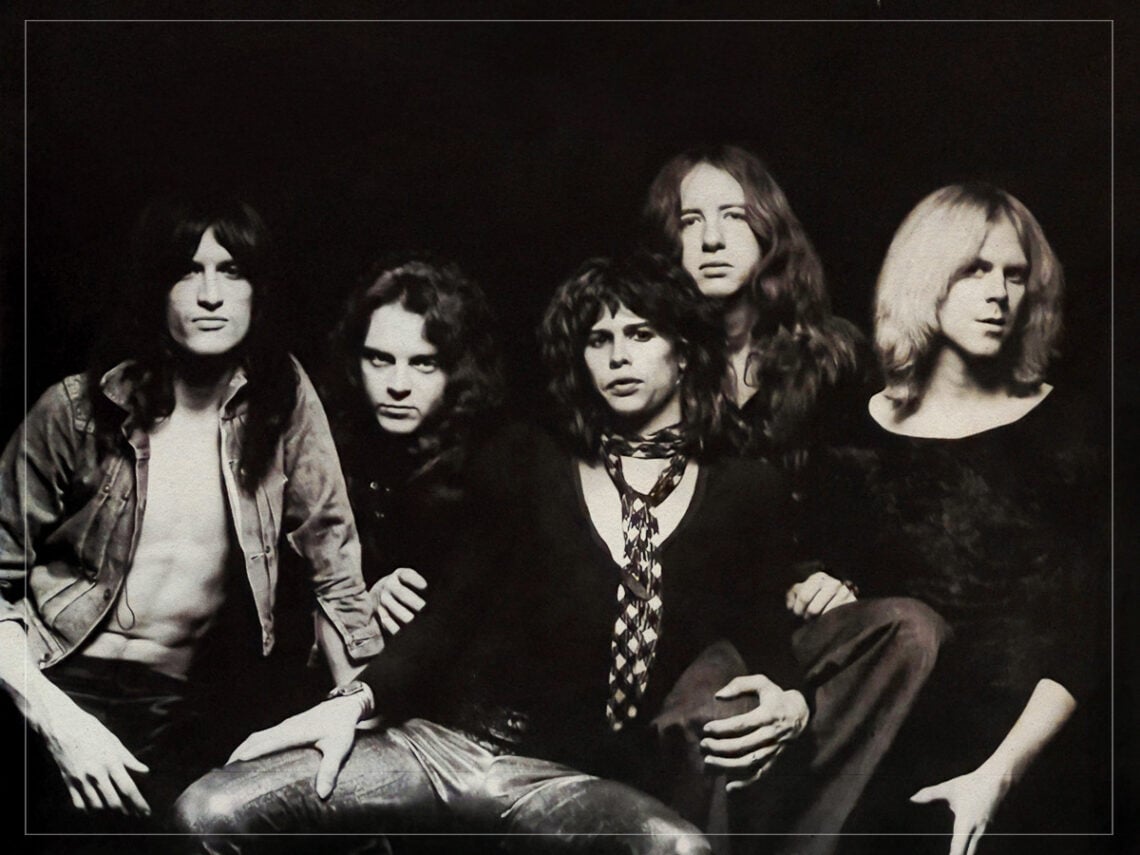
The 1974 record Aerosmith feared would be their last: “The second record, man, it’s a bitch!”

Everything with Aerosmith is about the fanfare: the pomp, regalia, and downright overindulgence. It’s hard to fathom a time when this whole notion was on the rocks.
Yet by the same token, they were also a clear prime example of graft in the music industry taking time, shattering the illusion that the best artists can make success happen at the flick of a switch. Indeed, it took Aerosmith a long time to truly fly off the ground – almost to the point where they thought the mission would have to be aborted.
The band had released their eponymous debut record in 1973, featuring ‘Dream On’, but that wouldn’t chart until much later, and it was a steady, if not exactly overwhelming, start. By all accounts, the second album is an infamously tough nut to crack, but in Aerosmith’s case, despite having a good amount of momentum behind them, it was a challenge they failed to live up to.
It wasn’t for a lack of trying on their part, to be clear. Steven Tyler went to pains to express how the band had fought to secure a record deal in the first place, so when their initial album didn’t budge the dial in any shape or form, the news that the label wanted to drop them as a result was a near-fatal blow. But they refused to give up.
Tyler voiced the thoughts of every artist who has ever gone through this same struggle. “The second record, man, it’s a bitch!”, he exclaimed. “So the label said, ‘We’ll give you another go as long as you bring in Bob Ezrin’.” A major producer might seem like a gift to some, but for Aerosmith, who’s spent so long working things in their own DIY way, there was cause for some trepidation.
To be fair, it wasn’t so much the concept of having the producer onboard in itself, but more the idea of having to succumb to authority that the band, and particularly Tyler, were more than a bit suspicious of. “He was one of the top producers at the time – and I’ve gotten to know him well now – but we were under their thumb,” the frontman explained.
Thankfully, there was someone on their level who could step in in the meantime. “Jack Douglas was brought in to do the day-to-day stuff, and Bob would come in every couple of weeks to listen to what was going on, but he kind of handed it off to Jack.” They wouldn’t know it at the time, but the late, great Douglas would come to be their saving grace, and the reason they kept a music career alive at all.

Of course, the band initially described the trade-off as “a deal with the Devil” and something they “weren’t happy” with, but it was a necessary evil unless they wanted to find themselves back out on the street, barred from the studio. In this sense, they had every reason to believe that the resulting record, Get Your Wings, would be the last they would make.
But Douglas knew how to work his magic, possibly much to Aerosmith’s surprise at the time. No, it still wasn’t an overnight success, but the quality was enough to secure them another shot, and another. Toys in the Attic came next, and suddenly, everything they had worked towards, failed at, and doubted all paid off.
