


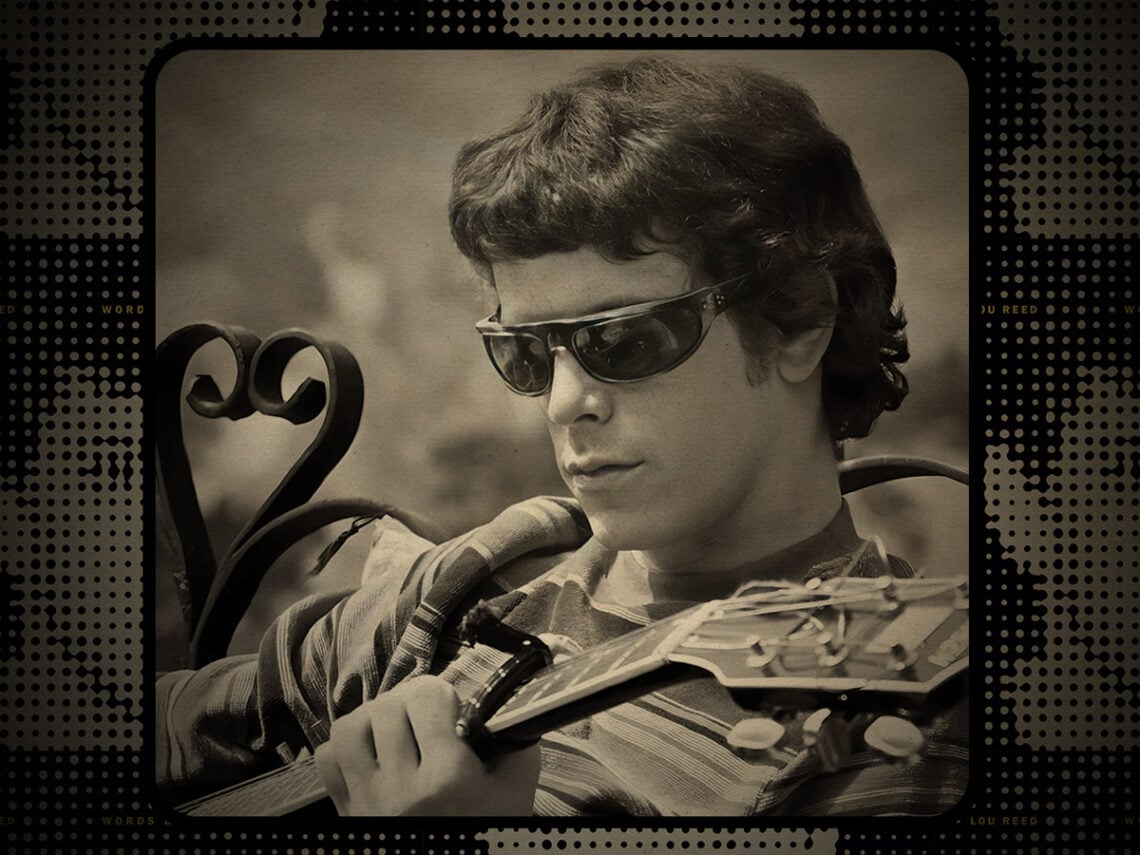
The Pickwick days: Lou Reed’s early career as the poor man’s Carole King

“The Velvet Underground was not just some freakish experimental group,” Lou Reed’s friend and collaborator Robert Quine once said. “It was straight from Little Richard and Elvis, getting as experimental as possible but never losing the basic, hypnotic, funky feel of nice simple rock ‘n’ roll.”
In the timeline of 1960s rock, The Velvets certainly have taken on a reputation as the flag-carriers for anti-pop; tearing away the artifice of Phil Spector’s pervasive radio sound, or the psychedelic optimism of the hippie bands, to reveal something much more raw, dark, real, and vulnerable. These were genuine artists, personally endorsed by a world-famous artist, and their songs came from the streets rather than the offices of hit-making factories.
In reality, though, unbeknownst to most believers in the Exploding Plastic Inevitable, the mastermind of The Velvet Underground was actually a veteran of those factories; the professional songwriting assembly lines of New York City in the early 1960s. Not only had Lou Reed cut his teeth in that world, but in some ways at least, it suited his sensibilities and saved his life.
As a kid of the 1950s, Reed was a first-generation rock ‘n’ appreciator, and much in the way the punks would come to see his own songwriting as a template in the ‘70s, he saw the three-chord simplicity of early rock and doo-wop as the guiding light for his own early forays into music.
Despite showing some talent as a wannabe teen rock ‘n’ roller, though, Reed was still feeling adrift after graduating from Syracuse University, struggling to get published as a writer or find the right venues to get his music heard. More importantly, he was under heavy pressure from his father to get the proverbial “real job” and grow up.

That’s when a friend tipped Lou off to a job opening with a budget New York record label called Pickwick International. Modelled loosely after the famous Brill Building in Manhattan, where half of the hits in America were getting written at the time, Pickwick was based in an ugly warehouse in Queens, and functioned more like the used car dealership version of Tin Pan Alley, as a small army of songwriters, producers, and musicians quickly churned out paint-by-numbers rip-offs of established pop hits. That included impersonations of songs by British Invasion bands, which were then packaged up and sold back across the Atlantic to the Brits at half the price of the original singles.
Not unlike today’s media companies, “content” was the central concern at Pickwick, and one of its executives, Terry Phillips, was on the lookout for anyone capable of meeting the company’s demands. In 1964, on a scouting mission, Phillips saw Lou Reed play with a band in Syracuse, and his assessment was swift. “He can’t play, sings like shit, but his sound… his feeling touched me,” Phillips later remembered, as quoted in Aidan Levy’s 2016 book, Dirty Blvd: The Life and Music of Lou Reed.


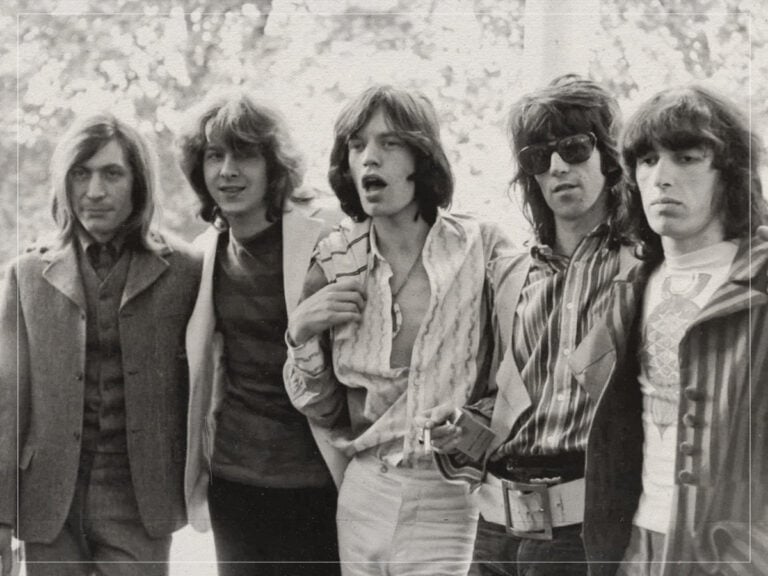
Suddenly, Lou Reed was the new hire at Pickwick International, shifting from coffee shop gigs and busking to writing pop hits like they were advertising copy.
“At Pickwick, I was like an unsuccessful Ellie Greenwich, a poor man’s Carole King,” Reed told Rolling Stone in 1986, referring to two of the legends of the Brill Building. “There were these three other guys. We’d all go into this room and write songs. We’d just be sitting there until someone came up with something.”
“The other guys, I think, wanted to have a future making pop records. Meanwhile, I had my own songs I was writing… But no one wanted to hear my stuff.”
Lou Reed
Lou’s boss, Terry Phillips, remembered things a bit differently. “He would come into work stoned every day, because he was the king, as I found out, of pills,” Philips said. “I could never figure out what he took. Lou was very bright, and he was taking pills that I think doctors didn’t know about.”
Rather than fire the kid or give up on him, though, Phillips appreciated that Reed was likely headed in one of two directions: self-destruction or great success on his own terms. To help him move toward the latter, Phillips gave Reed more chances not just to develop his songcraft but to record in the studio, as well, performing under a litany of made-up band names and pseudonyms.
“I backed off totally and let him do his own stuff,” Phillips said.
One of those one-off Reed-penned studio recordings, an oddball single called ‘The Ostrich’ by a made-up group called The Primitives, was intended as a novelty Pickwick take on all the dance craze records of the era – ‘The Locomotion’, ‘The Twist’, ‘Mashed Potato Time’, etc.
Phillips thought highly enough of Lou’s steady evolution as a writer/performer that he decided to try something new and turn the Primitives into an actual, viable band, hoping ‘The Ostrich’ would be a hit and lead to the group becoming the new, touring house band of the Pickwick label.
That plan didn’t work out; nobody bought ‘The Ostrich’, and The Primitives never released another record. During their brief attempt to exist in reality, though, Phillips had recruited a sophisticated young multi-instrumentalist from Wales to join the group after chatting with him at a party. This was John Cale.
Cale would later join Reed in the Pickwick offices for a while, further encouraging Lou’s wilder creative ideas at the same time that Pickwick’s “content” demands fine-tuned his pop instincts. The roots of The Velvet Underground were established right there and then, at a 99-cent record assembly line in Queens.
