


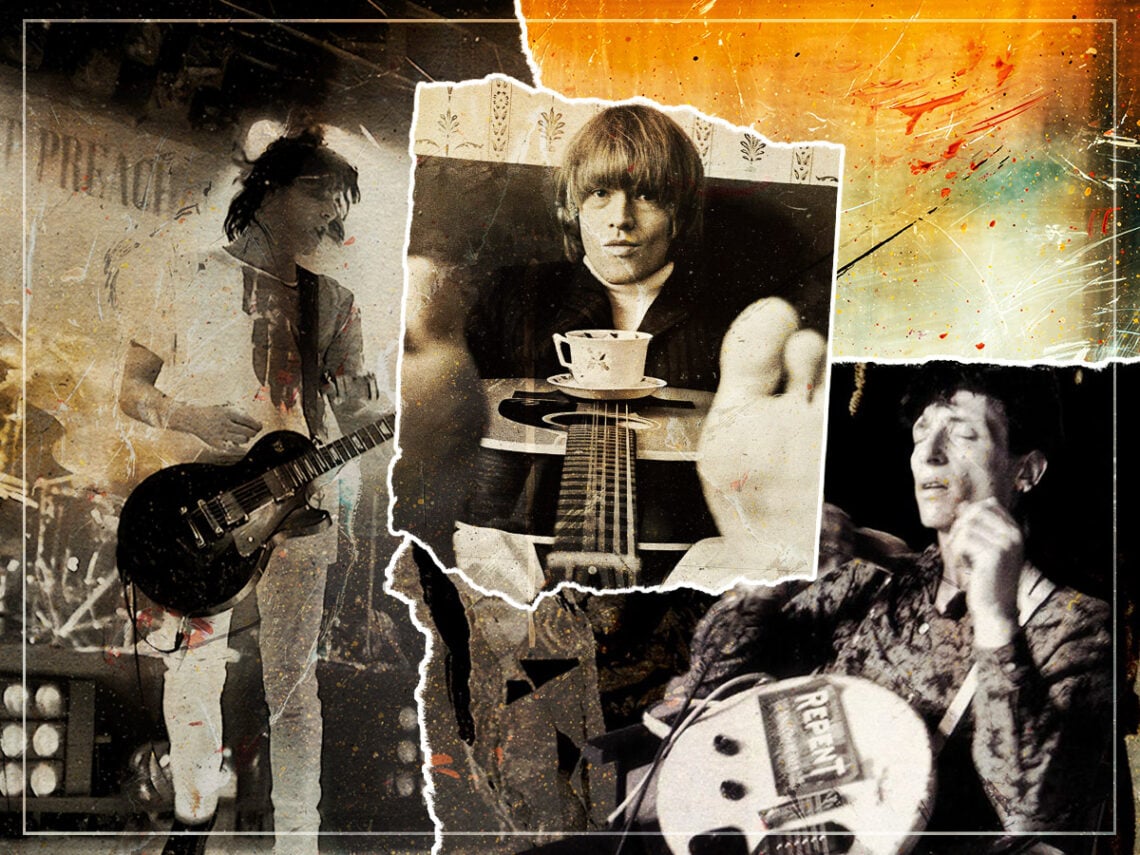
The 10 strangest unsolved mysteries in music history

Human fascination with the morbid has spanned centuries, dating back to the 16th and 17th centuries when murder ballads served as a captivating medium to disseminate society’s darkest tales. Then, with the advent of the internet, a new dimension emerged in the form of creepypastas, offering a repository for eerie superstitions and folklore-based horror narratives. However, it’s the enigma of stories lacking definitive closure that truly ignites our imagination.
Unsolved mysteries, especially when grounded in reality, possess an unmatched spine-tingling allure. Like other domains, the music industry harbours its collection of genuinely unsettling incidents that linger in our thoughts long after encountering them.
Though finding interest in music-related mysteries links back to the same level of dopamine experienced by true crime enthusiasts, our innate evolutionary drive can also account for our fascination with fear in general. Humans are wired to solve problems; anything unknown presents a potential challenge.
Hence, our fascination with mysteries is a fundamental aspect of human nature. Moreover, our innate curiosity about potential dangers may have historically stemmed from survival, but this intrigue extends to various forms of media and entertainment, as evidenced by the popularity of true crime documentaries, horror films, and crime novels.
Musical enigmas, particularly, captivate us due to the meticulous documentation of the music world, making any unexplained element exceptionally rare. Thus, let’s delve into some of the music industry’s most enigmatic and unresolved tales, stories that offer both answers and mysteries, leaving us all pondering for years to come.
10 unsolved music mysteries:
What happened to Richey Edwards?
Mysterious disappearances have always had an eerie quality, but the vanishing act of Manic Street Preachers‘ Richey Edwards is a case that can send shivers down your spine. In the bleak midwinter of 1995, between February 1st and the 14th, Edwards vanished without a trace. His abandoned car was discovered near the notorious Severn Bridge, a haunting location associated with suicide. This bewildering incident left his family in a painful limbo, torn between declaring him dead or holding on to the hope that he might still be alive. In the absence of concrete evidence, Edwards’ status remained uncertain for over a decade until, in 2008, he was officially presumed deceased.
However, the enigma surrounding Edwards didn’t end with his disappearance. In the years following his disappearance in the ’90s, there were sporadic reports and alleged sightings of Edwards in various corners of Asia. These tantalising glimpses of a man who was thought to be gone from the world raised intriguing questions about his fate: could he possibly still be among the living, hidden away in a shadowy existence far from the spotlight?
The curious case of ‘The Dark Side of the Rainbow’
Rock and roll has a rich tapestry of legends, some of which are whispered even before they’ve had a chance to flourish. Pink Floyd, standing tall as prog-rock pioneers, often find themselves at the epicentre of such legends. One of the most intriguing and obscure of these stories is The Dark Side of the Rainbow, a baffling fusion of rock and classic cinema that brings together Pink Floyd and Judy Garland in a way you probably never imagined.
The theory goes that a seamless synchronisation between the two unfolds if you commence playing the album The Dark Side of the Moon precisely as the MGM lion roars at the start of the 1939 film. This occurrence has held the fascination of both music and cinema aficionados for a long time, igniting lively conversations, debates, and late-night endeavours aimed at unravelling the enigmatic correlation that binds the album and the film.
What really happened to Sonny Boy Williamson I?
This is a story that only gets stranger as it unfolds. At the age of 34, blues star Sonny Boy Williamson‘s life was tragically cut short. In 1948, after a performance at Chicago’s Plantation Club, he met a mysterious death just a block and a half from his home. Despite having a national hit song, ‘Shake that Boogie’, on the Rhythm and Blues Chart at the time, his murder remained enigmatic.
The official police report indicated robbery and assault, but fellow musician William ‘Billy Boy’ Arnold claimed to know the true story. According to Arnold, Williamson had won a significant sum of money from dangerous gamblers at an after-hours gathering, leading to an altercation that resulted in his death. The details surrounding his murder remained concealed or vague, prompting questions about its authenticity. Even when his death notice appeared the next day in The Jackson Sun, there existed no mention of his impact or musical career. All of this begs the question: was his real cause of death deliberately concealed by the establishment?
The missing, murdered, and unidentified Grateful Dead fans
When you think of Grateful Dead, the last thing on your mind is probably murder. However, several eerie incidents and disappearances have been associated with Grateful Dead-related events over the years. Bridget Lee Pendell-Williamson, for instance, vanished in 1996 at the age of 23 while following the Grateful Dead, and Douglas Simmons was last seen at a Grateful Dead concert in 1990. Then, in 1993, Mitchel Fred Weiser and his girlfriend, Bonita Bickwit, went missing while hitchhiking to one of the band’s concerts.
An unidentified man’s body was then discovered near one of their concerts in Atlanta in 1995, and in 2008, an unidentified woman’s body wearing a Grateful Dead jacket was found under a boxspring in Sacramento. In 1991, a murdered woman with a tiger tattoo on her left leg, resembling Jerry Garcia’s guitar design, was found in the woods of Warren County, New Jersey. Additionally, in 1995, two men were found dead in a Volkswagen van crash; while one was identified, the second had two Grateful Dead tickets in his pocket.
Who is Randy Fitzsimmons?
This energetic group has solidified their position as one of the most captivating acts in music. Yet, amid The Hives‘ rock ‘n’ roll bravado and sharp humour, the enigma of Randy Fitzsimmons persists. The tale begins with each band member receiving an intriguing letter in the mail. This missive came from Fitzsimmons, a mysterious figure deeply entwined with Swedish rock and roll. In this letter, he directed these musicians to unite and form a garage band, promising to guide them to unprecedented heights in the realm of rock, surpassing even the legendary ABBA and venturing into uncharted territories of musical frenzy.
Whether man or legend, he undeniably stood as one of the era’s foremost providers of excitement within the realm of rock. As subsequent hits emerged, curiosity led people deeper into the enigma, revealing that the songwriting pseudonym was officially registered to the band’s guitarist Niklas Almqvist, AKA Arson, the unassuming band member.
The mysterious origins of ‘Peanut Duck’
During the peak of northern soul, it was a common practice to groove to a tune shrouded in mystery, intentionally mislabeled by DJs who sought to keep these musical gems to themselves. Then, in the 1980s, one such enigmatic track captured the attention of many: ‘Peanut Duck’. Allegedly attributed to a woman named Marsha Gee, the identity of Gee herself remains an elusive and uncertain figure, with no verifiable records of her recording this or any other song. As a result, the origins of ‘Peanut Duck’ have remained a compelling enigma for years.
The song opens with It opens with Gee claiming, “There is a brand new dance that’s sweeping the nation: the Peanut Duck is the new sensation”. From there, the lyrics go a bit misconstrued, but an intriguing level of passion keeps inviting you in. However, despite many attempts to unveil its true origin, the mystery remains unsolved.
The disappearance of Jim Sullivan
The disappearance of Jim Sullivan stands as an enduring enigma in all of music history. In 1975, while en route to Nashville, the singer-songwriter checked into a Santa Rosa motel, purchased a bottle of vodka, and subsequently vanished without a trace. The intrigue surrounding his disappearance is further fuelled by the mysterious nature of Sullivan himself. His debut album, U.F.O., released in 1969, endured its own vanishing act from history. Initially issued on a private label and met with modest success, it soon went out of print.
Nonetheless, Sullivan himself never resurfaced, and reports have offered differing explanations for this enigmatic event. Some have speculated foul play and murder, while others suggest he may have intentionally become disoriented to vanish from life. Given the title of his debut album, conspiracy theorists have even posited the notion of alien abduction. Despite extensive search efforts, nothing was ever discovered.
The death of Brian Jones
The tragic discovery of Brian Jones lifeless in his swimming pool in 1969 occurred shortly after the public announcement of his departure from The Rolling Stones. The initial official determination pointed to accidental drowning as the cause of death. However, persistent questions have shrouded this case over the decades, and recent revelations stemming from an undisclosed witness statement have reignited scepticism about the thoroughness of the initial investigation.
Additionally, disparities between the coroner’s report and the information disseminated by the police to the media have raised suspicions. Intriguingly, alongside accounts of Jones’ stark disinterest in the band, a series of peculiar incidences have emerged, accompanied by fresh perspectives from experts who have scrutinised the death report. A deathbed confession from a longstanding suspect in Jones’s death also allegedly exists. Given this influx of information, many questions arise regarding the circumstances of his death.
What happened to Glenn Miller?
Amid the zenith of Glenn Miller‘s illustrious musical journey, he made a remarkable sacrifice, exchanging the allure of commercial success for the solemnity of a military uniform. His noble mission was to uplift the spirits of US troops deployed during the tumultuous era of World War II. Yet, on a fog-laden afternoon, precisely on December 15th, 1944, Miller embarked on a fateful journey, departing from England en route to France. Tragically, his aircraft vanished into the obscurity of the English Channel, forever shrouding Miller in an enigmatic veil of uncertainty.
Along with his enduring influence on various music luminaries, Miller’s disappearance has become one of history’s enduring enigmas. The passage of time has only deepened the mysteries surrounding this iconic figure’s fate, leaving us to ponder the multifaceted questions that continue to linger.
The mystery of Johnny Thunders’ death
Johnny Thunders was destined to become legendary, much like his idol Keith Richards. Displaying a remarkable musical aptitude from an early age, he wielded the guitar with a talent that left his future New York Dolls bandmate, Arthur Kane, in awe, describing it as “truly inspired”. Johnny Thunders’ exceptional contributions to bands like The Dolls and The Heartbreakers earned him a devoted following, including punk trailblazers like the Sex Pistols and indie luminaries such as Johnny Marr.
Tragically, however, Thunders passed away in New Orleans at the tender age of 38. The circumstances surrounding his untimely demise remain cloaked in ambiguity, perpetuated by a web of contradictory accounts that have been disseminated through word of mouth. From speculations of cancer to murmurings of foul play, it is fitting that the life of a profoundly mythologised man should culminate in a death shrouded in mystery.
