


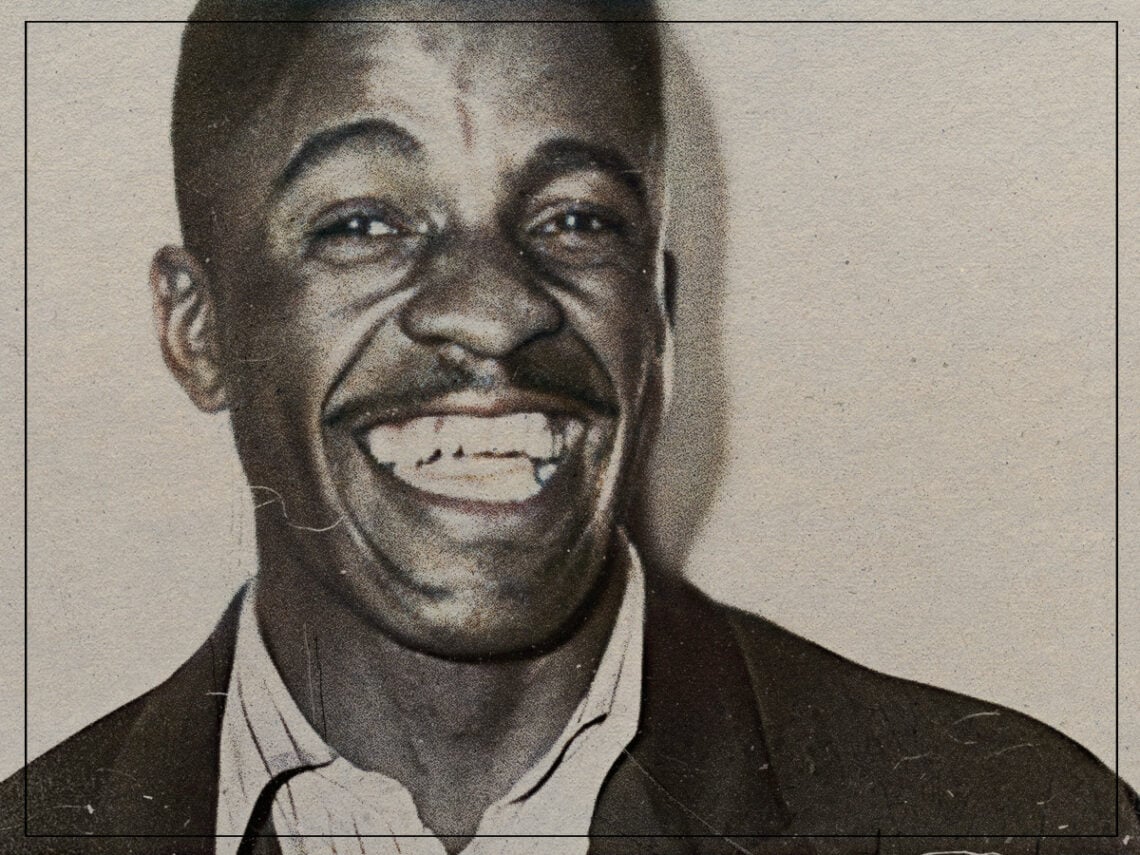
The curious tragedy of blues star Sonny Boy Williamson I

“I want my body buried way down in Jackson, Tennessee,” John Lee Curtis, who performed under the blues alias Sonny Boy Williamson I sings, paying a tribute to both his hometown while providing a haunting reflection on his battle with tuberculosis. Reflecting his wish, Williamson’s tombstone resides in southwest Madison County, where the only sounds are those of songbirds and the gentle rustling of leaves in the wind.
Unlike the bustling scenes of 1940s south Chicago, Williamson’s resting place remains still: existing separately to his legacy that transcends the confines of this quiet scene and resonates throughout the world of blues music. In Chicago, Williamson forged his reputation as a gifted musician, singer, and songwriter, earning distinction as the foremost blues harmonica player of his era.
At the young age of 11, Williamson’s mother gave him his first harmonica as a Christmas gift. Self-taught, he mastered the art of playing the instrument by mimicking the sounds that enveloped his rural home and by immersing himself in recorded music. A close friend attested to his skill, noting that he could make the harmonica replicate the chorus of a pack of hounds.
Commencing his musical journey, he lent his voice to a gospel quartet named The Four Lamb Jubilee. Alongside this, he gained local acclaim as a burgeoning musician, and during his teenage years, he joined forces with established bluesmen Sleepy John Estes and Yank Rachell, to stage performances throughout West Tennessee.
On November 13th, 1937, Williamson married Lacey Belle Davidson in his hometown, and together they embarked on a journey that led them to Chicago. During that same year, Williamson’s musical talents caught the attention of the RCA Record Company’s Bluebird label, resulting in a contract and inaugural recording sessions that yielded several hits and enduring blues classics, including ‘Good Morning Little School Girl’, ‘Sugar Mama’s Blues’, and ‘Bluebird Blues’.
His songs and distinctive harmonica style resonated deeply with audiences, particularly those who had migrated north in pursuit of better opportunities but still yearned for a connection to their Southern roots. Over the ensuing decade, he engaged in numerous recording sessions, assuming roles as both bandleader and a supporting musician for fellow Bluebird artists such as Tampa Red, Robert Nighthawk, and Big Joe Williams.
However, at 34 years old, Williamson’s life was tragically cut short. On one fateful night, in the early hours of June 1st, 1948, on his way home from a performance at the Plantation Club in Chicago, Williamson was mysteriously killed just a block and a half away from his home. At the time, he had one national hit song, ‘Shake that Boogie’, on the ‘Rhythm and Blues Chart’.
After his death, the official police report said that he was robbed and beaten as he walked home. Although it may not have been public discourse at the time, it’s likely that the murder was a racially motivated assault, especially given Williamson’s sharp rise to prominence. What’s more, the aloof way his death was reported, devoid of any solid evidence, was enough to raise questioning eyebrows around its authenticity. While any brutal details remained glossed over or absent from the newspaper obituary, fellow musician William ‘Billy Boy’ Arnold claimed to know the real story.
In fact, Arnold contested that he “saw what happened”, and that the random assault angle “got started to cover up what really happened.” After leaving the Plantation Club, Williamson apparently went over to a private residence for its after-hours games and whiskey. There, he allegedly won a great deal of money from several dangerous gamblers. “The musician said that the guy running the joint went and got three or four guys and jumped on Sonny Boy to get the money back,” Arnold said. Adding, “I guess nobody wanted to get involved. They took him to his house and left him at the door.”
He continued: “Sonny Boy’s wife told me that when she found him leaning against the door, he told her he had won more money that night than he ever had in his life. But there was no money on him. She helped him up the stairs to their apartment, but he passed out.” Afterwards, he was taken to a hospital, where he died at that morning.
His death notice appeared the next day in The Jackson Sun, but aside from a bleak, outdated term in its heading along with three brief paragraphs, there existed no mention of his impact or musical career. For over four decades, Williamson’s body remained all but unnoticed at Blairs Chapel Cemetery, Madison Country. However, in 1990, Michael Baker, Judy Pennel and Jack Wood of the Jackson-Madison County Library gained national support and released a series of articles on his life and career. Then, on June 1st that year, on the 42nd anniversary of his death, the city held a celebratory day to commemorate his achievements.
Today, Williamson is known as an innovator, serving as a vital musical bridge connecting the post-World War II expressions of country blues with the urban blues landscape. Widely acclaimed as the inaugural maestro of blues harmonica, his compositions have earned the status of enduring blues standards. Even though his life came to a harrowing end, and the years that followed shadowed his influence, his legacy lives on, with many of his timeless tunes having been embraced and reinterpreted by a multitude of musicians, including Muddy Waters, Howlin’ Wolf, Rod Stewart, Van Morrison, John Lee Hooker, The Yardbirds, and The Grateful Dead.
