


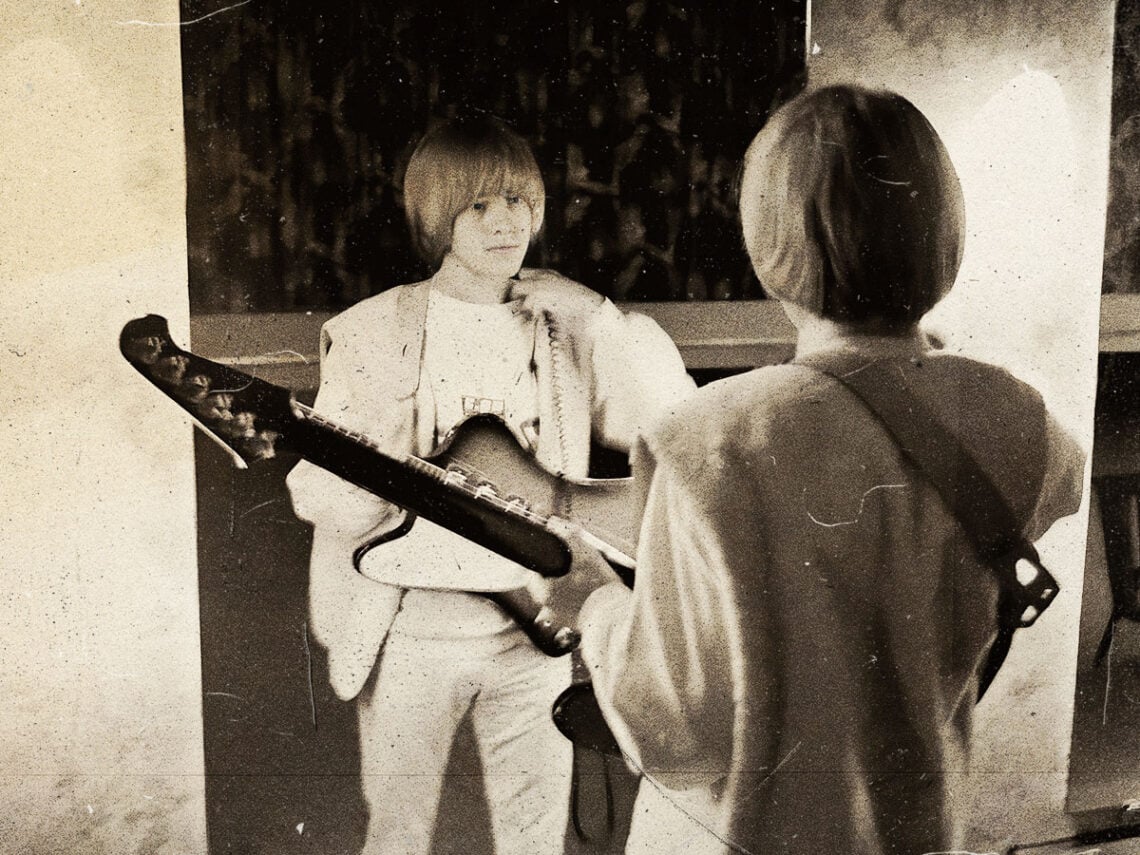
The final contributions Brian Jones made to The Rolling Stones

It was no secret that Brian Jones was fading by the end of the 1960s. After helping establish one of the most popular bands in the world, Jones began to lose interest in The Rolling Stones. Differences in musical taste, erratic behaviour, drug abuse, and stealing girlfriends all factored into what eventually became Jones’ departure (or firing) from the band. But as early as 1967, Jones would often appear disinterested in whatever the band were working on in the studio.
“The only time I ever saw Brian Jones in a studio, he resembled a catatonic patient in a psychiatric ward and was studiously ignored by everyone,” former road manager Sam Cutler explained in his memoir You Can’t Always Get What You Want. “The police were constantly harassing and busting him at every opportunity. It was certainly no fun being Brian Jones.”
“When he would show up at a session—let’s say he had just bought a sitar that day, he’d feel like playing it, so he’d look in his calendar to see if the Stones were in,” producer Jimmy Miller told Rolling Stone in 1997. “Now he may have missed the previous four sessions. We’d be doing let’s say, a blues thing. He’d walk in with a sitar, which was totally irrelevant to what we were doing, and want to play it.”
“I used to try to accommodate him. I would isolate him, put him in a booth and not record him onto any track that we really needed,” Miller added. “And the others, particularly Mick and Keith, would often say to me, ‘Just tell him to piss off and get the hell out of here’.”
By the time work had commenced on 1968’s Beggars Banquet, Jones was already faded into the background. Keith Richards played almost all of the guitar parts on the album, with Jones covering occasional Mellotron, sitar, and harmonica. One of the only exceptions was his slide guitar line for ‘No Expectations’, which Jagger later recalled fondly.
“That’s Brian playing [the slide guitar]. We were sitting around in a circle on the floor, singing and playing, recording with open mikes,” Jagger told Rolling Stone in 1995. “That was the last time I remember Brian really being totally involved in something that was really worth doing.”
But it wasn’t the final time that Jones appeared on a Rolling Stones album. By 1969, Mick Taylor was beginning to gradually take over Jones’ spot in the band, contributing lead guitar to the ‘honky Tonk Women’ single. Taylor was invited to the sessions for Let It Bleed, where he would add guitar to the acoustic version of ‘Honky Tonk Women’, ‘Country Honk’, and ‘Live With Me’. When Let It Bleed was released in November of 1969, Jones had already been dead for four months.
Jones’ occasional presence in the studio gave him grand total of two contributions to Let It Bleed: the congas on ‘Midnight Rambler’ and a faint, nearly inaudible autoharp line in ‘You Got The Silver’. The latter would be his final credit on a Rolling Stones album and fit his status in the band at the time: practically nonexistent.
