


All publicity is good publicity: The 10 biggest PR stunts in music history

All publicity is good publicity, so they say. For a long time, that point seemed relatively difficult to argue with when it came to the industry’s bizarrest ways to promote a record.
Musicians in the opulent heyday of fame could get away with pretty much anything: throwing televisions out of windows, crashing cars and essentially bailing on gigs. They did it with the safe knowledge that regardless of their behaviour, their fans will love them anyway. And so publicity campaigns were built around this recklessness, affording artists privileges the modern musician simply couldn’t comprehend.
So the phrase was born, and reckless publicity became the order of the day. Rock and roll was practically made for this sort of behaviour as well, for hundreds of performers lived their daily lives like coiled springs, just waiting to bounce into chaos at any given moment. Biting heads off of bats, stripping off naked and burning piles of cash were not only ignored but actively encouraged in the name of promotion.
But not all irreverence came in the form of career suicide. It wasn’t just about proving how much cash and resources you could burn through, but rather how much a conservative society could take. With the internet and the modern age, it’s easy to become anaesthetised to outrage culture, but icons of counterculture were doing it long before TikTok. Art became a multi-platform concept with album artworks, videos and gigs all being an extension of whatever song someone had written, and so began the era of wild publicity.
The good, the bad and the outright ugly (you can decide which falls into that category) are included in this list, which serves as some of the wildest publicity stunts music has ever seen. From harnessing the reckless anger of rock and roll to tapping into the cultural zeitgeist with artistic nous, there’s seemingly nothing untried in the ambitious worlds of music publicity.
The 10 biggest PR stunts in music history:
U2’s iTunes forced download, 2014

While I offered you, the reader, the opportunity to decide exactly which stunt falls into the good, bad and the ugly, we can all firmly agree this falls into the bad, tending towards ugly. Years after their rock and roll pomp, U2 still believed in their cultural immortality so much that they thought they could dump an entire album onto the public without permission.
What made it worse was that the album, Songs of Innocence, was complete rubbish, and so the whole thing felt like hand-me-downs as opposed to gifts. It was a pure example of how musicians of a certain level of fame can get completely high on their own supply and lose touch with the mood on the ground, which really is the essence of good PR.
Kiss offering blood to their fans, 1977

When you’re a band that exists in make-up 24/7, you set a relatively high bar for entry. Kiss were clearly victims of their own imposed standards in ‘77 when the band promoted their Marvel collaborated comic with samples of their own blood, taken backstage from their show at the Nassau Coliseum, by a registered nurse, I might add.
So rather than performing some sort of cutting ceremony, making them rock blood brothers, they actually permanently gifted fans with lasting products of their own blood. The band actually flew to a New York printing plant and, rather disgustingly, poured vats of their own donated blood into the red ink used to print the comic book.
Alice Cooper’s ‘chicken incident’, 1969

This really is one of the darker rock and roll stories and goes to show that the more considered culture music finds itself in today is for the better. Back in the late ‘60s, Cooper was known for his live performances ending with the shredding of a feather pillow to create a blizzard effect, but one night, while performing at the Toronto Rock and Roll Revival festival, he took it one step further.
When a live chicken made it to the stage, whether as an accident or part of the plan, nobody truly knows. Cooper decided to fling it into the air, hoping it would fly above the crowd and seemingly to safety. When an animal ignorant Cooper soon realised that chickens don’t quite possess the ability to fly, it was too late for him to save it from a raucous rock and roll crowd who then tore the animal to pieces and killed it in plain sight, before throwing the remains on stage.
John and Yoko’s bed-in, 1969
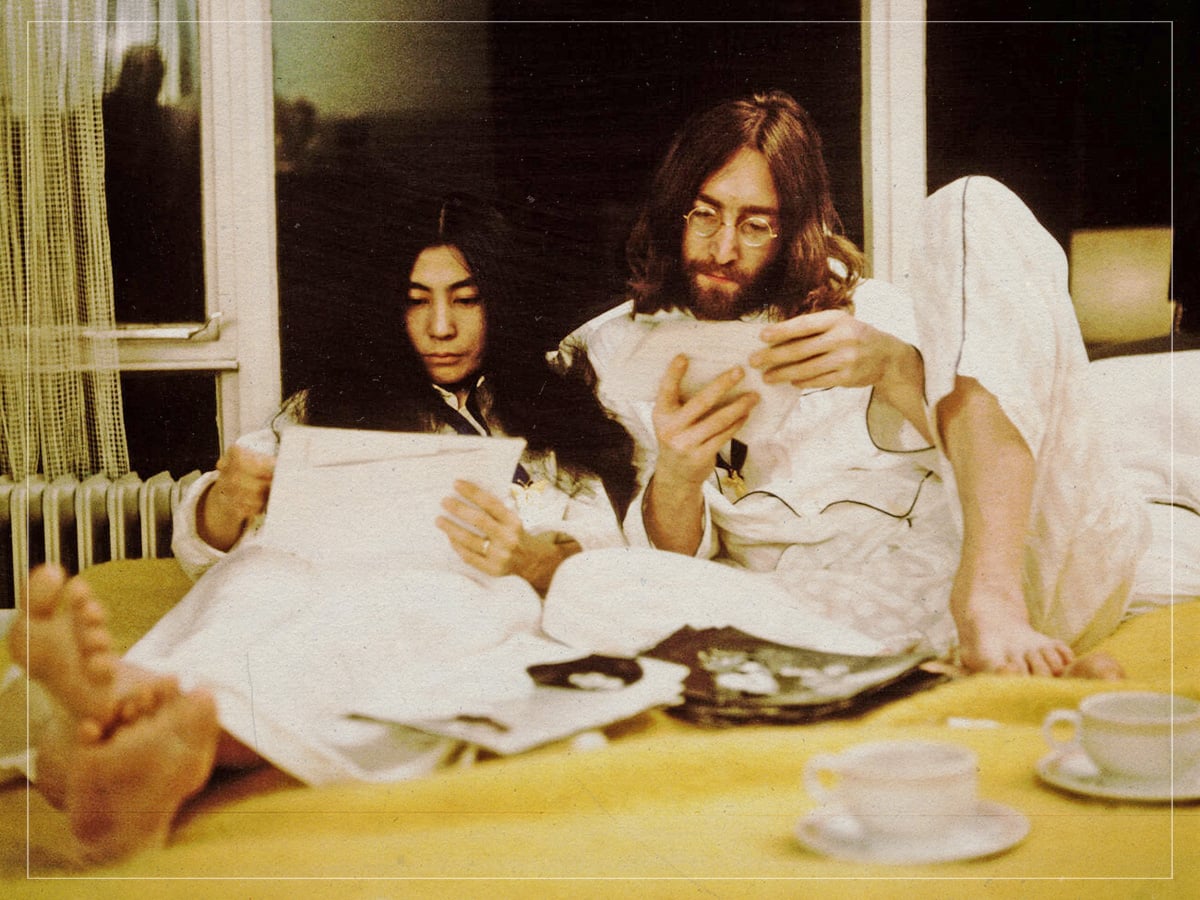
By ‘69, Lennon wasn’t bothered about promoting The Beatles because he knew what the world yet didn’t: they were breaking up. So now it was about his next career chapter, one of staunch political activism by the side of his new wife, Yoko Ono. And so, what better way to spend your honeymoon than enacting that philanthropy by staging a bed-in together?
The couple spent weeks in bed at the Hilton Hotel in Amsterdam and the Queen Elizabeth Hotel in Montreal, dressed in pyjamas with the world’s press at the foot of their bed. It was their quiet yet loud way of saying that they are committing themselves to protesting for non-violence in a world hurtling towards violence and corruption.
The Beatles butcher their cover art, 1966
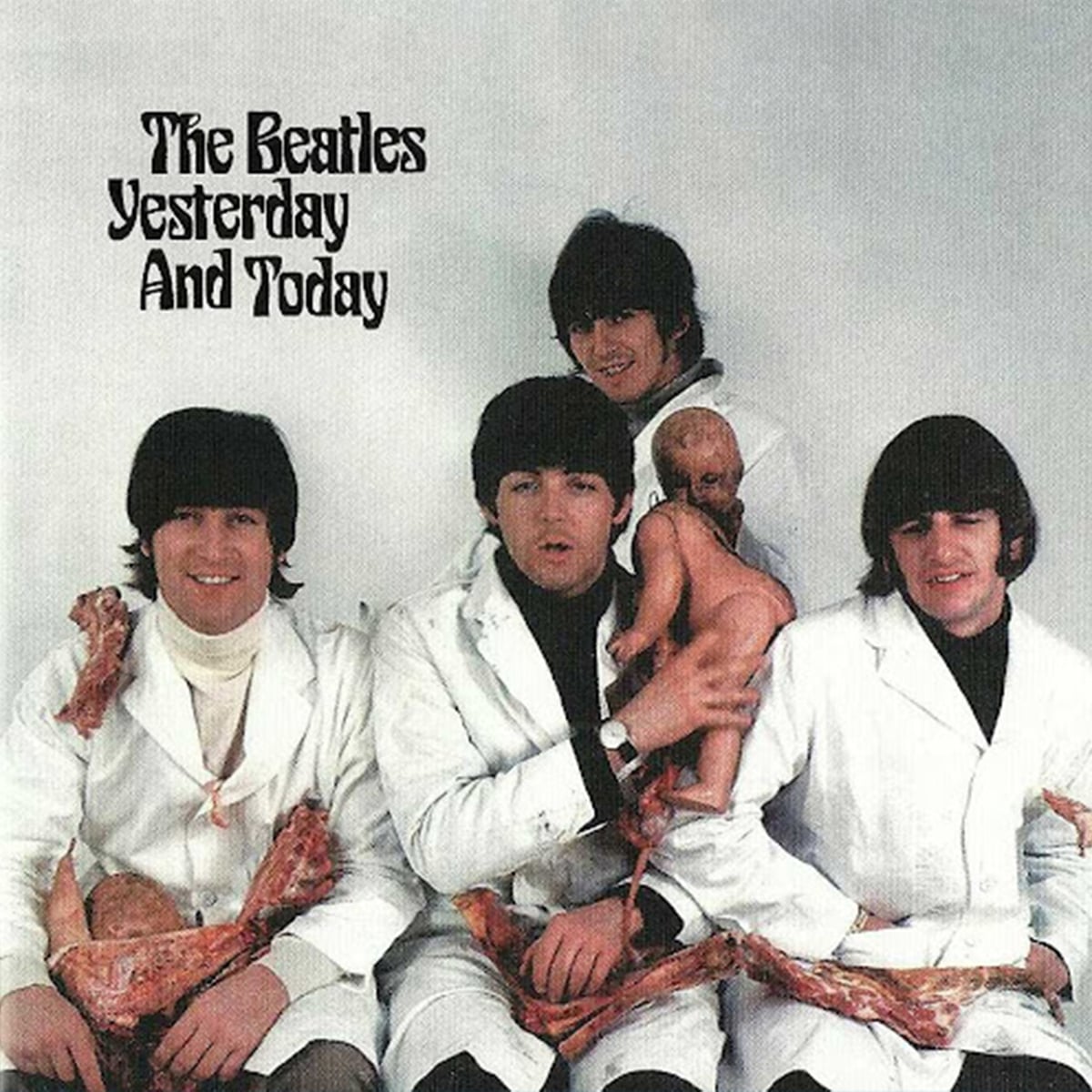
By this point in their careers, the Fab Four had decided they had grown up. The world hadn’t yet cottoned on to it and were desperate to keep them tucked in the safety of their childhood states, but they were ready to break out of that expectation and become artistic adults. Charm would be swapped for psychedelia, and so they had to shock the world before introducing awe.
What better way to do that than to introduce their upcoming album Yesterday and Today, dressed in all white butcher overalls, decorated in raw meat and holding dismembered doll parts. What’s worse is that the otherwise innocent Beatles all had a grin on their faces. Who on earth were these lot and what had they done with the world’s favourite band? Well, with one big push, they moved forward into a more daring artistic environment that would ultimately make them the band they became.
Sex Pistols’ River Thames gig, 1977

Sex Pistols needed little in the way of promotion for their music. Their full-blooded approach to political punk was as honest and daring as it sounded, and fans knew exactly what they were in for from the very beginning. So the publicity had to follow suit and avoid an underhanded approach to sharing information and instead embrace the vitally courageous nature of their own activism.
‘God Save The Queen’ didn’t flinch in its assault on the state, and neither did the band, when they staged a gig on the River Thames, during Queen Elizabeth II’s Silver Jubilee. It was a time when London was at a standstill with monarchy adoration, and the Pistols barged their way through to make a bold statement in front of the Houses of Parliament, no less.
Pink Floyd’s inflatable pig, 1977
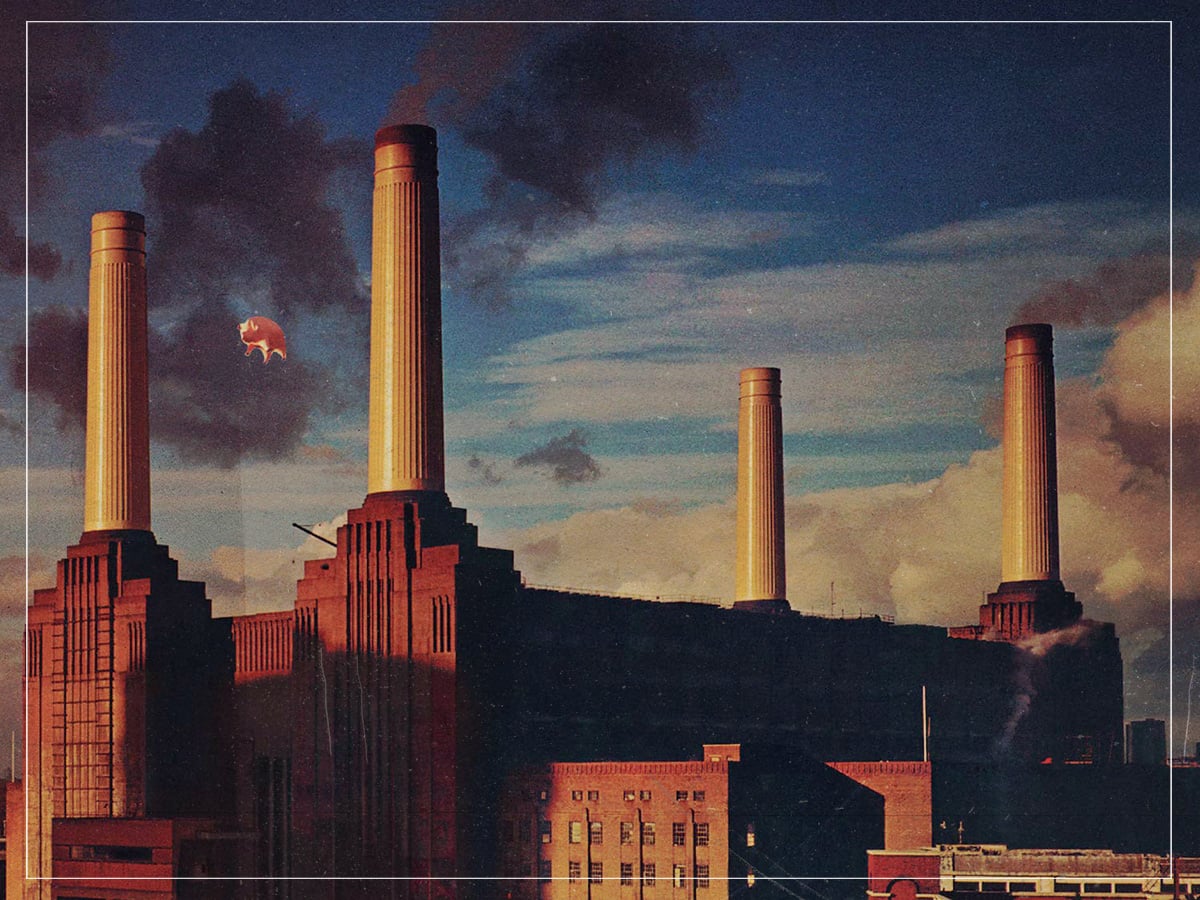
There might not have been a more ambitious band than Pink Floyd in the ‘70s. After The Dark Side of the Moon, fans wondered if they had any room for invention left, and while the ‘77 album Animals might have argued otherwise, at least the visual push for it compensated. The band set about creating one of the most daring album covers without the help of any special effects, and caused chaos in the process.
The rather dystopic image used on the album cover wasn’t artificially generated; it was actually a very real 40-foot inflatable pig, nicknamed Algie, that they elevated above the Battersea Power Station in London. Soaring high above the city sky, Algie flew freely until it interfered with the Heathrow Airport flight path and then finally, crash landed on a farm in Kent, a little like the band themselves.
Disco Demolition Night, 1979
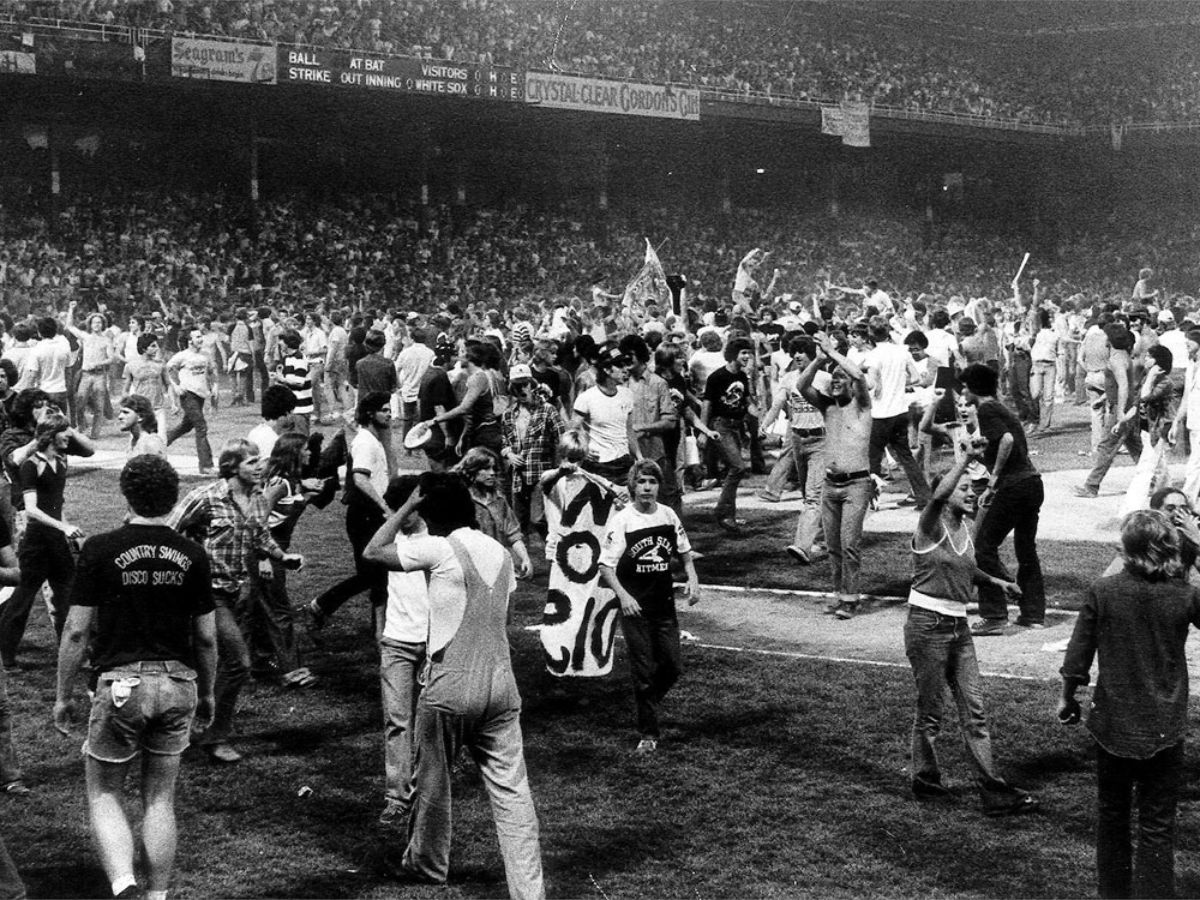
Organised by popular Chicago radio DJ Steve Dahl, 50,000 people were invited to Comiskey Park baseball field to pile their disco records high into a manmade blazing fire, which then descended into a violent riot. It was meant to platform the bulletproof power of rock in the face of disco, but did little in the way of anything good.
In fact, the world of disco quietly reaped all of the benefits. They simply had to thank the insecurities of their rock rivals, who were threatened by the burgeoning popularity of this new genre, set about burning every disco record they could find in a truly dark hour in Chicago. Laced with misogyny and homophobia, these rock fans thought they were stamping out this innocent genre but, in fact, highlighted its key role in cultural resistance.
Rage Against the Machine naked protest, 1993

In a time of rapidly changing culture, Rage Against the Machine were the anti-establishment band the world needed. They couldn’t be promoted via the glossy marketing campaigns that seemed to litter the ‘90s commercial space, but through defiantly standing against oppressive powers and paying homage to the lyrics in their music.
It was displayed no better than in ‘93, when the band staged a silent protest against music censorship at the Lollapalooza festival in Philadelphia. When Zack de la Rocha lost his voice the night before, the band still used their set to make an artistic statement and walked onto the stage completely naked, with duct tape over their mouths and the letters ‘PMRC’ painted across their chests.
The KLF burning £1million 1994
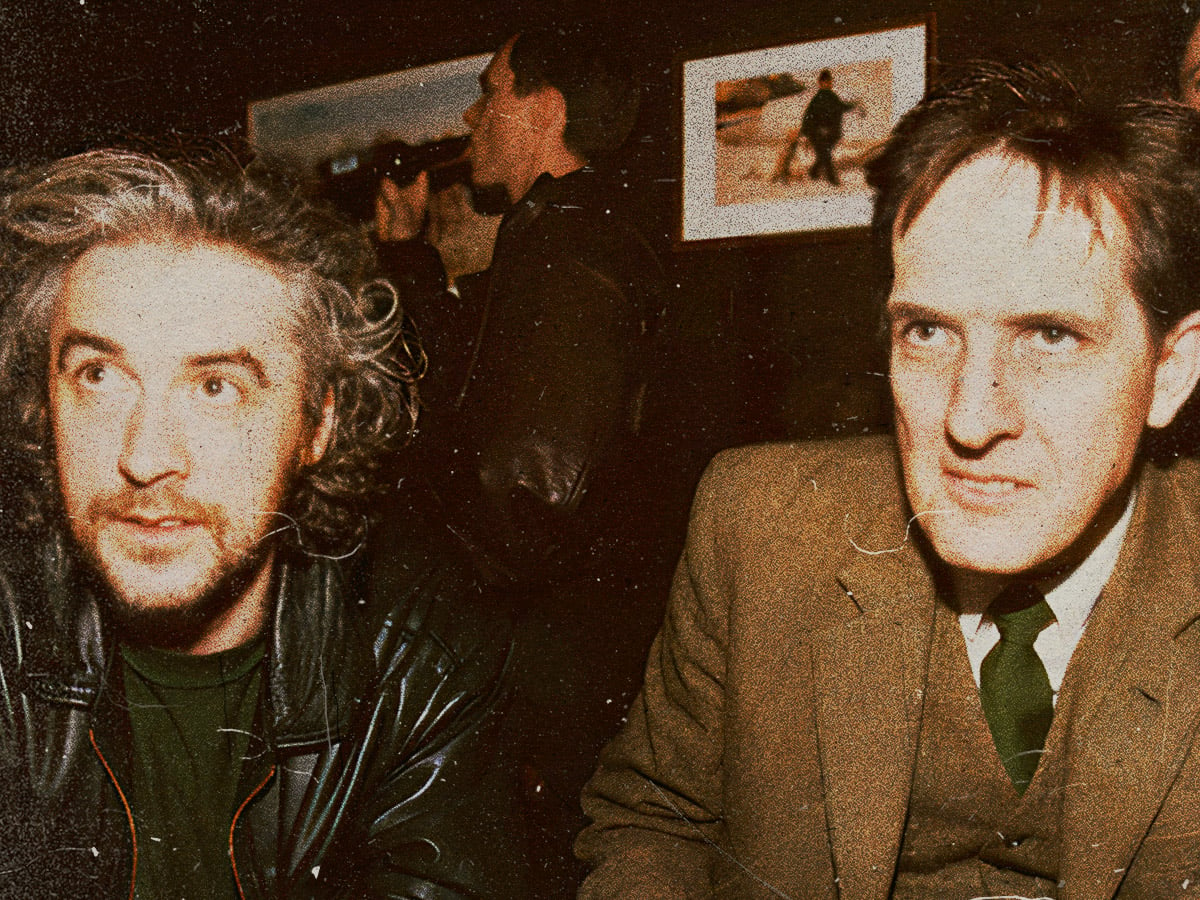
Most publicity plans are devised with the wider aim of platforming the band to a wider audience, to then make them more successful and thus, more lucrative. But the motive of The KLF ‘94 publicity stunt was clearly political, and thus made them one of the most questioned yet respected outfits in music.
The electronic duo, composed of Bill Drummond and Jimmy Cauty, had set up The K Foundation under their band name in order to help support artists who were struggling financially. Clearly deciding that the system was rigged against artists, the pair descended on an abandoned boathouse on the remote Scottish island of Jura to burn £1million in cash. The money burned for over an hour as part of a wider piece of performance art that was filmed entirely, with the duo aiming to make a sort of philanthropic statement about the absurd glorification of money and its threat to genuine artistry.
It promoted the political message, as well as a tour of the movie that showcased the burning, where they then performed Q&A’s with the crowd, revealing the various reasons they burned the cash. Ultimately, the film was a cultural success, with it still being spoken about today, but at the cost of £1m, which maybe could have been put towards the artists in question?

Never Miss A Beat
The Far Out Beatles Newsletter
All the latest stories about The Beatles from the independent voice of culture.
Straight to your inbox.