


The 10 best classic rock documentaries

It’s no surprise that most of the greatest musicians in the world treat the album as their medium of choice. Throughout rock history, it’s easier to say what you feel in your heart across two slabs of vinyl, on CD or streaming, rather than just telling your audience the deepest depths of your mind. While many artists may like the idea of keeping the album as their primary genre of expression, artists like Metallica and The Beatles have also found a way to add their distinct charm to the big screen.
Instead of the usual music videos, the biggest names in music have taken time to explain how their career has expanded with the world. Releasing various documentaries chronicling their time in the spotlight and beyond, many musicians have allowed themselves to be vulnerable in front of the camera, either talking about the various detours that their music takes or the strain that comes with living the life of a travelling musician.
Then again, not every documentary is meant to be shot the same way. As much as audiences want to see a good story being told from front to end, the greatest documentaries tend to show the band’s story still in progress, capturing a moment in time when they’ve hit their peak or showing the darkest moments of their career where they might be floundering.
Although they may not have been cut out to be musicians, it doesn’t matter. Across every one of these documentaries, the artists open themselves up to being human, showing their true colours and letting the audience decide what they think of them. It might not have been the most efficient way to hide that musical mystique, but no one could touch them when they set themselves free like this.
10 best classic rock documentaries:
10. Tina (2021)
During her time in the spotlight, Tina Turner was known as one of the ultimate rock and roll survivors. From her time working with her husband and known abuser, Ike, to rising like a phoenix from the ashes in the 1980s, Turner is practically regarded as royalty in the music industry at this point. Even though Tina may not have time to cover most of her back pages, what we’re left with is one of the most harrowing accounts of her history.
While there are a lot of gory details behind Turner meeting Ike and the abuse she suffered, most of it is also left up to the viewer’s imagination. Although it might seem complicated to translate decades of experience into just under two hours, the masterful editing and interviews from Turner feel like getting a voyeur into different moments in her career before she picks herself up and starts everything over again.
Then again, the primary focus is on how Turner changed the world of music, taking time to cover all of her classic material and how she relates to her music on a far more personal level than most. Turner might be known as one of the most dedicated women to ever grace the music industry, but Tina serves as a crash course for the all-hallowed ‘Queen of Rock and Roll’.
9. The Decline of Western Civilisation (1981)
It’s hard to explain a genre that was built around chaos in the first place. When the first punk shows were being performed underground in cities like London and New York, no one knew what they were seeing yet; involving kids having a primal reaction to what they were seeing in front of them. If the first wave of punk wasn’t documented enough, Penelope Spheeris oversaw where the genre would be going.
Across every frame of The Decline of Western Civilisation, the audience is practically thrown into a mosh pit, being treated to the various sets from the first hardcore acts like Fear. While there is an element of danger on display through the various brutal performances, there’s also a certain beauty that comes across that no one has been able to capture accurately.
Compared to the fantastic music these bands have created, the movie’s mission statement feels more like a call to action than a proper condemnation of the genre. While the sequel would show the hard rock genre as a gluttonous pile of degenerates, it’s hard not to look at the artists in the film and be inspired to start a revolution in your own head. If they can do it, why not us?
8. The History of the Eagles (2013)
Throughout their history, the Eagles have been known to keep their personal stories fairly close to the chest. As much as Don Henley and Glenn Frey may be two of the reigning kings of California rock, their story has been documented with various accounts across their years together. While most of the history tends to go down in rock and roll legend, the band peeled back the curtain as delicately as possible in 2013.
Spanning their entire career until the release of their final album, The Long Road Out of Eden, The History of the Eagles is a chronicling of every single aspect of the band’s career. Set to the tune of the greatest road trip playlist in the world, the band don’t hold back from the darker sides of their personality, talking about the various disagreements they had during the making of Hotel California and even including the audio of the infamous fight onstage that broke them up for good.
While many might walk away from the movie without the highest opinion of every band member, it was never about painting them in the most favourable light. Even though they may have scored some of the greatest years of the 1970s, The History of the Eagles does have an underlying theme revolving around what happens when one is willing to do anything for fame.
7. Moonage Daydream (2022)
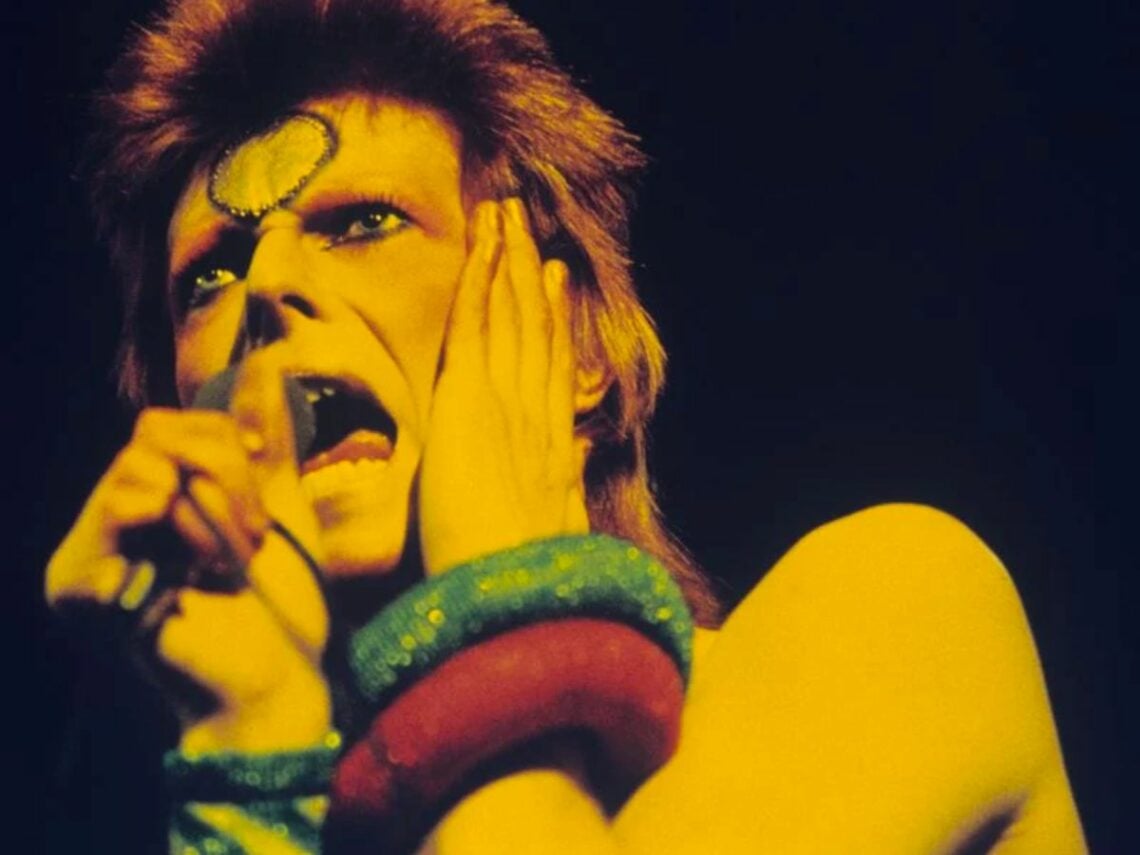
How do you accurately tell the story of someone like David Bowie? Throughout his career, ‘The Starman’ often moulded himself into different creatures whenever he took to the stage, never allowing anyone in the world to see the true man hiding underneath the make-up and costumes. While no one would know the real Bowie outside his closest family, it was only natural for Bowie to tell us his story himself in Moonage Daydream.
Coming just a few months after the attempted biography of the man, hearing Bowie tell the story of his upbringing in the glam scene feels like being a fly on the wall during rock and roll history. Instead of pulling from various interview clips, Bowie is kept only in audio form, as if he’s sitting next to the listener and recounting what he thought of his glory years as raw footage dazzles before our eyes.
Outside of Bowie’s contributions, the art design is miles above anything in the documentary scene, really making the audience feel like they have been sucked into a time warp and dropped right back into 1972 when the famed Ziggy Stardust crashlanded on Earth. Bowie may have been about to shed his skin into something else as the 1980s opened up, but this is a fascinating chapter into the artist that first lit hearts on fire in the 1970s.
6. Some Kind of Monster (2001)
Most rock documentaries paint their subjects in the most glowing aspects possible. Compared to raw documentary-style filmmaking, it’s usually easy to tell when there’s a lot of doctoring going on with footage, as artists try to put on their best face and convince the audience that they are just like any other person walking down the street. No one ever thought to peel back the curtain, but Metallica got to Some Kind of Monster by accident.
Looking to document the making of Metallica’s next album, the documentarians were thrown for a loop when James Hetfield quit midway through production to enter rehab. What transpires when he returns is one of the most human interactions captured by a rock band, as Hetfield and Lars Ulrich fail to get on the same page and are on the verge of collapse before they realise the good they bring out of each other.
This was also the first time Metallica fans got a look at new bassist Robert Trujillo, watching him audition for the band among other metal legends before filling the shoes of Jason Newsted. While many members of the rock community were outraged at the film for being too honest, it was a breath of fresh air to see one of the kings of the metal scene take off their masks and get in touch with their emotions.
5. Hype! (1996)
The entire concept of grunge music tends to be overexplained in this day and age. Although it may have started as a quirky art-rock take on classic rock, the looming shadow of artists like Nirvana and Pearl Jam made the whole genre feel much larger than it is. While many documentarians have made movies taking a look at any one band from the scene, the pure spirit of what Seattle music was is perfectly exemplified in Hype!
While the movie may have been released when grunge was the biggest genre in the world, many of the shots were taken well before ‘Smells Like Teen Spirit’ blew up. Even though it would have been a fortune to get artists like Chris Cornell of Soundgarden or Buzz Osbourne of Melvins in for an interview, hearing them talk about their musical upbringing and seeing them start to gain a following is the perfect way to show a scene developing by word of mouth.
Even though the bands in question had yet to take over the world, most of their manner of speaking is already a bit lacklustre, as if they know that life will never be the same once they sign those big-time record contracts. It might have been fun while it lasted, but it’s also easy to look at Hype! And see a loss of innocence as a charming local scene got co-opted by the biggest labels in the world.
4. Runnin’ Down a Dream (2007)
The entire story of Tom Petty reads like the archetype for the American dream. Despite not having the odds stacked against him, Petty was determined to win by any means necessary, going up against his label when they tried to screw with him and making sure that no one stood in the way of him making the music he wanted. If a documentary about that kind of life was being made, it’s only natural to get one of the most visionary American directors to put it to screen.
Directed by Peter Bogdanovich, Runnin’ Down a Dream is four hours of material as Petty and the Heartbreakers go through each facet of their catalogue. While the band aren’t looking to dissect every song they put to tape, hearing them talk about making the albums feels like reminiscing among old friends, from the headaches that went into Long After Dark to the happiest times of Petty’s life making Full Moon Fever.
While Petty was never known to let his feelings show outside his music, he is also incredibly candid about the dark points of his life, either at the hands of his domineering father, the dramatic divorce from his wife, or the loss of bassist Howie Epstein to drug addiction. Wrapping things up with the making of the solo album Highway Companion, Runnin’ Down a Dream shows Petty at one of the most joyous moments in his life, proud to have contributed to the pantheon of American music.
3. Pink Floyd: Live at Pompeii (1972)
Any dissection of Pink Floyd’s storied history has already been picked apart by millions of music outlets. Regardless of their musical masterpieces, the band had already gone through the tale of their troubled history with Syd Barrett before seeing Roger Waters pick up where he left off for some of the group’s most ambitious projects. Just as Dark Side of the Moon was about to reach its final form, the band ventured to an amphitheatre in Pompeii to make musical history.
While many of the songs from this live set encompass the first part of Floyd’s career, it’s apparent that there’s a different band at work here. Outside of the psychedelic experiments on songs like ‘Careful With That Axe Eugene’, much of the film features breathtaking cinematography of every member of the group, including a stellar version of ‘Echoes’ and Waters striking an imposing figure as he is silhouetted slamming a gong at sunset.
Outside of the performance pieces, the crew were also working alongside the band in the studio during the sessions for Dark Side of the Moon, getting to hear brief snippets of tracks being worked on and talking with the band about how success has affected their lives and creative relationships. After years of fumbling in the dark for what they should be, Live at Pompeii is raw footage of a band discovering themselves in real time.
2. Don’t Look Back (1967)
It’s never easy to describe a cultural revolution without having been there. While the various life events that lead to rock history may be set in stone, there’s nothing like seeing those shows happen in front of your eyes, seeing a musical movement go from one style to the next with the performance of one song. Despite Bob Dylan being an enigmatic character throughout his career, Don’t Look Back is where he goes from humble folk songwriter to folk-rock legend.
Recorded during Dylan’s peak in popularity in the late 1960s, the documentary fuses different elements of what made Dylan such a fascinating figure. While he makes mention of his love of poetry throughout the film, there are also various moments where we get to see his outlook on the world, chastising those who don’t want to understand him before transitioning into performances like ‘Ballad of a Thin Man’.
The film also features one of the first spellbinding performances of ‘Like A Rolling Stone’, which leaves fans both cold, confused and inspired simultaneously. While every audience member at that show may have left with a different interpretation of who Dylan was supposed to be, Don’t Look Back is the ultimate reminder that this ‘Voice of a Generation’ isn’t dancing to anyone’s tune but his own.
1. The Beatles Anthology (1995)
Far too many Beatles documentaries have tried to distil what the group did into a few hours. Throughout rock history, fans have continued to be enthralled by the story of the Fab Four and how they created some of the most celebrated music in rock history almost out of nothing. While the band may have had a hand in telling their story, The Beatles Anthology is one of the greatest accounts of what being a member of the greatest band in the world was really like.
Throughout the ongoing series, each group member has their say about what each facet of their career meant to them, from their humble beginnings as a scruffy bar band to becoming some of the most complex musical thinkers of the modern age. Outside of the various stories of the songs that most might come to see, the band open themselves up to talking about their dark period, focusing on the pressure that went into their final records before finally falling prey to management differences during their breakup.
While the end of the story may not have ended happily back in 1970, The Beatles Anthology isn’t meant to recount the history and the ultimate demise of the band. This is meant to be a celebration of the joy that the Fab Four brought to so many songs, and with the inclusion of two new Beatles songs worked on by everyone in the band, it’s a reminder that their music will continue to inspire musicians for generations to come.

Never Miss A Tale
The Far Out Bob Dylan Newsletter
All the latest stories about Bob Dylan from the independent voice of culture.
Straight to your inbox.