Tales of a drum legend: Inside the mind of Stewart Copeland

No artist is really thinking about whether their songs are going to be looked at as classics when they’re making them. It’s all about trying to serve the song at the end of the day, but even in the moment, Stewart Copeland always knew when to serve the song the best whenever he sat behind the kit for The Police.
Then again, Copeland knew better than most before the band even started. Despite featuring some fantastic vocal melodies from Sting throughout their career, the original idea for the group was planted in the mind of Copeland when he first saw the blonde-haired kid playing with Last Exit in the late 1970s. But after going through the first handful of albums, Zenyatta Mondatta sees the group at a strange point in their career.
Caught between the garage-rock beginnings and the more atmospheric music they would be exploring later in their career, the album is the best of both worlds when it comes to hearing the band playing off each other. But as Copeland has said, not everything was as easy to put together in the studio as it used to be.
According to the drummer, this was when things had started to get a bit more industry-focused, telling Far Out, “Zenyatta was when we first started to feel the pressure of commercial success. The stakes were now higher. Previously, there hadn’t been any stakes. It was us three doing what we thought was cool. Now there was a machine to feed [and] it was important to a lot of people. So that was the first feeling that this wasn’t our personal property anymore.”
And if the stress didn’t already mount up from the record company, bringing suits into the studio to decide on what the single should be probably didn’t help matters, either. While the pressures of Zenyatta didn’t exactly dissipate when working on the next few records, it only served to change what they were doing.
After deciding they didn’t want to have the suits in the room anymore, Copeland figured the next best thing was to head to Montserrat when they were recording. No outside voices, no complaining, now it was just “a hellscape between the three of us, without any commercial intrusion,” which would only make it more frustrating on the later records. Then again, for a band that was born out of three professional musicians with a punk ethos, they weren’t exactly going to roll with every single thing the label was asking them to do.
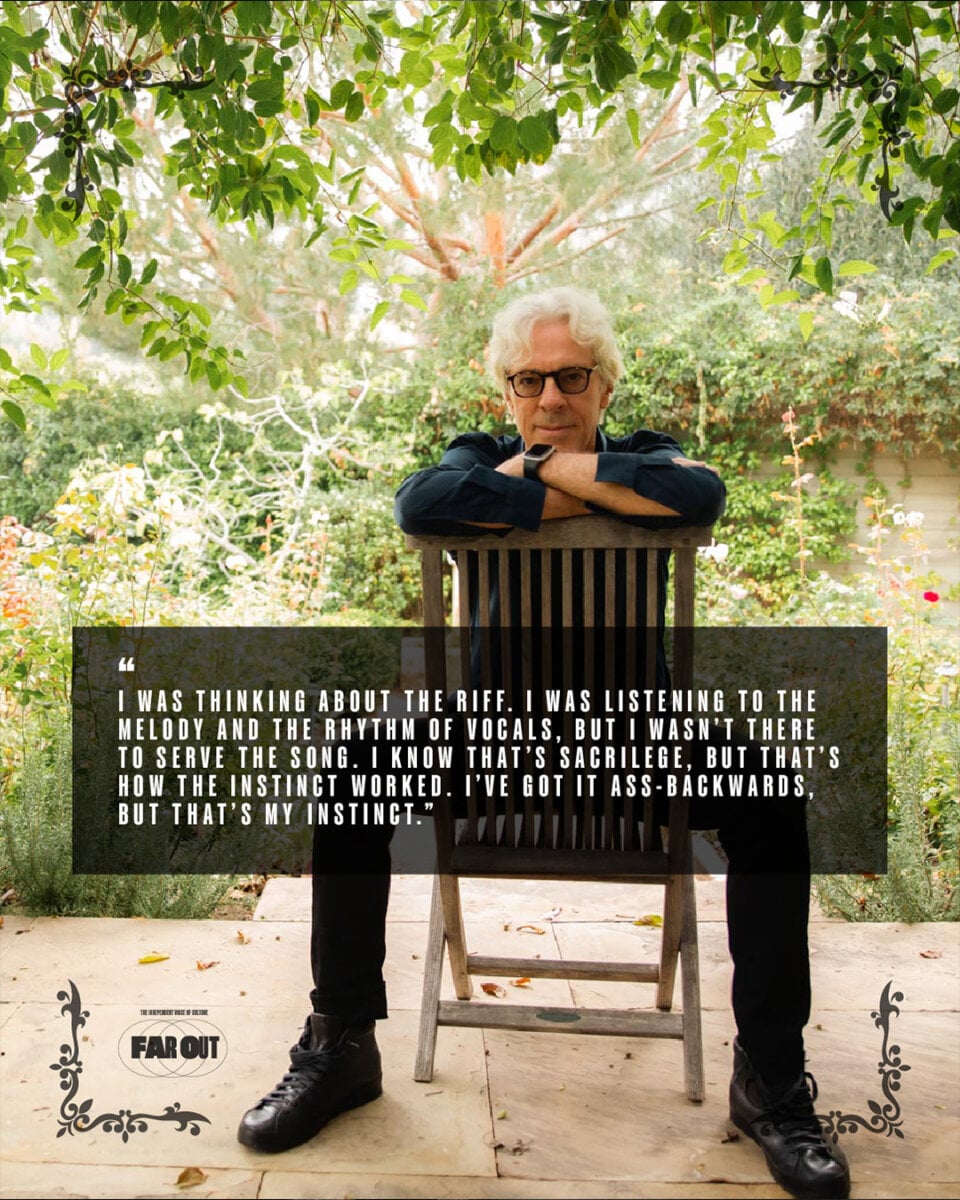
Yes, songs like ‘Don’t Stand So Close To Me’ and ‘De Do Do Do De Da Da Da’ were fantastic on their own, but the band was still about having fun, and Copeland was going to give what he felt was his best performance whenever that red light came on, adding, “I was thinking about the riff. I was listening to the melody and the rhythm of vocals, but I wasn’t there to serve the song. I know that’s sacrilege, but that’s how the instinct worked. I’ve got it ass-backwards, but that’s my instinct.”
That instinct is also what made The Police such an interesting band to listen to, especially on Zenyatta. Everyone could have easily focused on Sting’s melody throughout the entire thing, but the best parts of the record were the subtle pieces in how Copeland plays with the rhythm of the melody, whether it’s toying around with reggae textures on ‘Canary in A Coalmine’ or working out the different pieces of ‘Driven to Tears’ that make the song breathe a lot better.
But you have to understand that Copeland is a much different animal depending on where you put him on the bandstand. The entire concept of him ‘Deranging’ Police songs for his solo tours, writing scores, or arranging different charts for sessions is a lot different than the guy that throws his entire body into the performance, and when looking back on the record, Copeland knew the Sting was dealing with his primal side a lot of the time.
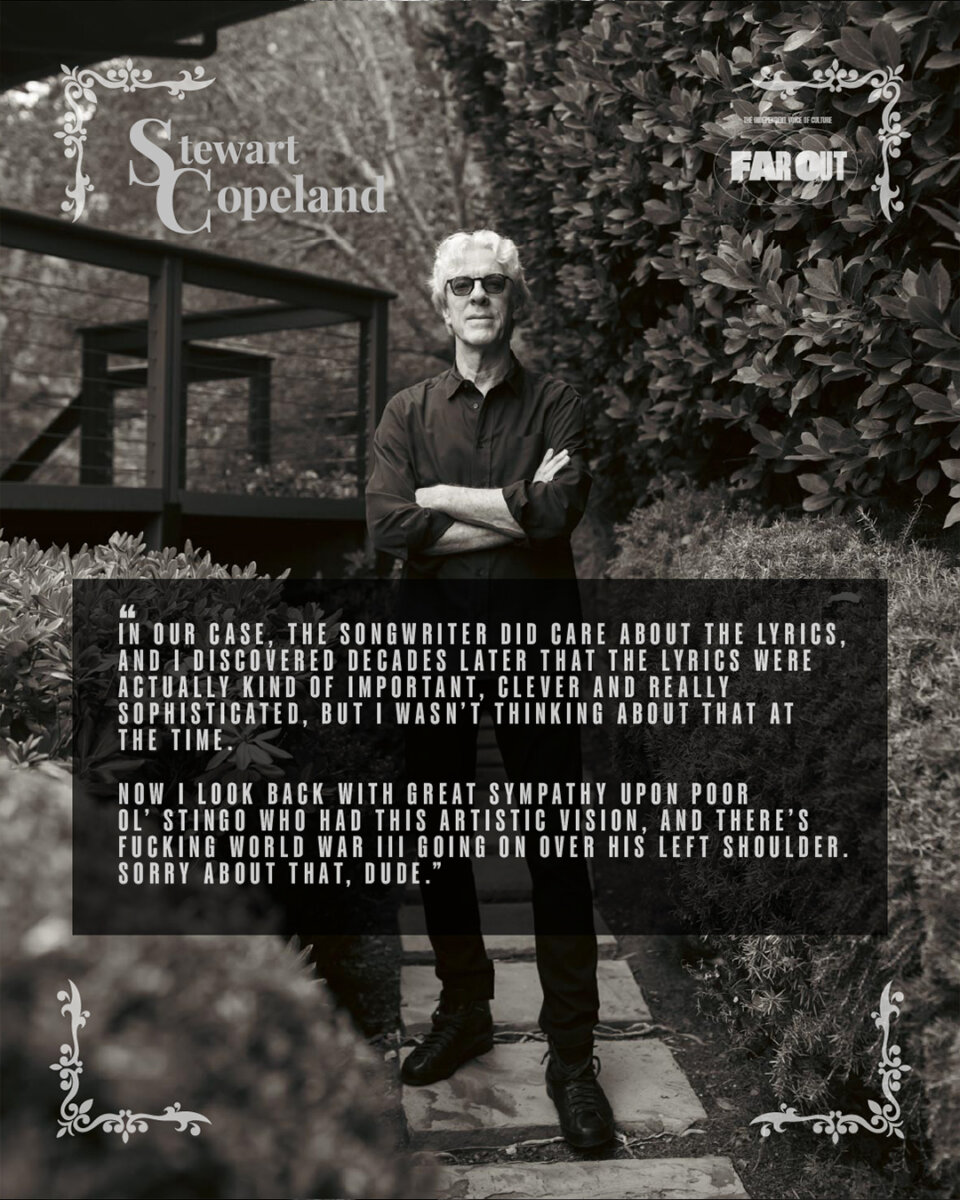
Having written his own pieces, Copeland realised what he was putting Sting through a lot more, saying, “In our case, the songwriter did care about the lyrics, and I discovered decades later that the lyrics were actually kind of important, clever and really sophisticated, but I wasn’t thinking about that at the time. Now I look back with great sympathy upon poor ol’ Stingo who had this artistic vision, and there’s fucking World War III going on over his left shoulder. Sorry about that, dude.”
What makes it even more insane is the fact that Copeland was usually figuring out the drum patterns on the fly. As he tells it, Sting would only present certain song ideas on a need-to-know basis, so it only took a few minutes for Copeland and Andy Summers to decide which songs to record. Or, in his words: “Fuck it, let’s play that.”
Since the machine needs to be fed, though, a lot of what Copeland was doing from Zenyatta onward were largely recorded off the floor in a few takes. You have to remember that every great rock track from this era was built from the drums outward, so when looking at his own performance, it was easy for everyone to get a functional take out of him before letting Summers and Sting run wild when they have an idea of what the guitar solo should sound like or what inflexion to put on certain words.
Even if you’re hearing the most primitive take that Copeland could have possibly laid down at the time, it’s not like he took any less care of it than others. A lot of the time was spent capturing the band discovering the tunes in real time, and while the performances on the live renditions may feature Copeland getting out of the transition much better than in the studio, he knows that the energy behind the records are what’s going to be here long after he’s gone.
For him, the magic behind all of the band’s greatest records was about all of them working to nail the right performance, saying, “This is where I get superstitious, but that zing of spontaneity and the energy of exploration gives an X-factor to those recordings. I think they wouldn’t have been as good if I had the chance to learn the parts. It wouldn’t have had the same buzz.”
And that’s what makes all the difference when working with any classic rock drummer. Whether it’s talking about the power of John Bonham, the batshit insanity of Mitch Mitchell, or the musical language or Ringo Starr, Copeland belongs in that company for always focusing on the performance rather than anything. Because, let’s face it, the drums are the backbone of the song, and no matter how much the tune might work, the band would fall apart were it not for Copeland’s foundation to everything.