


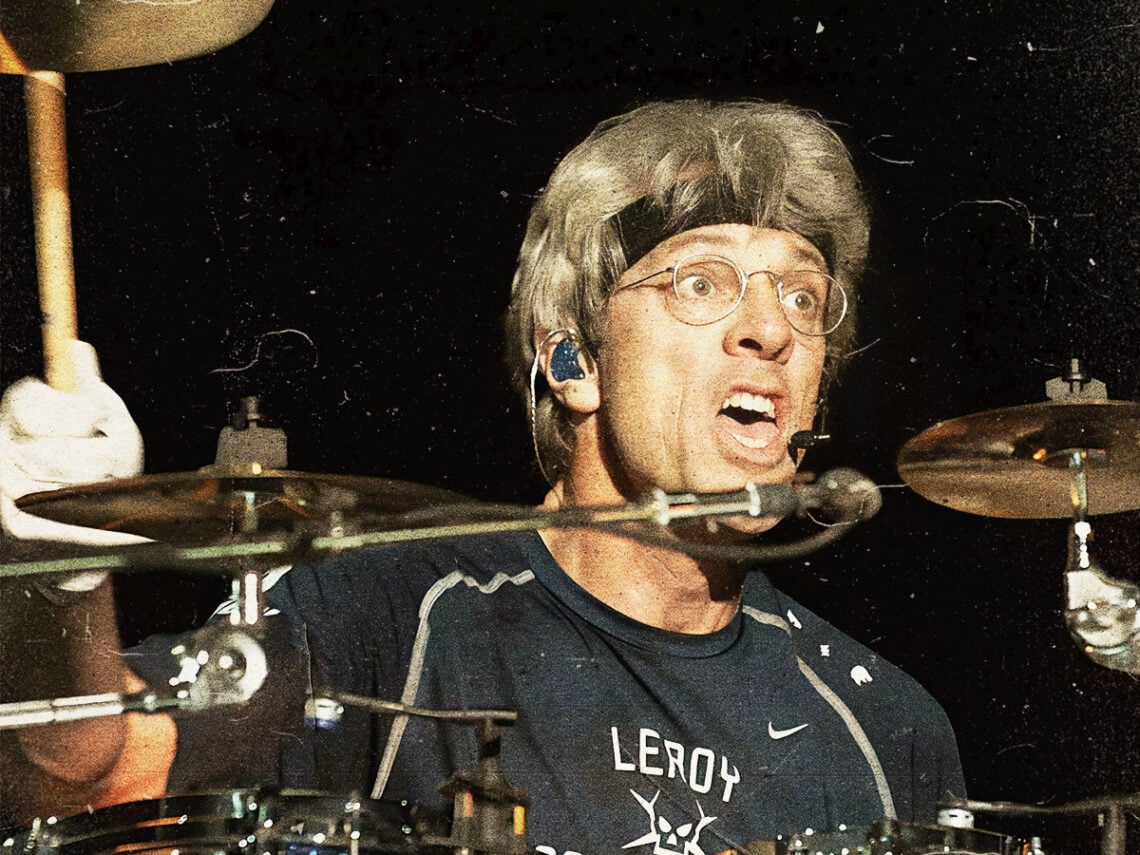
Stewart Copeland on the two types of musicians: “Connect to the music”

Every great drum part that Stewart Copeland came from a place of finesse. Regardless of how many people have tried to capture the nervy spirit that he did on those early Police records, there are just as many times when he played something that only he could do, usually because of his own approach to the instrument. Although Copeland is more of a musician’s musician these days, he thought that what constitutes a great player has two completely different ways of life.
Then again, Copeland didn’t suddenly get all his chops by accident. Before his first few years working in The Police, the drummer had cut his teeth playing in progressive outfits, which meant that it wasn’t out of the question to incorporate little bits of jazz into the equation or go on long tangents with time signatures that fried someone’s brain.
When you listen to him play in his main outfit, that kind of drumming sounds almost too easy to get right. There are some amazing fills going on in the context of ‘Message in a Bottle’ or ‘Synchronicity II’, and yet when he plays them, it feels like no other fill would have worked if he hadn’t been there to play it at the right time.
However, once Copeland graduated from making musical scores, he noticed that there was a definite separation between his art and what classical musicians were doing. Sure, he could make music that went off on wild tangents and then notate that onto the page, but these classical artists seemed to approach their craft like a job whenever that sheet music landed in their lap.
Compared to what he had seen in the Police and beyond, Copeland thought that reading sheet music was a completely different animal to what he had done, saying, “There are two kinds of musicians in the world: musicians of the eye and musicians of the ear. You connect to the music with your ear, but classical musicians are musicians of the eye. They don’t compose. They don’t jam. Their mission is to take that Mozart or Beethoven and faithfully obey the page.”
That’s not necessarily a bad thing, either. When listening to the biggest classical pieces of all time, it wouldn’t make sense for someone to recreate something like ‘Moonlight Sonata’ and then, for some reason, go off on another tangent after getting done the main theme. Classical audiences know what to expect, and if something out of the ordinary starts happening, it will definitely be noted.
As far as rock music goes, things align with how jazz greats improvised. There might be a common musical motif to tie everything together. Still, some of the best moments come when everyone approaches a song like a musical conversation, like Mick Taylor creating a musical statement on Rolling Stones records or the Allman Brothers trading licks back and forth across albums like At Fillmore East.
Whereas most people expect their music to sound pretty much the same every time they hear it, Copeland came from a school where sounding different didn’t necessarily mean sounding bad. If anything, adding one’s own flavour to the song gave the song character that no one had thought of before.
