


‘Disclosure Day’ movie review: A blunt instrument with its heart in the right place

In his latest film, Steven Spielberg returns to familiar territory.
Aliens have landed on Earth, and a couple of relatively normal Americans find themselves mysteriously drawn to them as the government pulls out all the stops to prevent the truth from getting out. It’s been more than 20 years since the release of the director’s last alien invasion movie, and a lot has changed. We are more cynical, weary, and isolated now.
We are prone to conspiracy theories and mistrustful of authority. We are surrounded and consumed with latent rage. This environment is ripe for a new perspective on how the world would respond to the revelation of extraterrestrial visitors, but Disclosure Day is often too hopeful for its own good.
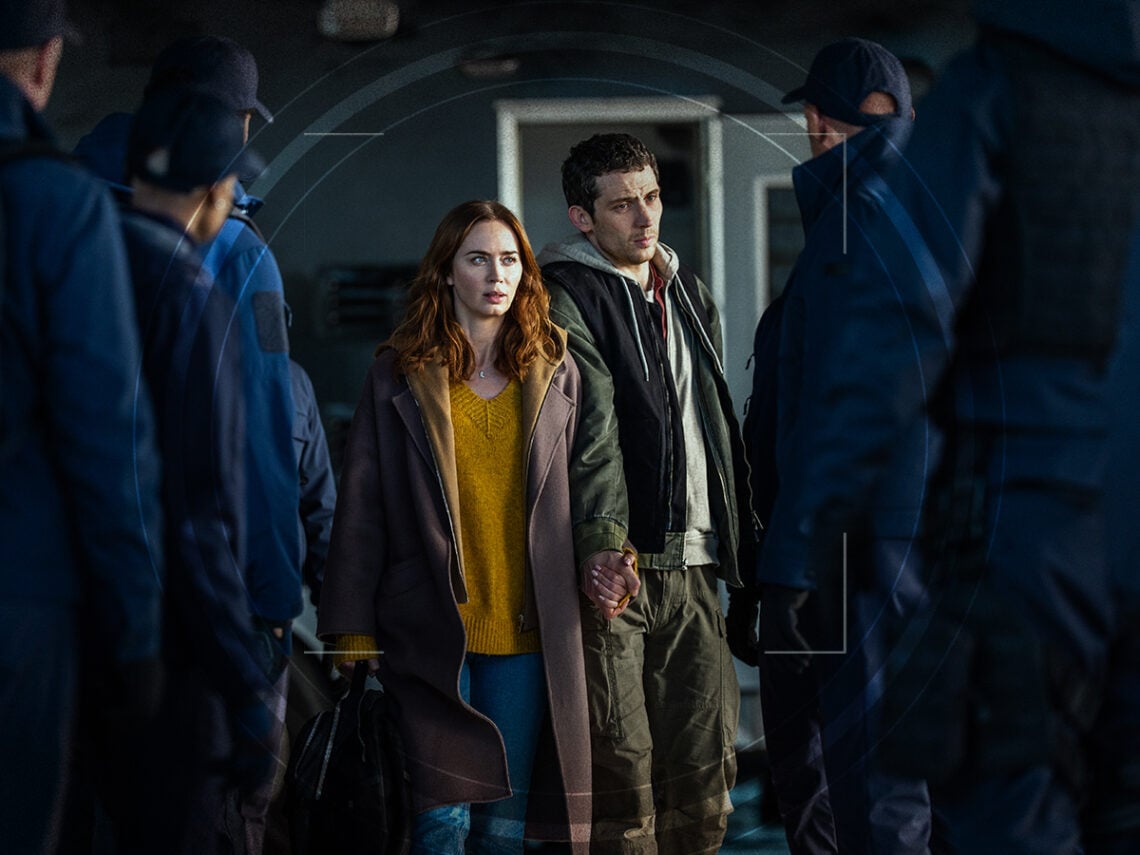
Josh O’Connor and Emily Blunt star as a duo who have an inexplicable, psychic connection to each other and the rest of the world. He is Daniel Kellner, a cybersecurity expert about to blow the whistle on a trove of evidence about extraterrestrial visitations on Earth that a shadowy government agency has been keeping under lock and key (overseen by a beardy Colin Firth).
She is Margaret Fairchild, a restless meteorologist at a local TV station in Kansas City who has sudden fits of clairvoyance and multilingualism. Guided by Colman Domingo, a fellow whistleblower who knows more than they do about the secrets they harbour, Daniel and Margaret try to evade capture and disclose the truth to the world.

At the heart of the film is a plea for empathy. Far from being a malevolent force, the aliens, we learn, are creatures of deep emotional intelligence who seek to spread connection in a world on the brink of World War III. As a result, whenever Margaret is cornered, she uses her psychic powers to appeal to her aggressors’ humanity.
“You do want the baby,” she tells a policeman who pulls her over for speeding. “You’re not like your dad.” She can even transform in their eyes to become figures of their past – beloved dead wives and fathers whose shining eyes project love and healing. Instead of panicking, her would-be captors collapse under the emotional heft of it, letting her pass in a daze of overdue resolution.
It’s a nice interpretation of psychology, the same mentality that leads people to claim that the dictators and dick-swinging megalomaniacs of the world really just need a hug and a good cry. If you’re on board with this notion, Disclosure Day will probably hit all the right notes. It has Spielberg’s unfailing faith in humanity, which shone through in movies like ET and Close Encounters of the Third Kind, but which, nearly five decades on, feels more than a little naive.
These days, pessimism is like dry rot – embedded in our foundations and nearly impossible to eradicate, especially with anything as nebulous as kindness. Screenwriter David Koepp, who has collaborated with Spielberg on multiple occasions, has a wildly uneven track record, and unfortunately, the script is the weakest link in this equation. Under more subtle hands, the optimism in Disclosure Day could have operated on a subliminal level. Instead, it is all too often a sledgehammer.
Luckily for Koepp and Spielberg, they have Blunt, whose performance is the most electrifying and redeeming aspect of the film. As Margaret, she is sharp, silly, and sincere, a mixture of Carole Lombard and Karen Allen. Without her, Disclosure Day would be far too formulaic and old-fashioned, even with Spielberg’s sharp-as-ever directing chops. Between this and The Devil Wears Prada 2 earlier this year, Blunt has shown a superhuman ability to transform listless material into riveting performances. There are points where even she can’t save the script from itself, though. Particularly around the halfway point, the film flails about in sentimentality for several scenes too long.

John Williams, who has nothing to prove and is well deserving of his GOAT status, has provided a score that is so relentless and manipulative that it becomes grating. It’s like having someone tap continuously on your shoulder for the duration of the movie, insistent, annoying, and so constant that it loses all meaning. In the cinema where I watched the film, one scene of overbearing sincerity was punctuated with the deafening sound of snoring. It provided a welcome moment of levity in an otherwise joyless interlude of unearned emotion and highlighted the scene with much greater meaning than the swelling orchestrals.
There are certain visual decisions in this movie that, like Williams’s contribution, are so clichéd that they approach meaninglessness. It is hard to give yourself over to the sentimentality of it all when certain creative choices feel so perfunctory. But there is no question that the overarching themes – kindness and empathy – are genuine. Spielberg may have pioneered the summer blockbuster and reinvented Hollywood, but he hasn’t let corporate success eclipse his humanity.
I sincerely hope that the audience who fell under the spell of Project Hail Mary will feel similarly softened and snuggled by Disclosure Day. We need more sincerity and warmth in the world. But for those hoping for the type of painful soul-searching found in Close Encounters of the Third Kind, this hopeful but often superficial variation on familiar themes leaves little to contemplate once the credits roll.
