


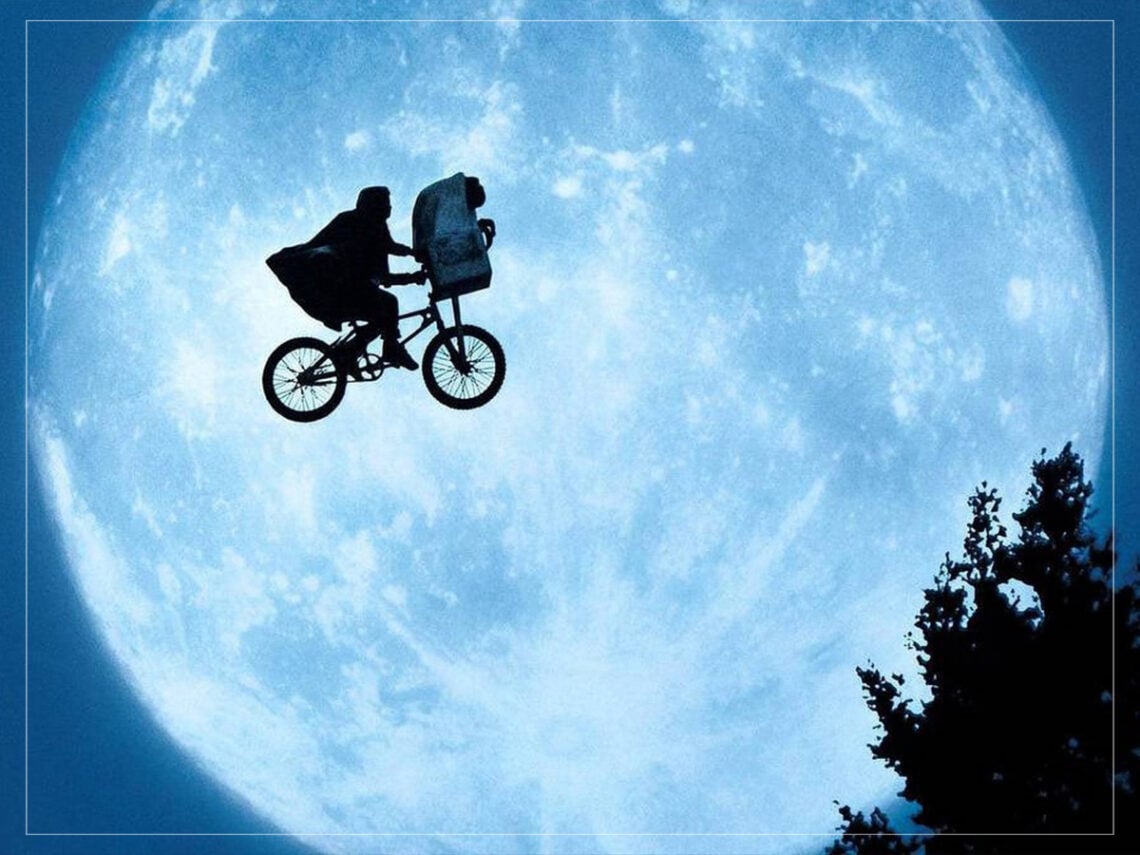
Why Steven Spielberg refused to release ‘ET the Extra-Terrestrial’ on video: “Finally worn down by the world”

Few things more fully illustrate the differences between today’s theatrical/home video landscape and the early days of VHS better than the tale of ET the Extra-Terrestrial.
When Steven Spielberg released ET in 1982, his charming tale of the friendliest alien in the galaxy was a genuine cultural phenomenon. It began its theatrical run on June 11th and didn’t leave cinemas until June 9th, 1983, a full 363 days later. That would be unheard of today, even for the biggest film of the year. During this year-long dominance of the box office, it became the biggest movie of all time, and the ET doll became the must-have Christmas toy of ‘82, shifting a gargantuan 15 million units.
One piece of ET merchandise was conspicuous by its absence, though: a VHS tape. Videocassettes and VCRs had been introduced in 1976, and in the ‘80s, they would become the way to watch movies at home. In case you weren’t around then, just think of VHS like an archaic precursor to DVD/Laser Disc/Blu-ray/4K: pick your poison.
Although, come to think of it, if you weren’t around for the heyday of DVD, either, just think of VHS like an extremely early version of streaming, except you had to spend £80 on one bulky cassette, instead of £11.99 on an entire library. Oh, and the solitary movie on that cassette needed to be rewound to the start every time you watched it, and the picture quality looked like watching a film with mud in your eyes. It was awesome at the time, though!
In this era, Hollywood finally gained access to a potentially lucrative secondary market for its films, which, up until that point, could only be watched during their theatrical run or years later on TV. In the ‘80s, the Top Gun VHS sold a whopping 2.9m units, while Disney’s Lady and the Tramp shifted 3.2m. Industry insiders predicted ET, one of the most purely beloved movies of all time, would surely sell at least six million copies, but there was one problem: Spielberg wouldn’t allow it.
For six long years, Spielberg fought against the idea of ET being released on VHS. Again, this is anathema in today’s landscape, given the theatrical window is currently so short that many movies end up being available in the cinema and for home rental at the same time. However, no matter how many people told Spielberg that he’d make a ton of money with an ET VHS release, he said no. No matter how many people said the fans were demanding it, he said, no. They probably even tried telling him that children were crying into their Cheerios because they couldn’t watch ET at home. Still, he persisted with the rejection.
However, there’s only so long anyone can hold out, and in 1988, MCA Home Entertainment finally broke through Spielberg’s defences. The director’s spokesman Marvin Levy told The New York Times, “Steven told me, ‘Since 1982, I’ve been inundated with three questions: When is ET coming to home video? Will there be a sequel? And what is Michael Jackson really like?’ Steven was finally worn down by the world.”
ET was finally released to a rabid public on October 27th, 1988, selling 15m units and breaking the record for most rented movie in its first two weeks of release. Why exactly did Spielberg hold out for so long, though? It’s simple: he was worried about piracy. The Motion Picture Association of America lost an estimated $1billion to VHS piracy in ‘87, and Spielberg was terrified that legitimate copies of ET could instantly be copied and flogged at every flea market up and down the country.
So, to put his mind at rest and attempt to combat those pesky pirates, MCA spent more than $1m colouring the tape guards and tape hubs green, and slapping a small, holographic sticker of the Universal logo on each cassette, similar to the holograms that now appear on credit cards. Amazingly, it also agreed to remove the tape from circulation after six to eight months, to protect the theatrical value Spielberg was convinced the movie still had.
