


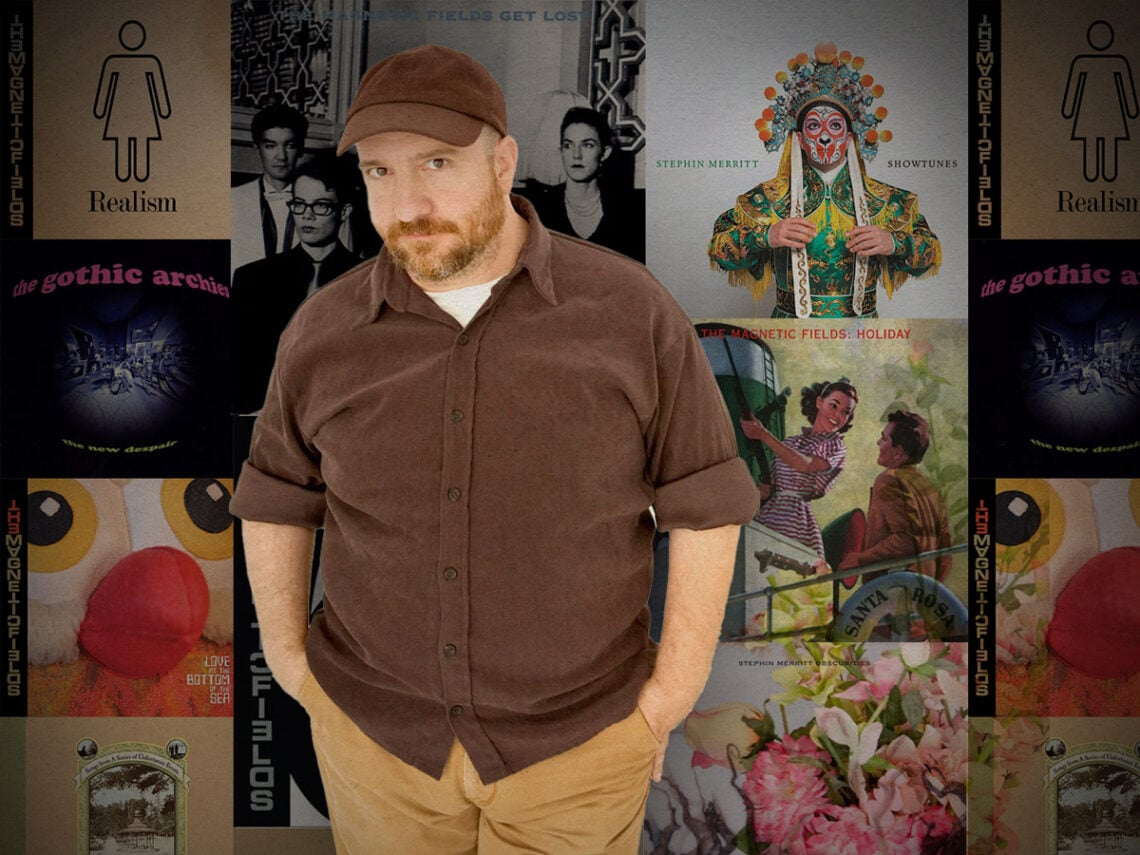
The merits of Stephin Merritt: Indie’s finest and most overlooked songwriter?

First of all, it’s pronounced “Steven” (/ˈstiːvən/), not STEF-en. Since a lot of people have only learned about the songwriting exploits of the prolific Stephin Merritt in the past month (searches have gone from a literal zero to 100 on Google’s traffic scale), it’s probably worth starting with the basics.
Merritt, the longtime leader of the indie band the Magnetic Fields, is getting an unexpected moment of well-deserved mainstream attention at the age of 61, thanks to his conspicuous appearance on The New York Times’ recently published list of the ’30 Greatest Living American Songwriters’.
The very conceit of a piece like that, of course, is less about celebrating overlooked talent and more about enticing a whole lot of controversy and angry reposts on social media. Getting that response doesn’t require any left-field thinking, either. The NYT list is fairly vanilla, all things considered, openly acknowledging its effort to create an even mix of obvious Hall of Famers (Bob Dylan, Dolly Parton, Bruce Springsteen, Smokey Robinson, Stevie Wonder, Willie Nelson, etc), legends of the hit-making craft (Brian and Eddie Holland, Carole King, Diane Warren, Valerie Simpson), and a batch of current pop and hip hop stars for good measure (Taylor Swift, Kendrick Lamar, Lana Del Rey, Bad Bunny).
Naturally, a lot of older readers rolled their eyes out of their sockets at seeing the likes of Young Thug ranked alongside Dylan, or Swift holding down a spot while Billy Joel, Tom Waits, Randy Newman, John Fogerty, and a host of other “proper” songwriters were left off entirely. The one true oddball on the list, however, capable of confusing and flustering both the Swifties and the cranky old-schoolers, is Merritt, the Top 30’s only real representative from the indie rock universe.
The Times’ panel clearly put together their list with the idea of giving credence to commercial success as much, if not more, than poetic skill or compositional innovation. This didn’t leave a ton of room for today’s healthy crop of critically revered indie songwriters; the ones routinely discussed at record shop counters, but rarely big enough to headline stadiums. Phoebe Bridgers, Matt Berninger, Adrianne Lenker, Kurt Vile, Father John Misty, and Sufjan Stevens weren’t list-worthy, nor were any of the giants of indie’s 1980s and ‘90s heyday, as frontmen like Michael Stipe, Paul Westerberg, Stephen Malkmus, Isaac Brock, and Frank Black were perhaps penalised for co-writing with their bandmates.
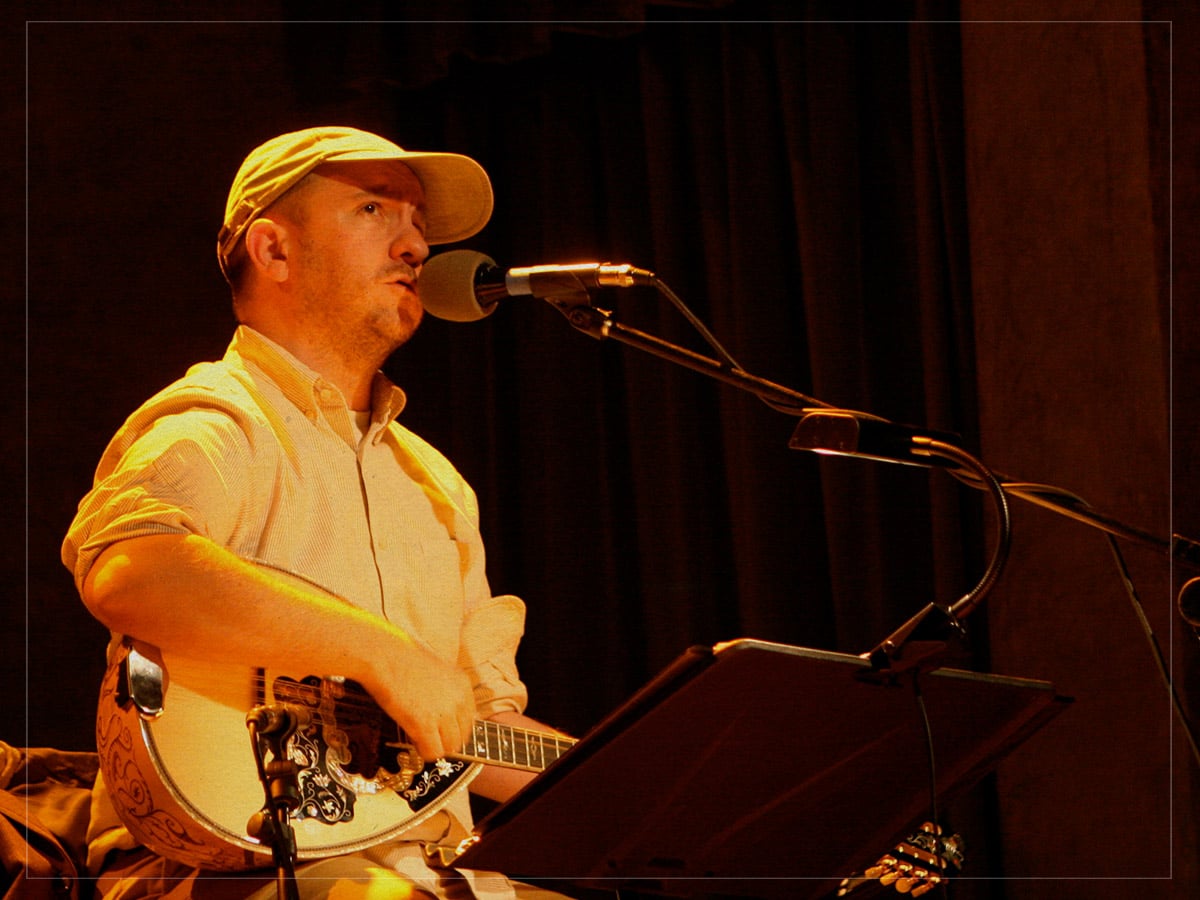
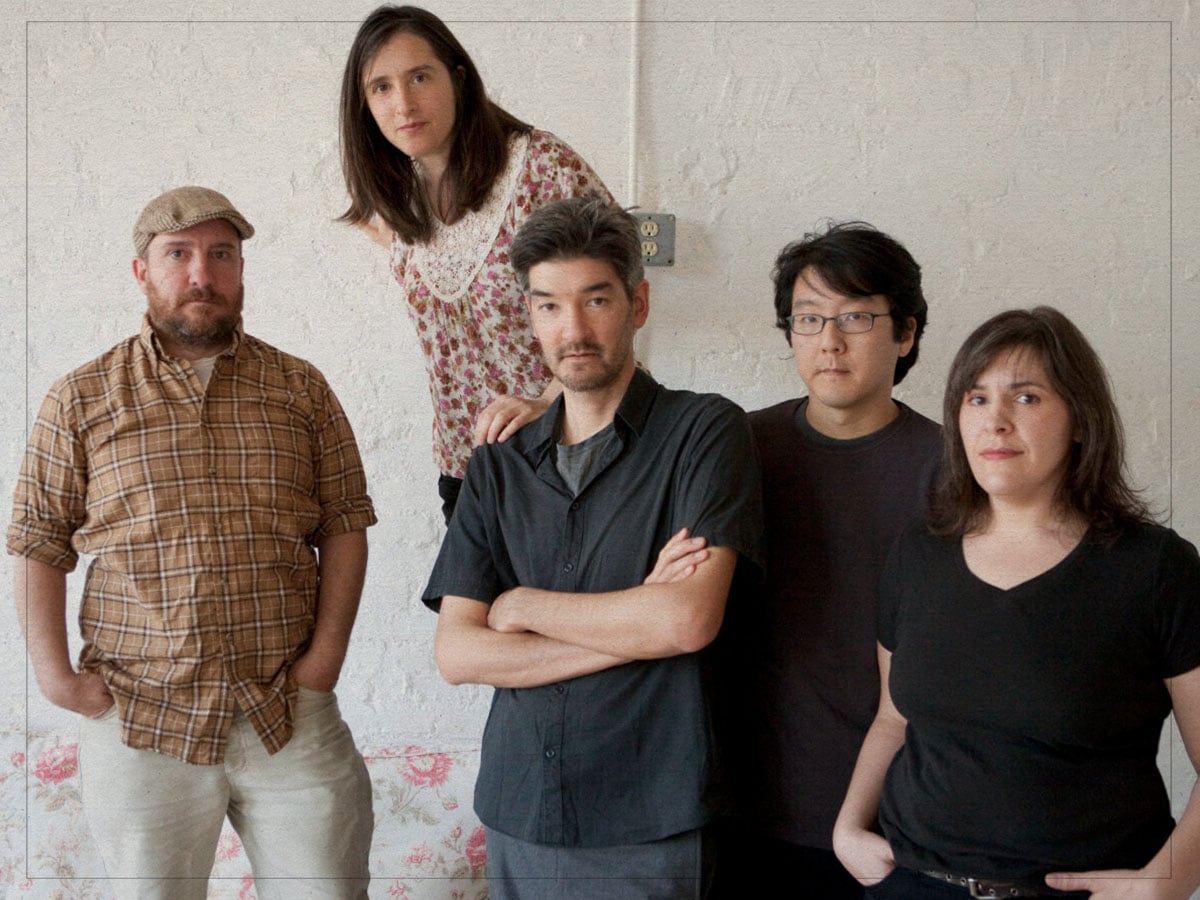
The New York native Merritt released most of the early Magnetic Fields albums on Merge Records, the same label that’s been home to other highly literate bands like Arcade Fire, Neutral Milk Hotel, Spoon, and the Mountain Goats. But even amongst that crew, Merritt’s songwriting was always thoroughly in its own orbit; simultaneously distinctive and trend-averse, but also ever-changing and insanely versatile.
The Magnetic Fields went from sounding like a blend of synth-pop and lo-fi Shirelles in the early ‘90s to being the official house band for an alternate-reality version of the great American songbook; churning out a sometimes cheeky, sometimes morbid, often beautiful parade of simple but catchy country-folk ballads, show tunes, noise-rock romps, chamber-poperas, ABBA-caliber torch songs, vampire laments, character studies, and diary entries; tongue often firmly in cheek one moment, then removed to devastating effect the next.
Dating back to the Magnetic Fields’ wildly ambitious 1999 triple album 69 Love Songs, Merritt’s penchant for gimmicky songwriting challenges, and his consistent ability to make something revelatory out of them, has often overshadowed the songs themselves, with the lone exception being of one of the standout tunes from 69 Love Songs, ‘The Book of Love’, a devastating ditty that’s since been covered by everyone from Peter Gabriel to Olivia Rodrigo. Aside from that, Merritt’s work has operated on its own frequency, never denting the pop charts despite being constructed largely from the DNA of that chart’s grand history.
“I can’t do any one thing really well except write songs,” the famously curmudgeonly Merritt told the LA Times in 2008. “So I don’t feel married to any particular genre. I need to marry a genre before I can do a coherent album, though, so we keep switching what that is. But for me, that feels normal, because growing up in the ‘70s, that’s what people did – 1977, we’ll go disco; 1978, oops, we missed punk, we’ll go punk; 1979, we’ll have slap bass. I grew up thinking David Bowie was the norm.”
In the 21st century, the Magnetic Fields have released an album of songs all starting with the letter “i”; another telling the story of Merritt’s life as a 50 Song Memoir; and another filled with 28 songs all under 2:35 in length (Quickies). The 2008 record Distortion was maybe the most fascinating experiment of all, as Merritt, who suffers from a condition called hyperacusis that painfully distorts loud noises in his ears, decided to record a Jesus & Mary Chain-style noise-rock album that essentially celebrated that phenomenon. “That’s the joke of the record,” he told me at the time. “It sounds like all music sounds to me.”
Humour is a huge part of Merritt’s skill set as a lyricist and translates well to his role as a deadpan baritone vocalist, regularly deploying a witty turn of phrase in a manner rivalled only by Simon and Newman. Sometimes it’s dark as hell, like the opening lines of ‘The Desperate Things You Made Me Do’: “Time provides the rope / But love will tie the slipknot / And I will be the chair you kick away.” Other times, it’s cute as a button, like on ‘I Don’t Believe You’: “So you quote love unquote me / Well stranger things have come to be / But let’s agree to disagree.”
Along with 13 Magnetic Fields records, Merritt has also released two solo albums, a pair of film soundtracks, a handful of stage musicals, and a number of side projects under the names of the Gothic Archies, The Sixths, and the Future Bible Heroes. None of those albums cracked the Top 50 in America, and while they’re all chock full of great, hummable tunes, they exist outside of trends and time, enjoying no real crossover appeal into the mainstream aside from the occasional ‘Book of Love’ moment on a TV show.
It may not be a coincidence that mainstream audiences seem to appreciate Merritt’s work a bit more when Peter Gabriel or Olivia Rodrigo take over the vocal duties. “I’m not great shakes as a singer,” Merritt said back in 2004. “I’m a much better songwriter. I certainly wish all the most famous people in the world would cover my songs all the time.”
Maybe that will be a fortuitous consequence of this new attention coming Merritt’s way right now. In the meantime, it’s easy to understand why people might look at his relative “failure” to reach a wider audience as disqualifying evidence against his placement on the NYT songwriters list. Can someone who’s never had a chart hit across a 35-year career really be better at his craft than, say, Neil Diamond?
In the end, the body of work suggests that the answer is, at the very least, “sure”. Merritt might have a tiny fraction of the listenership of Swift or Springsteen, but people who do stumble upon his discography are rewarded with an almost endless supply of unclassifiable but delightfully consistent gems. “You’ll laugh, you’ll cry!” as the theatrical cliche goes; just think of it more like 100 off-Broadway shows instead of a big-ticket Andrew Lloyd Webber production.
