


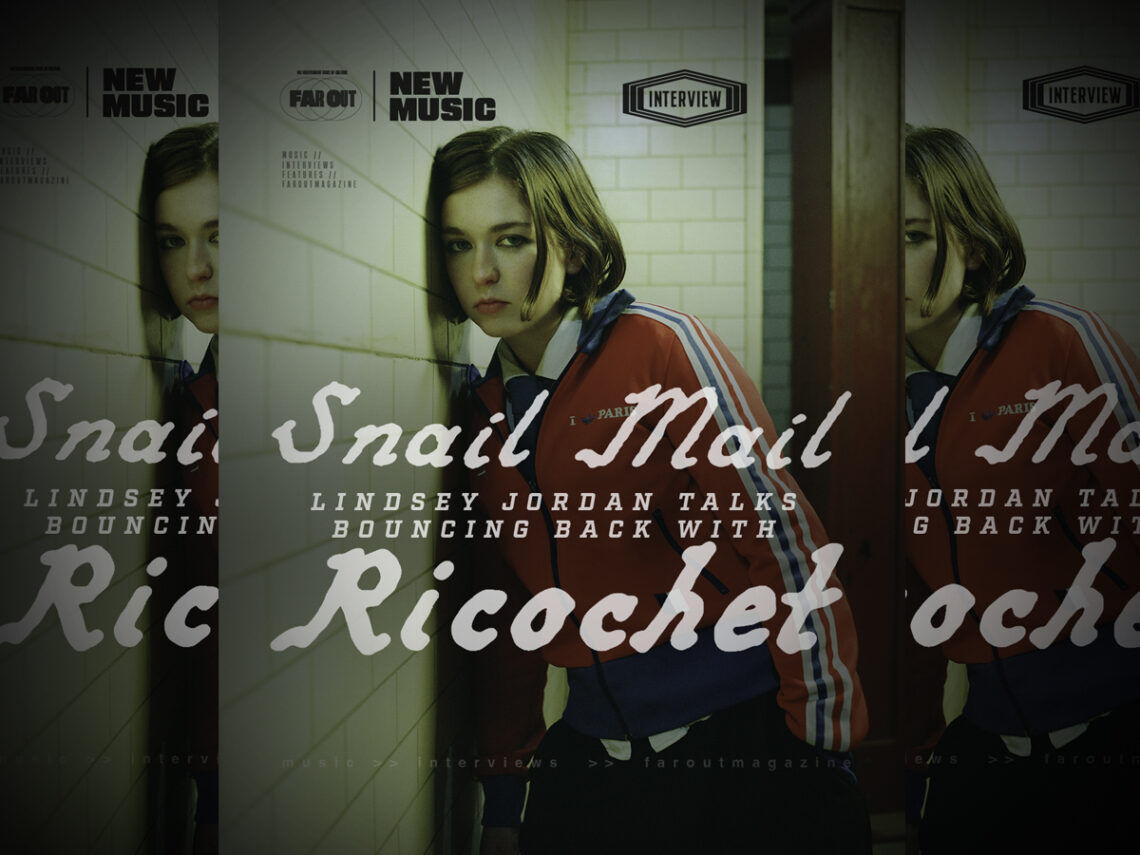
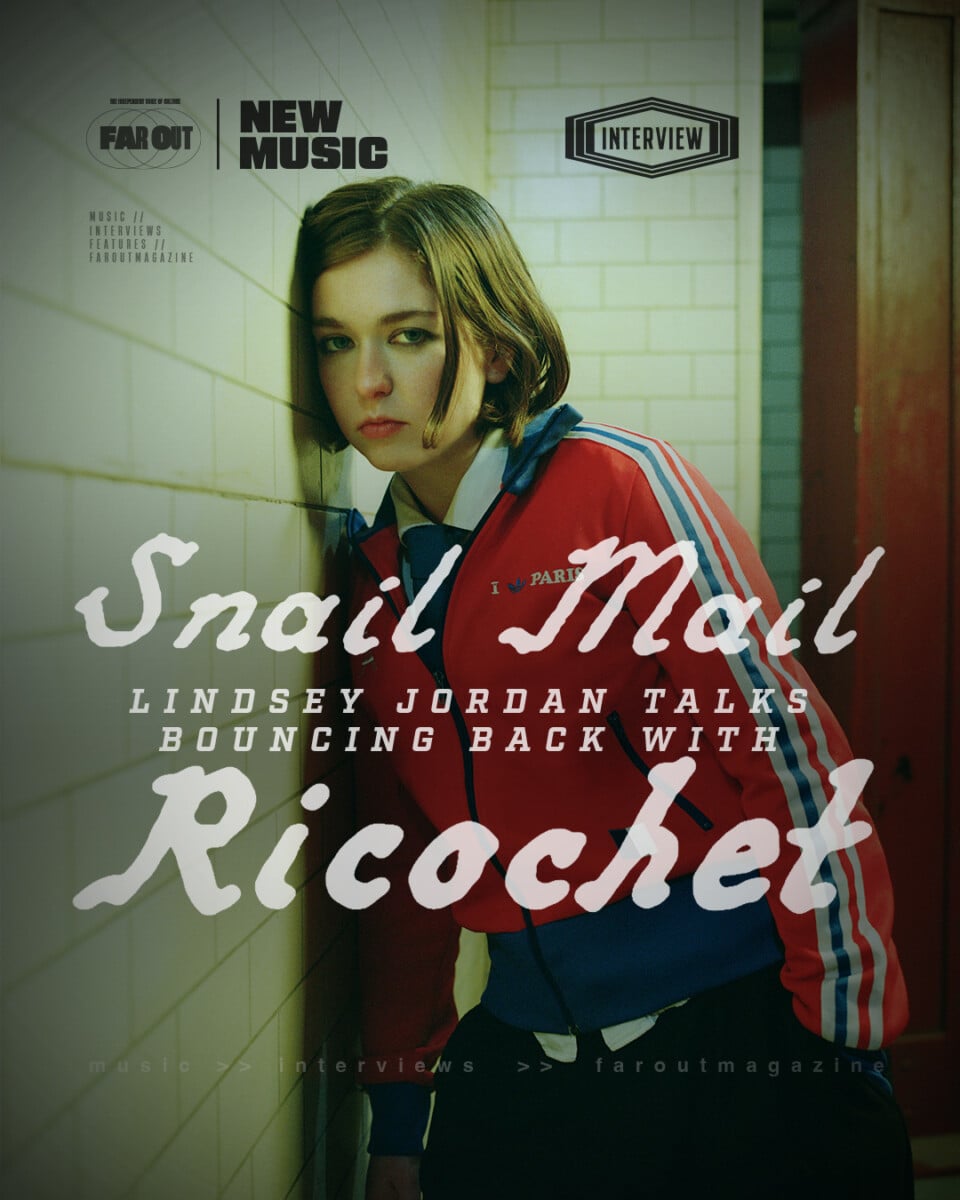
“It’s really beautiful and devastating”: Snail Mail’s Lindsey Jordan talks bouncing back with ‘Ricochet’

When it reaches a point where an over-zealous fanbase are actively throwing tantrums in comment sections about how long it’s been since their favourite artist last released anything, you have to question whether they recognise how painstaking the process of writing an album can be. For Lindsey Jordan, the driving force behind beloved US indie act Snail Mail, the agony of striving to get everything right is ultimately far more important to her than being able to release at a rapid rate.
“One of the things that makes writing really intense for me is that in the past, my method has kind of been working on one song relentlessly, and then usually over months, getting sick of it and then discarding it, or deciding it’s savable,” she tells me, attempting to justify why things tend to take longer than your average indie act. “That’s just a devastating process.”
The thing is, Jordan shouldn’t need to explain herself like this. The pursuit of perfection is a challenge for all artists to grapple with, and having a desire to make something that you can be proud of for years to come requires a lot of fine-tuning of a process, which she was prepared to invest her time into. Just because she’d already released a beloved EP and album under the Snail Mail moniker by the time she was 18 years old doesn’t automatically mean that she ought to have an extensive back catalogue by 26, the age she is as she prepares for the release of her third album, Ricochet.
Ricochet is Snail Mail’s first album in almost five years; the sort of gap between releases that very few rising stars are ever afforded due to the incessant demands of the modern music industry. Take two years without even so much as hinting at a return, and the world will be at your throat, demanding that you get your ass in gear and secede to their wants. For Jordan, two years was simply not enough.
Pressure, demand, and intensity, as it happens, were the last things on Jordan’s mind while trying to adapt to this new way of working that would help her in producing this next chapter in her career, although the desire to eliminate chaos may not be apparent to outsiders. “This time, I was just trying to take a little bit of intensity out,” she asserts, before describing a process that feels as though it prioritised intensity in a different disguise.
“I basically created all of the songs musically, wrote all of the vocal melodies, and then I could work on them all at once to make sure everything had what it needed,” she added, noting how stitching together different parts was akin to Dr Frankenstein’s approach to making a monster. “I did all the lyrics over the same six months, and it felt more connected lyrically. I feel like I sat down to be like, ‘here’s the concept’. That really helped me keep it moving, and nothing got discarded, which is awesome. That’s never happened to me before.”
This, frankly, isn’t the sort of approach that would work for everyone, but Jordan giving herself the space to hone in on each constituent part of the record separately rather than allowing it to come together in drips and drabs has ultimately led to her creating a record with more cohesion, and in a way that felt less restrictive than it ever had before.
Working alongside close friend Aron Kobayashi-Ritch from Brooklyn-based indie rock outfit Momma as a co-producer, Jordan was blessed to have someone who completely and utterly understood her approach and her need to meticulously alter the finer points of a record. “I kind of have a gnawing feeling where usually I try to take as much time as I can in between studio sessions to sit with it and breathe,” Jordan admits, but during the points where Kobayashi-Ritch was out of town touring with his own band, she found herself obsessing over details that others wouldn’t think to revisit.
“There ended up being tiny little syntactical things that I genuinely could not sleep over,” she recalls. “I had to go back into the studio with the engineer and change ‘ands’, ‘buts’, or certain lyrics where the vowels just weren’t catchy enough. It just doesn’t feel right when there’s something that isn’t all the way done, and even now, I’m super happy with everything, but there’s some stuff that I maybe still would have gone back and changed.”
That being said, working with Kobayashi-Ritch was an experience she wouldn’t trade for the world. “We’d already been talking about doing the record for years,” Jordan explains. “We had a shared playlist that we were making forever, from just sitting around and talking about music. He took all of my points extremely seriously, and it wasn’t an ego trip for him.”

While working alongside producers in the past has often led to scenarios where Jordan has felt as though any question she asks might present her as being dumb or inexperienced, the mutual curiosity shared between her and Kobayashi-Ritch meant that they developed something of a shared creative language that allowed them to know what the other wanted. “I left him alone a decent amount to do things like pick the vocal takes because I trusted him,” she admits. “I don’t usually like to leave people alone with mixes and stuff, but he just did such a fantastic job interpreting my taste. It was just like a caring friend operation.”
Still, from start to finish, Ricochet was the longest overall process any of Snail Mail’s records has taken, and something that, given how her career has evolved over time, was entirely necessary. “It still took two years,” Jordan sheepishly admits, “but I will say this one was easier to make than any of the others. I feel like as I get older, I’m starting to figure out how I work. But that was the longest break I’ve ever had my entire adult life, so that was also kind of sick. I was just hanging out in my house and writing.”
Even though her other releases came in comparatively quick succession, the pace at which she found herself having to keep up was exhausting, and had her frantically searching for the right themes to explore. “Habit to Lush I think was natural,” she says of the evolution between her breakout EP and debut album, released in 2016 and 2018, respectively. “Habit didn’t pop off until it was out. Me and my friend made that ‘Thinning’ video a couple months later, and then it started getting covered.”
The sudden attention was unexpected, but not unwelcome. “We had a little bit of local DIY buzz, and a tiny little bit of Bandcamp internet buzz,” she reflects. “By the time that ‘Thinning’ became a big thing on the internet, I was already mostly done writing Lush, just because it was still my hobby. I was still in high school, and that was what I wanted to do when I got home.”
However, while the ideas were already there for those records due to her having amassed a wealth of material while there was no external pressure on her to release music or fulfil expectations, things didn’t come so naturally with her second LP. “With Valentine, I took longer than I think I should have, or people were bummed about how long it took,” she acknowledges. “I was pretty much doing everything that I could to try to write on the road, and I think that’s where I started coming up with so many riffs and things that ended up becoming what the album was.”
Not wanting to repeat this for her follow-up, she found herself entering a period of writer’s block, but also wanting to force the songs to come to fruition. “I really struggled to switch my mindset from being in Valentine world to being asking ‘what do I have to say on this next one?,’” she adds. “No matter how much I sat in the tour bus or my hotel room and tried to write, I just had a really hard time transitioning into something new, and I think I just needed time at home to figure that out.”
Speaking of home, Jordan now resides in North Carolina, which came about as a result of wanting to remove herself from city life and focus on songwriting in isolation. “I bought this house and made it my writing house,” she says, rotating her camera to give a brief guided tour. “I mean, it’s my only house, but I basically tried to get a house that’s literally in the middle of nowhere. I know people pay money to go work in a log cabin, and that’s what I needed, but I’ve never paid for writing retreats. I think it’s stupid, so I got a house in isolation. As soon as I was off that tour, I was completing those songs.”
The decorations that adorn the wood-cladded walls of her remote home all paint a portrait of Jordan and her interests and influences, with the posters behind her ranging from one of influential dream-pop group The Sundays to a Japanese poster for Dario Argento’s Suspiria. While she feels as though her musical tastes haven’t changed a great deal in recent years, with her still hailing the likes of Radiohead, The Magnetic Fields and Teenage Fanclub (she’s also donning a Bandwagonesque t-shirt throughout the interview), various other art forms inspired her while making Ricochet.
“I’m still really into Gregg Araki,” she says, noting how his adaptation of the Scott Heim novel, Mysterious Skin, was a major influence on the record. “I felt really touched and moved by using alien abduction as a metaphor for lost time, when there’s something traumatising, or disassociation. I think it’s really beautiful and devastating.”
Another film that found itself having a profound effect on Jordan, both as a songwriter and an individual, was Charlie Kaufman’s postmodern masterpiece Synecdoche, New York. “The entire fear of death thing came over me because of that film,” she admits. “I had this unbelievably intense OCD unravelling type of obsession with death for years that just made everything so much harder. I’d be having fun with friends, and then I’d zone out and need to go home. It was ruining everything, and was all I could think about, even with my pets.”
Poetry, specifically works by David Berman, Frank O’Hara, Adrienne Rich and Charles Bukowski, which Jordan notes as being “low-key cringe”, also played a major role in her lyrical development across Ricochet. “Sometimes when you’re stuck, it’s nice to just look at syntax that makes you feel moved, because that’s hard to find,” she notes. “Even in a fictional thing, if there’s three lines in an entire book that make me feel something, I’m gonna be going back.”
This development and expansion of lyrical themes was something that Jordan consciously wanted to explore, with a desire to break out of singing about topics she’d already covered extensively. “I had to purposefully open my mind to try to write outside of what was screwing all around my head as a teenager,” she explains, “which was feeling not accepted or wanting a girlfriend. Between Valentine and this one, no matter what is happening in my life, I really couldn’t write about love or heartbreak, because it’s not all-encompassing to me anymore.”
Putting herself in a different headspace that made her listen to music that explored themes other than love and sang about the universe was one way in which she deliberately tried to centre herself and write lyrics that were different to what she had been used to. However, the delivery of them was also something that needed to change, and a health scare after the release of Valentine led to her having surgery to remove vocal polyps, something that prompted her to explore using her voice in a different way.
“The physical therapist who was helping me get my voice back was listening to Habit and said she could already hear polyps, so I think I’ve been losing my voice since the beginning of Snail Mail,” Jordan reflects. “I’ve always had this gravelly voice, and it made me really nervous to get on stage. When I had the surgery, it was a really gnarly recovery, but I learned how to speak again, so my speaking voice is completely different. My singing voice gained a range above, so I got all this falsetto that was never there, which was the best feeling ever.”
Even though she’s no longer worrying about her vocals, performance is still a huge cause for anxiety for Jordan as she looks ahead to touring the new material. “I’m terrified,” she admits. “We have a cellist now, and there’s three part harmonies, so I’ve got two backup vocalists and three guitars at moments. Even just having band practices is nerve-racking to me, because the parts are pretty hard to play. It’s kind of been like boot camp here.”
The current landscape of touring at home in the US is perhaps as uncertain and unfriendly as it has ever been, with growing concerns over the safety of certain groups playing a considerable role due to anti-immigration and anti-LGBTQ+ legislation in certain states. While many have a bleak outlook on the state of affairs, Jordan still has an unwavering belief in her own fanbase to be as much of an antidote to the sorry situation.
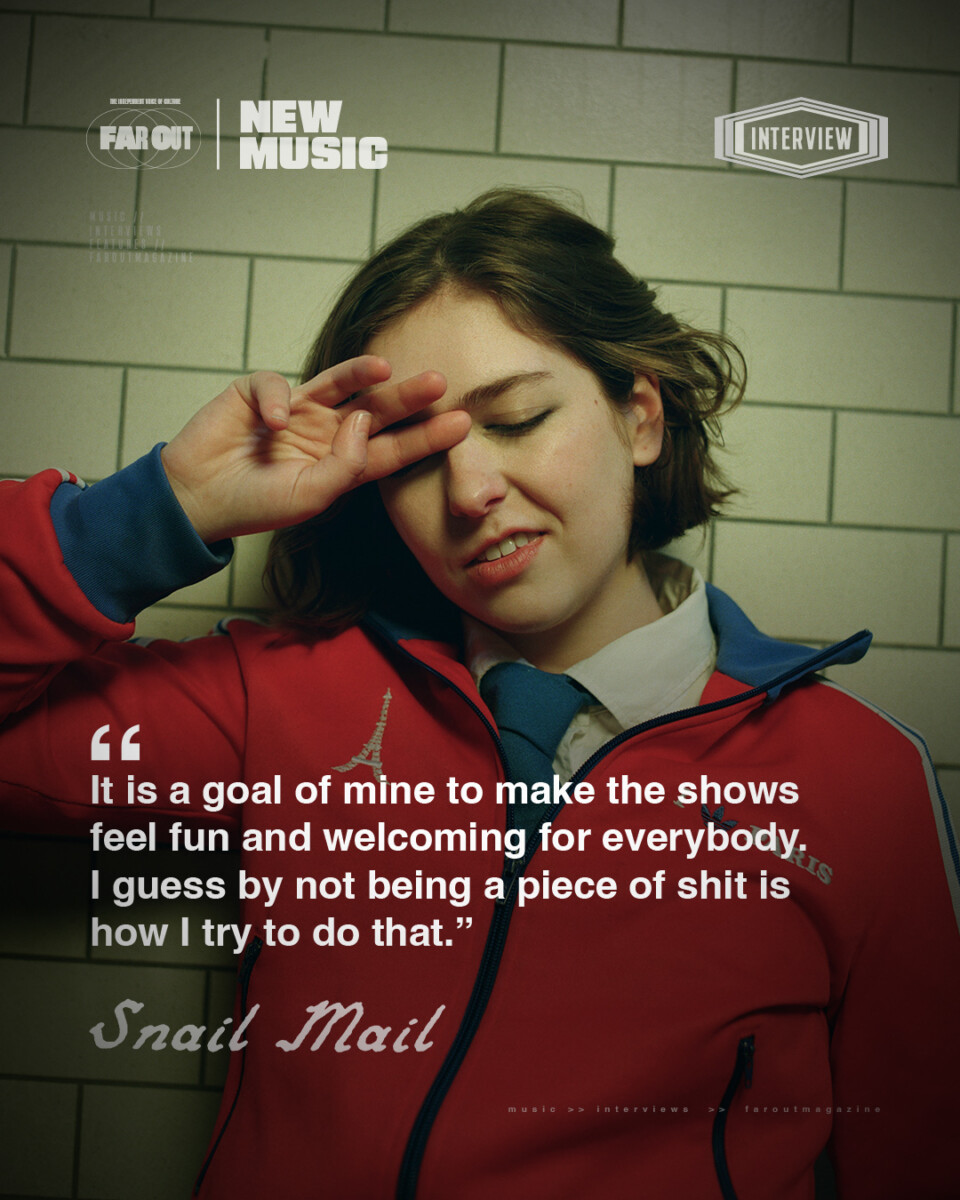
“I hope everybody feels comfortable at a Snail Mail concert,” she muses. “It is a goal of mine to make the shows feel fun and welcoming for everybody. I guess by not being a piece of shit is how I try to do that.” She also notes that the scenes she rose from alongside acts like Priests, Flasher and Sneaks also implemented an ethos deep within her that she still follows to this day.
“The Baltimore and DC DIY scenes are pretty community-forward, or at least that was my experience,” she adds. “Everybody is really cool. I’ve never encountered any righties in indie rock as far as I know, but I guess I wouldn’t know if they were hidden in the crowd. They definitely don’t make themselves known at the Snail Mail shows.”
For all of the chaos of the world around her, and the obstacles that stand in the way of her generation being able to thrive in the creative industries, Jordan has done an impeccable job of being able to navigate her way up the indie rock ladder in just a decade, and still with plenty of time ahead of her. “I don’t exactly know how you can find these things unless somebody’s directly telling you, or you have a really supportive network around you,” she says of being left to her own devices to find the right connections in the industry. “I didn’t really know anybody coming into this.”
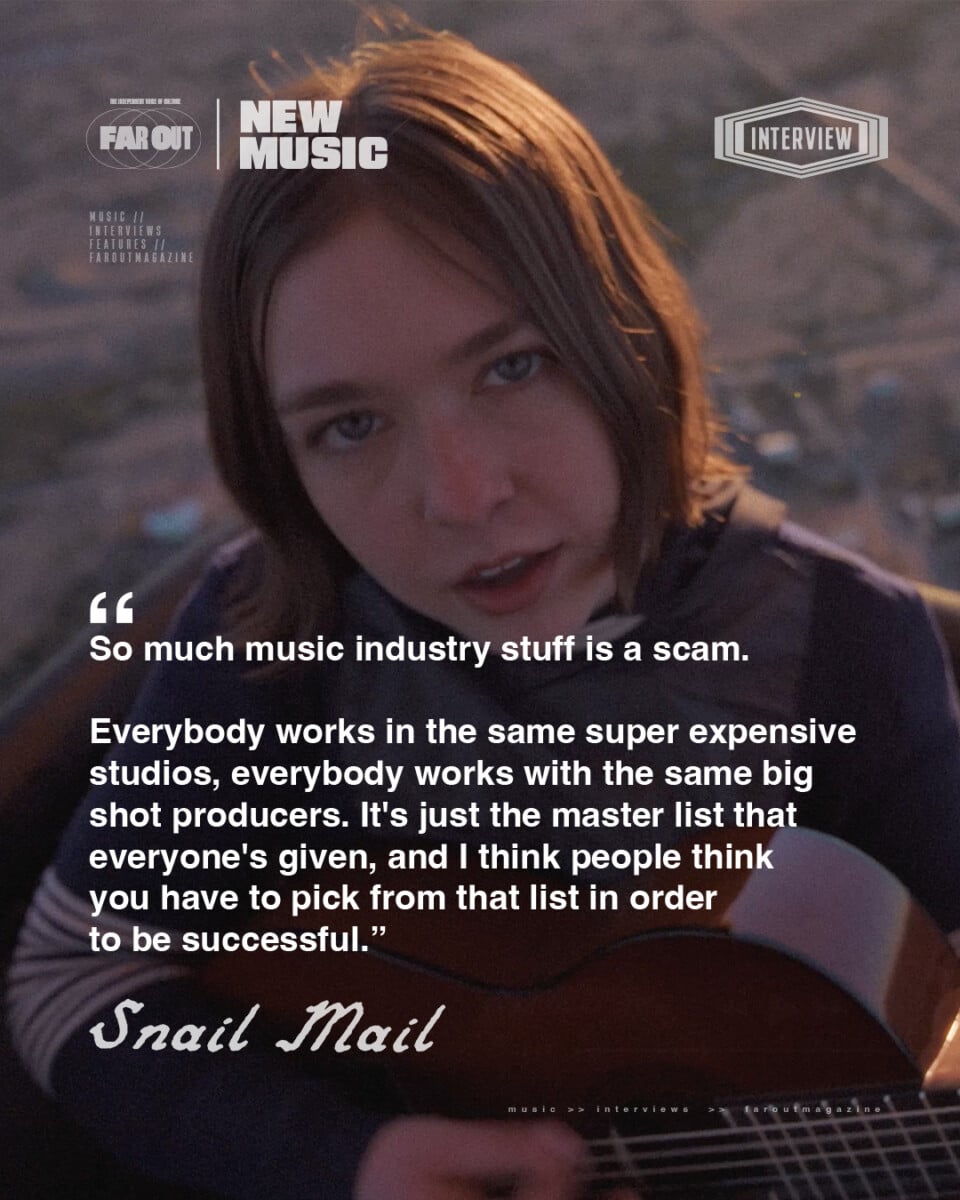
She may have found a way to succeed, with Ricochet serving as a triumphant product of resilience in the face of the industry’s many pitfalls. “So much music industry stuff is a scam,” she passionately argues. “Everybody works in the same super expensive studios, everybody works with the same big shot producers. It’s just the master list that everyone’s given, and I think people think you have to pick from that list in order to be successful.”
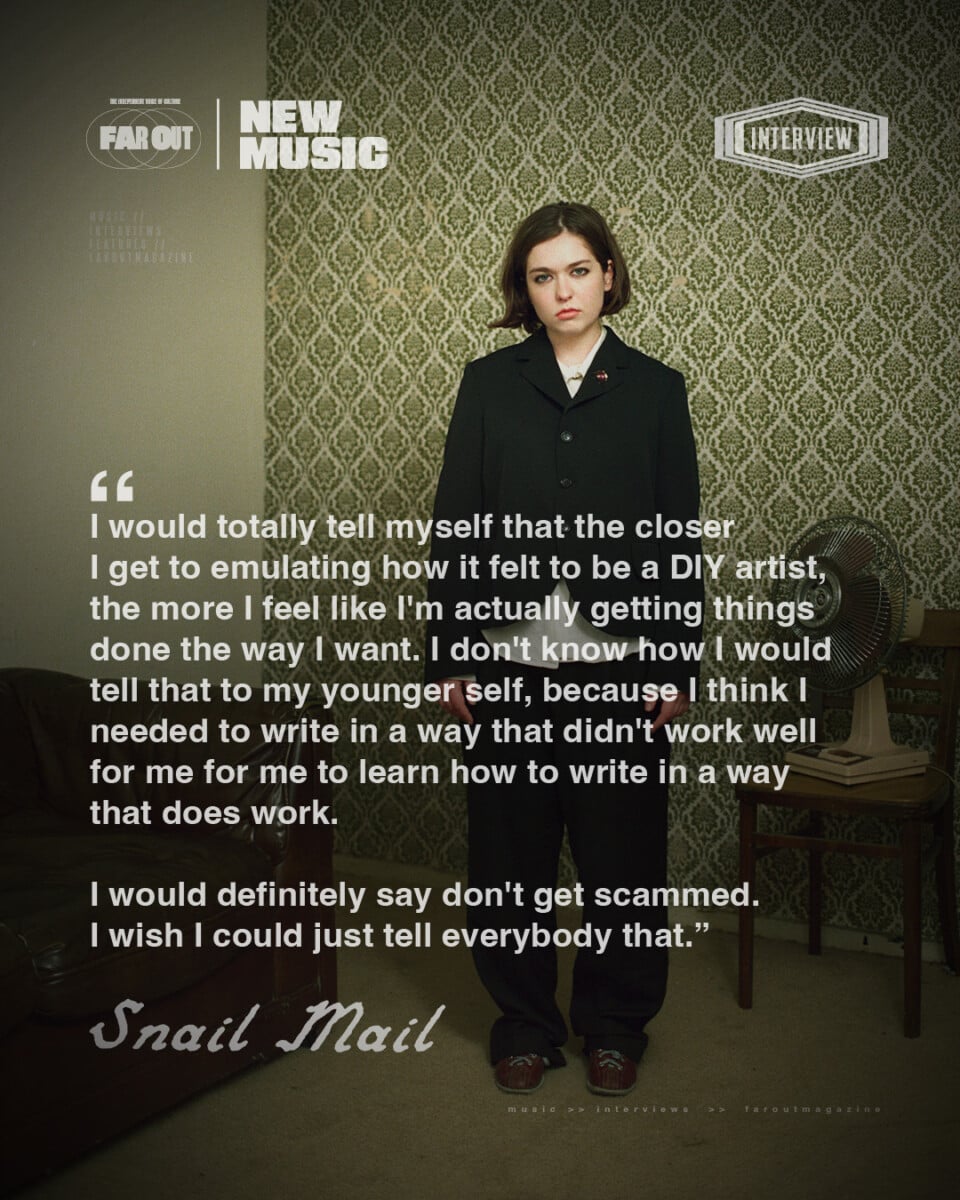
Given where she is now, would she consider having done anything differently in retrospect? “I would totally tell myself that the closer I get to emulating how it felt to be a DIY artist, the more I feel like I’m actually getting things done the way I want,” she declares. “I don’t know how I would tell that to my younger self, because I think I needed to write in a way that didn’t work well for me, for me to learn how to write in a way that does work. I would definitely say don’t get scammed. I wish I could just tell everybody that.”
