


The North Carolina ghost town that became a Hollywood dystopia

As the real world continues edging ever closer to dystopia, Hollywood may not have to look too far in the future to find locations that can convincingly double as dank, dour, and miserable places where the local population lives in constant fear under the threat of authoritarian rule.
We’re hopefully a ways away from that happening, although you can never be too sure, looking at basically everything that’s going on, so when one multi-billion-dollar movie franchise was on the hunt for the perfect backdrop to light the touchpaper on an uprising, North Carolina would have to do.
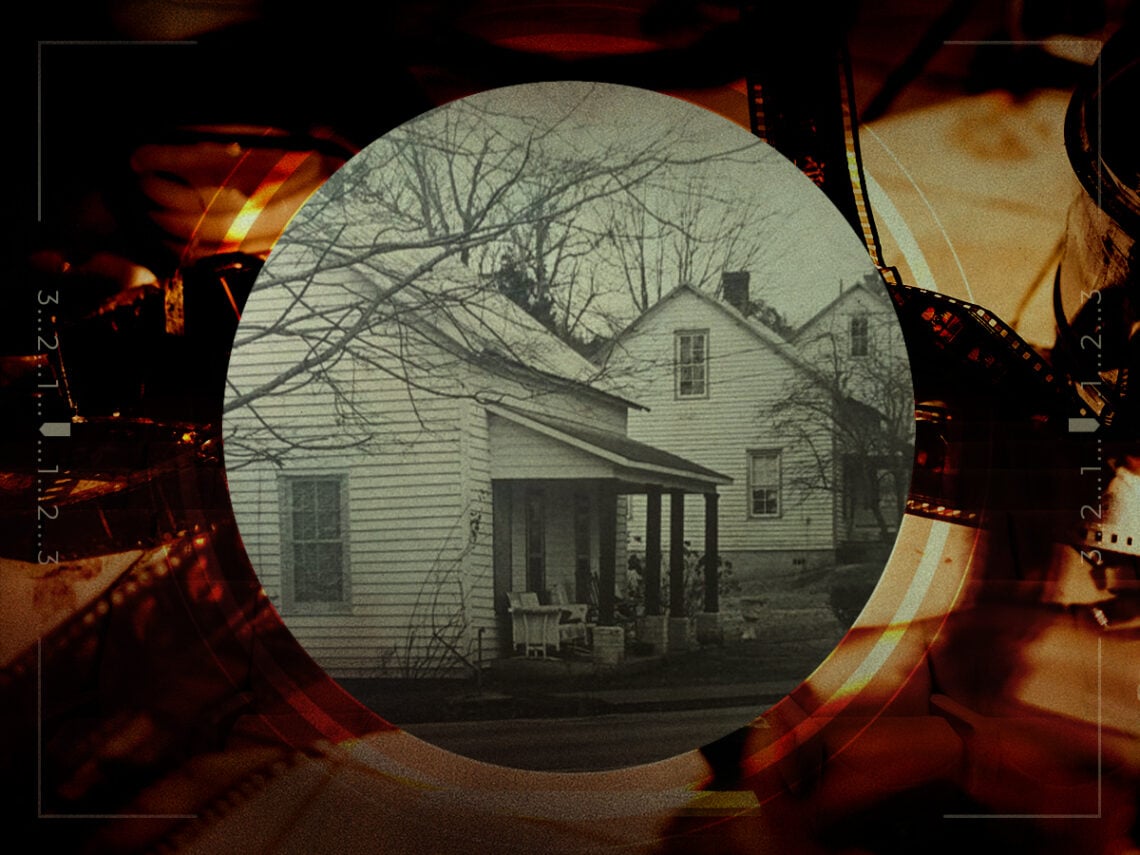
One of the many drawbacks of rapid expansion is that some purpose-built towns eventually outlive their usefulness, which happened to Burke County’s Henry Mill River Village within a matter of decades. Created in the early 1900s as a textile-dependent outpost, it was completely abandoned by the end of the 1980s.
Once upon a time, it had its own mill, dam, water and fire systems, shops, and amenities, with the population hovering between 100 and 150 inhabitants when it was fully operational. Once the mill shut down in 1973, the purpose it was built for was rendered irrelevant, and it was simply left to decay and be reclaimed by the wilderness.
At least, until The Hunger Games came along. When director Gary Ross signed on to adapt Suzanne Collins’ literary sensation for the big screen, the big-budget production’s location scouting saw it settle on North Carolina as its base of operations, with lucrative tax breaks incentivising Lionsgate to set up shop in the state.
Jennifer Lawrence’s Katniss Everdeen was born and raised in District 12 before she volunteers to take part in the titular showcase, and Henry River Mill Village was the perfect place to illustrate those early sequences before she’s whisked off to the Capitol, with Ross explaining that “just worked perfectly for the movie to evoke the scene” the way he’d envisioned.
Inevitably, when The Hunger Games earned almost $700million at the box office and launched a money-spinning franchise that’s since segued into prequels after the original four-film series concluded, fans began descending upon the abandoned village en masse to wander around the very place they’d watched Katniss take her first steps towards overthrowing the established order.
It would be foolish not to capitalise on the association, and these days, Henry River Mill Village is thriving for the first time in a long time, or as close to thriving as a derelict and abandoned ghost town can be, evolving into a tourist attraction where visitors can spend the night, attend events, or organise events of their own, bringing more eyes than ever before.
The Hunger Games didn’t single-handedly save the place from being a forgotten speck on the map, with efforts to preserve its history predating the movie, but a world-famous and massively popular franchise was nothing if not handy.
