


The singer who made Bob Dylan avoid rock and roll: “He had just done it”

Let’s be fair, the majority of music you actively listen to, or even hear without consciously paying attention to, is a rehash of something else to a certain extent. Rock and roll may have sounded like a truly groundbreaking innovation, but in truth, it was impossible to separate it from what had preceded it.
The emergence of rock and roll in the 1950s was heavily inspired by the blues and jazz music of the 1940s and even before, and it’s hard to look at it as anything other than a logical progression from that that would eventually transform into its own thing. After a short gestation period, it would then become the dominant cultural force, only to be surpassed by further new innovations down the line.
This cycle has continued to repeat itself and regurgitate old styles in order to create something that appears to be new. What we now call pop music essentially began as a bastardisation of rock and roll that has constantly accrued other elements along the way, and even jazz, which would have felt like something truly original when it was first starting to be embraced by a wider group of performers, came as a result of classical music fusing with folk and various other pre-existing forms.
Folk is arguably the closest you’ll get to a genre that has existed since the beginning of time, and yet it still lives on and retains its popularity due to its overwhelming level of accessibility. That doesn’t mean it has remained untouched, but modern folk music is still easily recognised as a mutation of folk music that was passed down through generations in times before recorded music existed.
But despite its relative pureness and how it would go on to become a commercially powerful style of music that provided the likes of Bob Dylan with their careers, there’s always going to be the temptation to try and create something new by fusing it with other ideas.
Like so many others, Dylan himself had to deal with the temptation of dabbling with rock and roll despite having already carved his own niche in the folk world, and while the resistance was strong at first, he knew when it was the right time to make a comfortable transition into new territory.
In a 1987 interview with Rolling Stone, Dylan said that his initial reluctance to join the rock and roll party was because he felt as though he’d come along too late to ride on the coattails of the artists who had already made it successful. “Chuck Berry was a rock and roll songwriter,” he argued, “so I never tried to write rock and roll songs, ’cause I figured he had just done it.”
“When I started writing songs, they had to be in a different mould. Because who wants to be a second-rate anybody?”
Bob Dylan
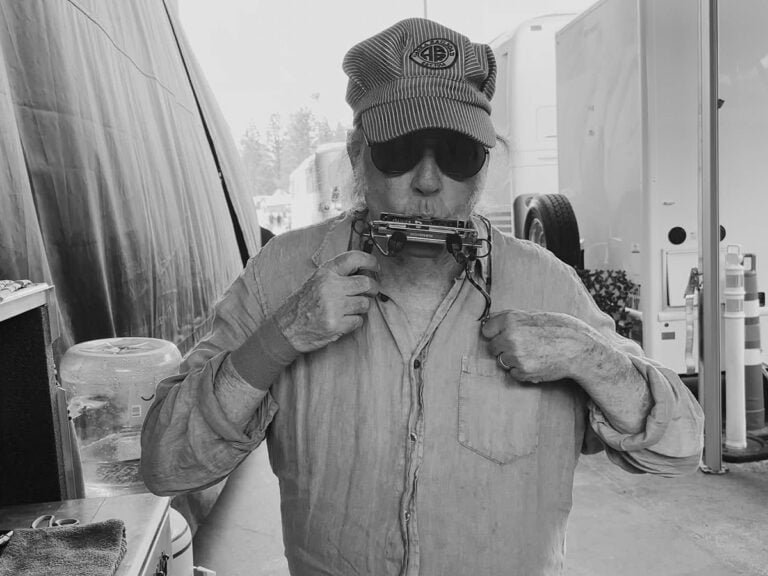

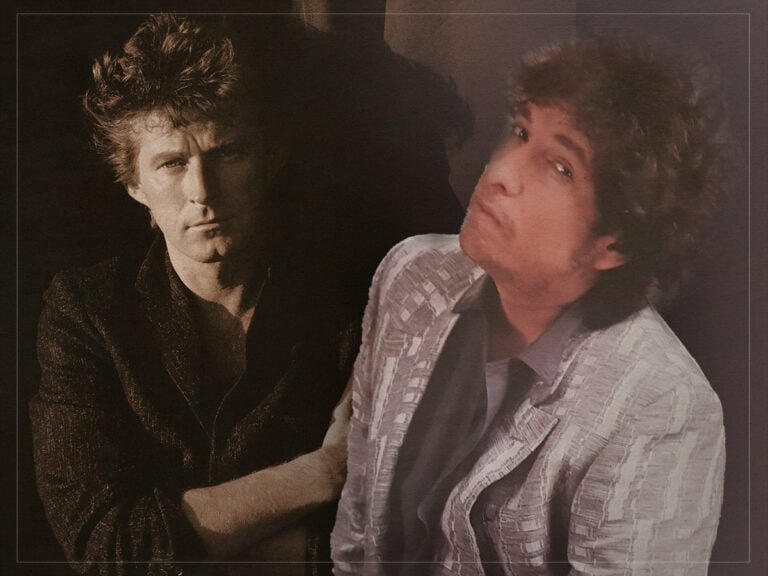
However, he conceded that after a few years, there was an opening for him to be able to experiment with incorporating aspects of rock and roll into his own music, commonly referred to as the moment where Dylan “turned electric” at the infamous 1965 Newport Folk Festival.
“A new generation had come along, of which I was a part,” he continued, “the second generation of rock and roll people. To me, and to others like me, it was a way of life. It was an all-consuming way of life.”
Folk had served Dylan well, and in his eyes, there was no need to entertain the idea of trying to reinvent himself as something else in the earliest years of his career. However, as time moved on, he knew that things had to evolve and that they were susceptible to change, and he took the initiative to fuse what he had with rock and roll to become part of the new vanguard.

Never Miss A Tale
The Far Out Bob Dylan Newsletter
All the latest stories about Bob Dylan from the independent voice of culture.
Straight to your inbox.