


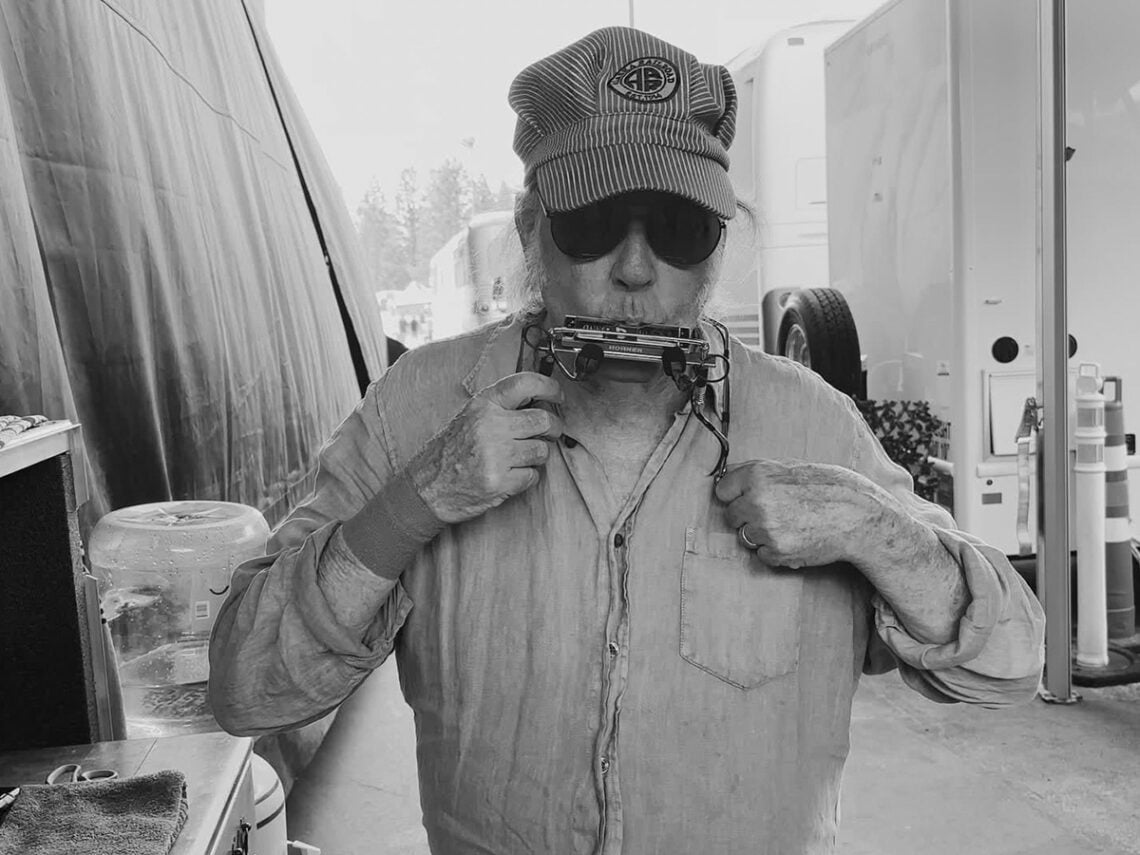
“Best piece of work”: the 2003 album Neil Young called his magnum opus

Counting 49 studio albums under his belt, there’s a multitude of records and chapters in his oeuvre that Neil Young could point to as his most essential.
And that’s not including his various live LPs, exhaustive Archives series, Buffalo Springfield records, and collaborations with Crosby, Stills, & Nash. There’s a meatier body of work to sink your teeth into than any of his supergroup peers’ solo efforts or even much of the Woodstock generation once the counterculture had ebbed, jumping between earnest singer-songwriter, pissed-off punk thrasher, synthpop provocateur, and later Godfather of Grunge. There’s a myriad of Youngs always seeking to clamour wherever his artistic antenna is calling him.
It’s what binds his disparate discography. From 1968’s Neil Young to 2025’s Talkin to the Trees, Canada’s finest cultural export has always anchored his creative haphazardity with an integrity of the stylistic fancy he’s gunning for, never any idea entertained that he’s just going through the motions for a paycheque. If Yong’s not satisfied with the path before him, he won’t even take a step forward.
Such gun-sticking means if Young thinks one album will stand the test of time in his LP legacy, you best believe he’s not kidding. Among such a lauded record run, boasting the likes of After the Gold Rush, Harvest, and Rust Never Sleeps, Young in fact reached into a relatively recent album from 2003 that towered high and mighty in his estimation.
“This might be right up there with Tonight’s the Night in the long run,” Young confessed frankly on Musikbyrån in 2006, while holding the Greenland CD in his hand. “This is one of my best pieces of work.”
It’s quite the statement. Backed by his trusty Crazy Horse band, Greendale took one of Young’s most raw and rustic retreats into the down-home roots rock that the two camps are able to venture so authentically whenever they join forces.
The stripped-down production approach served the conceptual edge of the record. Set in the fictional namesake Californian town, Young ensured a looser backing band in order to afford his dreamed-up Green family the lyrical presence they needed to explore the larger themes of life’s ticking clock, environmental concerns, and political corruption’s dark shadow on working-class communities. Possessing such narrative potential, Greendale was even expanded into a graphic novel with DC Comics’ Vertigo offshoot in 2010.

Young was playing director more than musician during Plywood Analog’s Greendale sessions, hearkening back to his filmmaker chops on Human Highway to pursue a songwriting approach of a lyrical sketch in the morning, the guts of the jam worked out a little later, then a song in the can before the day’s out. Each day would yield another scenario in the Greenland universe, until a whole story arc was realised involving police murder by the hands of the family’s great-nephew, the patriarch hounded by the press toward a heart attack, and the granddaughter hounded out of Greendale by the FBI due to her eco organising.
“You can’t please everybody all the time, but I pleased myself with this,” Young concluded. It’s a characteristic remark on the albums that shine with vitality in his high opinion, Greendale, while far away from the classic output most fans will flock to, pulling him to an artistic realm where he’s challenging himself, exactly the terrain that typically yields his best work.
