



Is there a secret to the ideal writing routine?

Every great writer is always dreaming of a perfect “spark”, one moment when the ideal character, setting, or vision of a storyline begins to take shape. But can this momentous shift actually occur?
To be clear, there is no secret to being a writer. Between the ever-present imposter syndrome, the fluctuations from writing genius prose to mindless drivel and the constant pressure to meet expectations (of oneself, of others, or both), the act of writing is an undertaking that never comes lightly.
As for any artist, honing one’s talent comes from an incessant practice that needs to be rigorous alongside the usual chaos of life. For some, this means balancing being a writer while working their nine-to-five job, juggling children and marriage, all while maintaining their social life and at least a semblance of their sanity.
Because there is no special secret, we are forced to leave sparks of inspiration up to the universe and little more. As Octavia E Butler advised, “First forget inspiration. Habit is more dependable. Habit will sustain you whether you’re inspired or not. Habit will help you finish and polish your stories. Inspiration won’t. Habit is persistence in practice.”
Adopting a writing habit does not come overnight – unless you’re like Jack Kerouac, who, according to legend, wrote On The Road primarily in one sitting, producing one giant, taped-together scroll of a manuscript on his typewriter. Rather, its imperative is in the very continued act, however that may look from one writer to the next. If being a writer requires such discipline, then thankfully, we can look to the esteemed writers’ routines that they steadily adopted over time.
Joan Didion, for instance, began her mornings with a can of Coca-Cola and some almonds for breakfast. She would spend her day writing and, at the final hour, have a drink of her choice to edit her work. Crucially, once she came towards the end of finishing a novel, she would sleep in the same room as her manuscript. “Somehow the book doesn’t leave you when you’re asleep right next to it,” she rationalised.
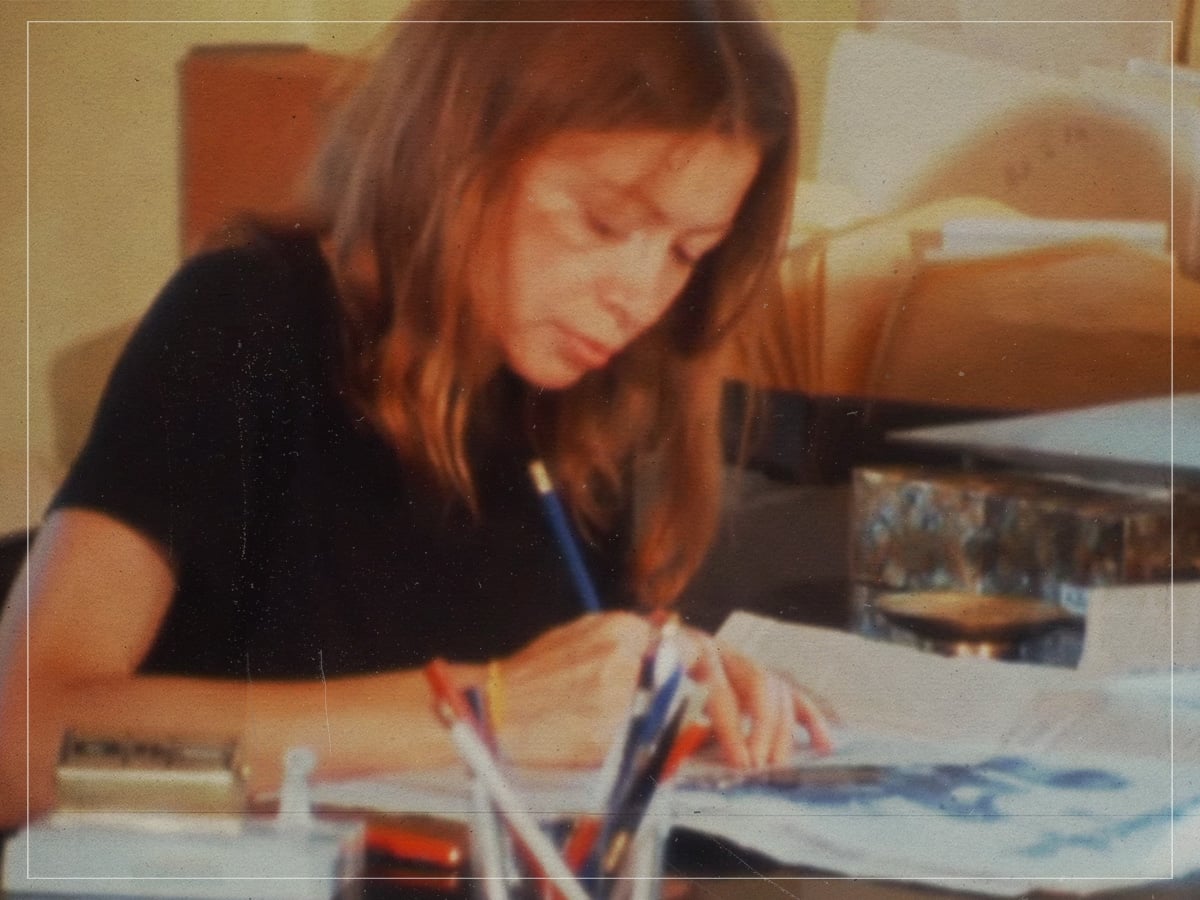
While her genius gifted us with some of modern culture’s most significant criticism, Didion was no stranger to moments of blankness. In 2005, she told an interviewer that she would spend “most of the day working on a piece not actually putting anything on paper, just sitting there, trying to form a coherent idea,” eventually writing three sentences to a paragraph, if luck was on her side.
Susan Sontag showed a similar discipline. Often, she would write for 18-20 hours a day and, as chronicled in her published diaries, she would write a list of rules that she would attempt to force herself to follow: waking up at 8am, not taking any phone calls in the morning, only going out to lunch if it was with her editor and always reading in the evening (she allowed herself to break two rules per week).
Patti Smith, in contrast, leans into the languid nature of the writing process. As detailed on her Substack account, she spends every morning at her usual café, where, armed with her cup of black coffee and notebook, she sits and writes for hours. Rather than a café, Donna Tartt typically chooses the New York Public Library, gleaning descriptions of her characters from those who passed her by. She writes in a chosen notebook and colour-codes her revision notes, writing until she grows tired.
Maya Angelou’s chosen space was a hotel or motel, chosen in every town she lived in – she would rent a room for a few months, rising every morning around 5:30am and arriving an hour later, and with no visitors allowed and no distractions decorating the walls, she had only her chosen objects: a dictionary, a thesaurus, a Bible, books of poetry, a yellow notepad, ballpoint pens, a deck of cards, an ashtray, a glass and a bottle of sherry. Writing until the early afternoon, Angelou would return home, shower and forget about writing until the evening, when she would read and edit what she had written.
Mornings seem to be a common thread (unfortunately for the night owls). Ernest Hemingway would also wake up at 5:30am, as Angelou did, and begin writing by 6am. But, he championed a healthy work-life balance: “You write until you come to a place where you still have your juice and know what will happen next, and you stop and try to live through until the next day when you hit it again,” he once shared.
Whether one’s own routine follows a set alarm clock, a strict diet, or veers into the strange and unusual, discipline looks different for every person who holds the pen. There is no magic writing utensil, notebook, or laptop; nor is there any amount of aestheticising the practice of writing that will make words suddenly appear on a page. The ideal routine, then, comes from the sheer compulsion to do so.
