


No chapter, no clothes: Victor Hugo’s bizarre naked writing routine

When you picture Victor Hugo, one of France’s most prolific romantic writers, the first thing that will come to mind is probably his tragic and painstakingly long Les Miserables, most recently put up on the silver screen in your local cinema. If you’re a real connoisseur, you might point out his philanthropic work of the mid-18th century, when he campaigned for free education and to end poverty, as part of his work in the French National Assembly.
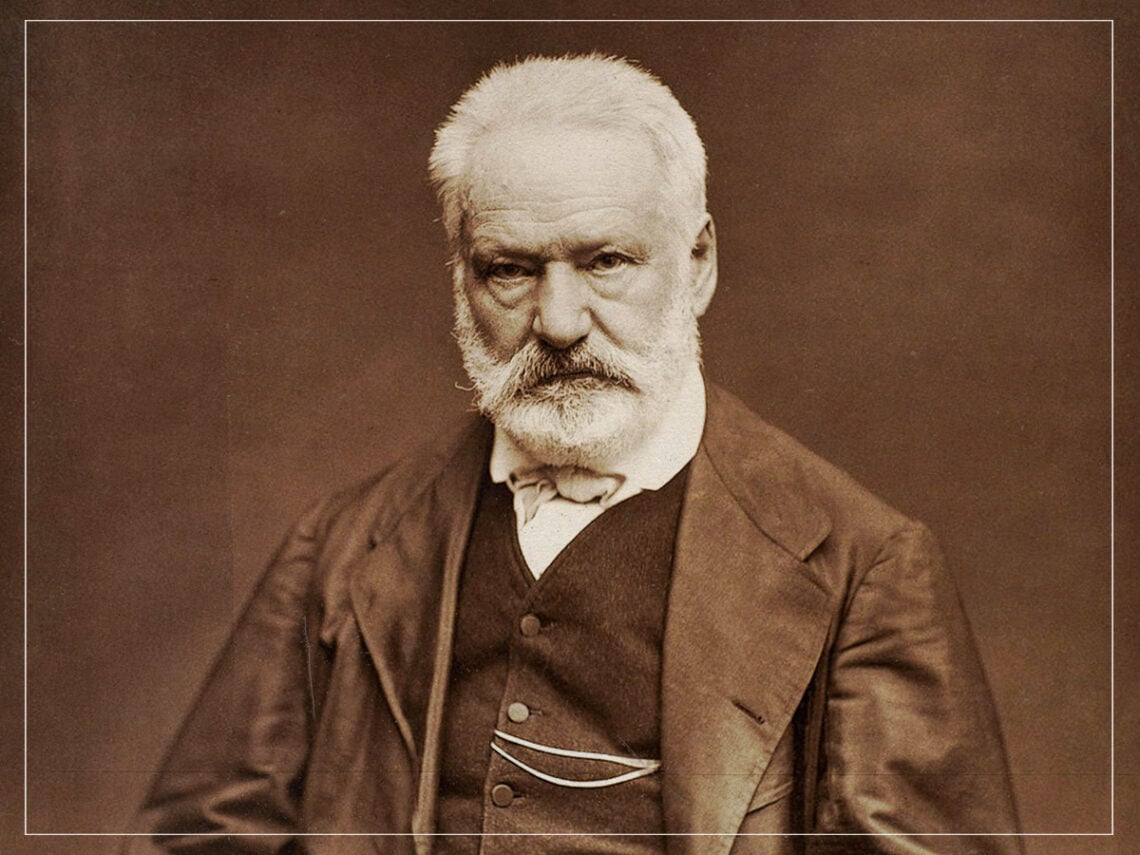
Only a few, however, will know that behind the icy eyes, white ‘stache’ and pensive pose of his portraits, which vaguely recall Rodin’s ‘The Thinker’, is a wild and kinky nymphomaniac whose life was far from miserable.
Indeed, Hugo’s appreciation for the finer (and funner) things in life runs in the family. Rumour has it that his parents conceived him on the grassy plains of the Mont Blanc, where clearly the ‘birds and the bees’ took on a much more literal meaning. We are reminded of this “en plain air” love-making thanks to a museum curator who, in the 1960s, decided to commemorate the writer by placing a memorial there, so don’t be surprised if, on your next alpine hike, you come across a sandstone block that clearly spells out “in this location Victor Hugo was conceived”.
You might still be asking yourself what all this has to do with Hugo himself. Such a pillar of French culture, studied in schools across the world, couldn’t be that risqué. Well, I might beg to persuade you otherwise. When concocting a new oeuvre, it is said that Hugo only brought the bare necessities with him into his study: pen and paper and, literally, his bare body. It seems like Hugo was a fan of self-inflicting punishment, as he demanded his servants only to return his clothes to him once he’d finished a chapter.
However, this bizarre writing ritual took a turn. According to the memoirs of his poor wife, Adèle Foucher, Hugo conceded himself a “huge grey knitted shawl, which swathed him from head to foot” while writing another one of his “chef-d’œuvres”, The Hunchback of Notre Dame. No wonder his works are so devastating; the poor man was probably developing frostbite in the regions of the body where frostbite shouldn’t ever be.
The label of ‘sex addict’ stuck until Hugo’s very last days, not that he seemed particularly fussed about it. He loved to recount endlessly how, on his wedding night, he and Foucher had sex almost ten times. When Foucher lost interest in Hugo’s coital curiosities, Hugo became a weekly, perhaps even daily, visitor of Parisian brothels to “unload” from a hard day’s work.
When Hugo died at the mature age of 83, one of the many ways he was mourned was when all the city’s brothels closed for the day. I wouldn’t be surprised if the brothel industry experienced a financial depression after such a loyal client went to the great beyond.
So next time you find yourself watching the sexy skinhead Anne Hathaway, in a dishevelled corset dress, singing ‘I Dreamed A Dream’, don’t hesitate to ask yourself whether her character was just a fabrication of Hugo’s feral fantasies or truly the ‘dramatis persona’ she is known to be.
