


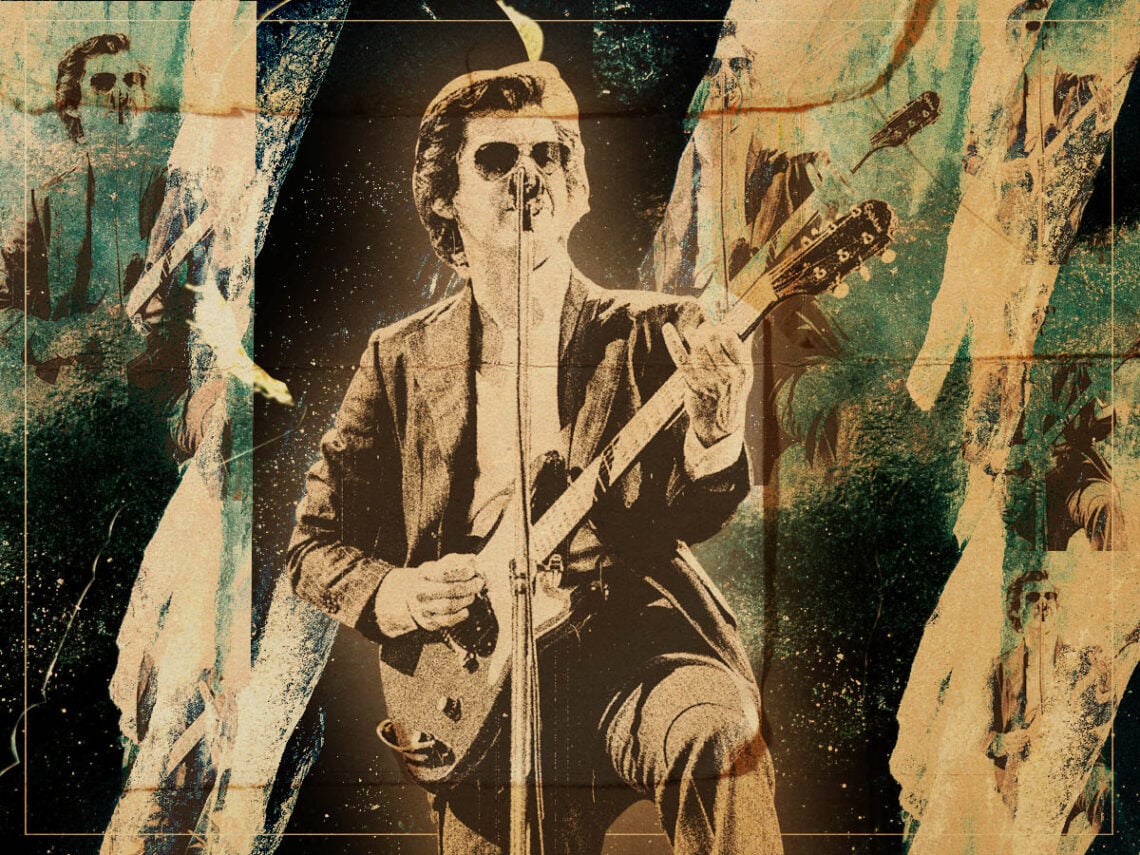
Mad Sounds: The secret to Alex Turner’s guitar playing

It’s been two decades since the world was first introduced to Alex Turner – a then 20-year-old armed with his signature Fender Stratocaster in Arctic white, of course. Launching rather into the spotlight as the frontman of the band who defined the era’s garage-rock revival, the Sheffield native possessed an unmistakable knack for writing lyrics laced with sarcasm and wit while delivering them with great tongue-in-cheek appeal.
In 2006, Arctic Monkeys released their debut album, Whatever People Say I Am, That’s What I’m Not. Their second album followed swiftly in 2007, just two months before the band headlined Glastonbury’s Friday night, marking a meteoric rise to fame. Remarkably, it was frontman Turner’s first time attending the festival. Despite that, their set remains one of Glastonbury’s most celebrated, solidifying their reputation as a band whose live performance could match the immense hype.
Moments after gracing the stage and singing the opening line of ‘When the Sun Goes Down’, the crowd completely takes over, and Turner happily hands them the mic. At this point you’re struck by the captivating nature of this young wordsmith’s lyricism.
But while a field full of 20-year-olds are meticulously blasting out every word to their heart’s content, a younger generation is sat at home practising and practising and practising to the tune of Turner’s adept guitar skills. The chocker-block chords of ‘I Bet You Look Good On The Dancefloor’ straining little fingers and announcing Turner as an unassuming virtuoso.
While its role has changed over the years, the guitar has remained at the forefront of each of Turner’s musical outpourings. So, what’s the secret to his truly distinctive tone and melodicism?

Taking a moment to dig into the technicalities behind his guitar playing, it doesn’t take long to see one common denominator shine through: augmented chords. You may expect a complicated explanation here, but thanks to Turner’s clever use, it’s not necessary. Across a selection of tracks, we find that his approach is quite formulaic. Each augmented chord played is always preceded by the major chord of the same root note, while the chord to follow is either a variation of that same major chord or a major fourth.
‘Stuck on the Puzzle’, a track composed for Richard Ayoade’s 2010 movie Submarine, opens with augmented chords, but played in a descending pattern on piano, it creates a dreamy soundscape. Yes, played here on piano, Turner’s technique transcended instrumentation and, as we’ll come to learn, his wide span of artistic projects.
‘No 1 Party Anthem’, taken from Arctic Monkeys’ widely lauded fifth album AM, utilises a combination of two augmented chords in the pre-chorus. While the same bass note underpins the first four chords, the highest note played on the guitar moves up a semi-tone each time. Played slowly with some added reverb, instead of creating a point of tension, we hear that dream-like quality again.
On Alexandra Saviour’s ‘Girlie’, co-written by Turner, a C# augmented chord is played during the instrumental break, bridging the verse and chorus. We first hear the chord progression return to the major chord of the root note, but the second time around, the track switches lanes to land on the major fourth—as heard on ‘Stuck on the Puzzle’.
A similar progression provides the foundation to ‘The Dream Synopsis’, the 11th track taken from The Last Shadow Puppets second – and most recent – outing Everything You’ve Come To Expect. Played in E, the pattern this time supports a vocal melody that sings through the verse. The album’s title track makes use of the form with greater subtlety, appearing on just one occasion as the song nears its end – but what’s seldom can be golden, and here, it plays a crucial part in creating the climactic point of the track.
Released as a B-side to their 7-inch pressing of Tranquility Base Hotel & Casino, Arctic Monkeys’ ‘Anyways’ takes a similar approach in utilising this pivotal chord choice as a point of transition – here linking chorus to verse.
Alex Turner’s style has undoubtedly evolved in more ways than one in these past 20 years. From a hoodie-wearing guitar-playing teen to a slicked-back leather-clad rocker, parallels can perhaps be drawn between his development in instrumentation. From loud, busy guitar to more orchestral arrangements, the augmented chord – interestingly first used in classical music – has found its place throughout. With such findings, I do always wonder if musicians set out on a conscious mission to incorporate techniques in a formulaic fashion or if it comes naturally. With Alex Turner, my bet is on the latter.
