


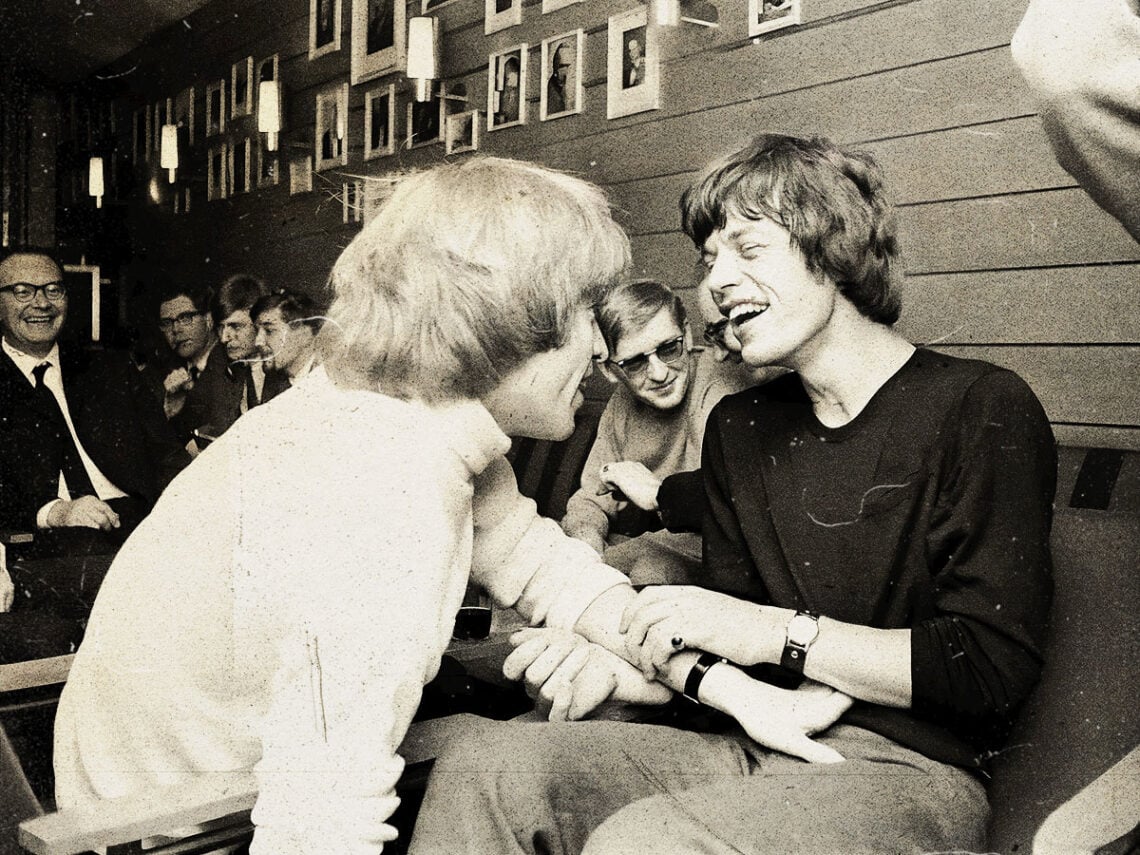
The Riot at Kurhaus, 1964: The Rolling Stones’ revolutionary first gig in the Netherlands

By 1964, The Rolling Stones were the only band capable of challenging the fandom that currently swelled around The Beatles.
They offered a visceral sense of punky immediacy amid the pandemonium of mainstream Beatlemania. Where the Fab Four were always a police cordon away from their screaming fans, the Stones were always a lot closer to the dangers of rock and roll, immersing themselves in the filth and the fury.
That attitude became readily apparent in the mania that Brian Jones, Mick Jagger, Keith Richards, Charlie Watts and Bill Wyman created within just a few songs at their riotous debut in Den Haag, the Netherlands. With an incendiary set, the band would bring the Kurhaus down. Literally.
August 8th, 1964, would be a day that would go down in Dutch pop history as The Rolling Stones arrived with rock and roll in their hearts, a swing in their hips and a glint in their eye. The group’s reputation had only grown over their minimal years on the touring circuit. Still, they were setting foot on the continent as a group for the first time, and the audience made sure nobody would ever forget it.
“Kurhaus theatre in Holland. It was a very nice opera house theatre,” says Bill Wyman, ostensibly the group’s sensible older head. “Tapestry on the walls, chandeliers, boxes, you know,” he continued, painting the picture of tranquillity and theatrical opulence about to be sullied by the decadence of rock and roll. “Went on there. Played one song and they just went nuts.”

That much is evident in the historic clip below. The archival footage comes from the Dutch music TV show Brigitte for TV Noordzee, which captured the audience’s intensity as it erupted in front of Jagger and the rest of the band’s eyes. While the original sound has seemingly been lost amid the mayhem – the track overlaid onto the footage, ‘Carol’, was not actually performed during the evening on August 8th – what we can see is the feverish energy that the Stones incited wherever they went.
The Netherlands of 1964 was orderly on the surface, still pillarised by social divides. But the Stones scratched that surface with a single razor-sharp riff and found beneath it a generation that was beginning to chafe against the rigid structures of post-war society.

Stationed incongruously in an elite concert hall, the literal collapse caused by the clamouring uproar of the youth in attendance felt unmistakably symbolic. Even the swiftness hinted at how pent-up a lack of satisfaction had been among the young. The crowd erupted instantly on the night, and begin swarming the stage, clambering over the theatre’s ancient seating.
Soon enough, security guards swarmed the stage to protect the band from the powerful mob. While it seems clear that the heaving audience was only ever interested in dancing and letting loose, the swell of unstoppable youthful spirit must’ve been overwhelming for the still fresh-faced band.
Jagger and co tried to move through their set as the security guards become heavier handed (and footed), landing kicks to the young faces in the crowd as daring rascals looked to swarm the stage. As all the members of the group took collective leaps backwards, Mick Jagger’s microphone cord soon found itself snapped. Alas, his words barely seemed needed.
Ever the professional, Jagger grabbed some maracas, made his way to the back of the stage for an impromptu proto-Bez performance, and let the music take the spotlight. But in truth, it was more to do with what the music represented rather than its sound that caused chairs to fly through the air, and finally, for the police to enter the fold.
The Rolling Stones soon escaped to backstage safety and then on to their waiting cars while the interior of Kurhaus was smashed to pieces by the crowd/baying mob inside. The police would employ canines to escort everyone out of the theatre and into the street, where they were dispersed.
As the teens flocked into the alcoves that encircle the seafront of Scheveningen, surrounding the grand old theatre, they fled into the night, emboldened by the fury of rock and roll rebellion, weaving local press officers reeling. Every single one of those kids was now a Rolling Stones fan for life, and that had a marked impact on the future of the whole Nertherlands.
In the days that followed, the Dutch press reported the incident as a riot, stressed the ‘collapsed’ damage casued to the Kurhaus, and framed the whole event as a warning. Rock ’n’ roll was no longer harmless entertainment that crackled onto radios from afar. With one single show, it was now being recast as a social threat.
The youth saw this as a gaudy celebration of their actions and battle against stilted banality rather than the telling off it was intended as. Similarly, the Stones basked in the backlash once they had regained their senses, and saw the ordeal as international promotion of their newly minted ‘dangerous’ image. If they were going to compete with The Beatles, they had to be their more daring counterparts.
Within a year, the Netherlands would become a hub of countercultural experimentation. And the Rolling Stones would become the most joyously feared band in the world. One simple gig became a moment in history, and the Kurhaus still has the scars to prove it.
Watch the riot that ensued during The Rolling Stones’ first Dutch performance at the Kurhaus theatre in 1964.
