


The rock guitarist Miles Davis immediately fell in love with: “We understood each other right away”

Even though Miles Davis is frequently credited with having changed the course of jazz history on multiple occasions with his constant shapeshifting ability, that doesn’t mean that he wasn’t invested in studying innovations in other strands of music.
This shouldn’t really come as much of a surprise, given how his various attempts at reshaping his own field were heavily informed by the ways in which other artists were innovating in their own fields. This sense of fearlessness that Davis possessed frequently earned him praise, but it often came many years after he’d released his most daring works, with people coming late to the game and realising their initial dismissal of it was because they simply didn’t understand it yet.
To say that Davis was ahead of the curve would be a misunderstanding of his place in the history of music, because arguably, Davis was the one responsible for creating and manipulating the curve, with people following suit upon recognising his genius. By this point, he’d usually have already forged his own new path, showing interest in pushing boundaries further so that people would constantly have to play catch-up with him.
Albums like Jack Johnson were demonstrative of Davis taking a shine to rock music, while On The Corner, released only a year later, is just as indebted to the funk of Sly and the Family Stone as it is to the avant-garde electronic composition of Karlheinz Stockhausen.
However, for all of these different directions that Davis found himself exploring, he never strayed too far away from his roots, and while many people might think of that as being rooted in a profound love of jazz music, his origins stem much more from the blues music that predates his love and admiration for the likes of Charlie Parker and Dizzy Gillespie.
Introduced to the blues from a young age, before he’d even had any formal musical education or even owned his first trumpet, the raw, soulful yet straightforward style that was employed by blues musicians was something that he endeavoured to include in his own compositions once he’d started to develop his own musical talents. One of his earliest pioneering moves was his transition away from bebop to hard bop, a branch of jazz that was far more overt in its association with blues music, and throughout all of his later works, this still coursed through his musical DNA.
However, whenever he developed an affinity for something else, it was usually because there was a way in which he could tangibly link it back to the blues music he’d grown up admiring so much. As far as rock musicians go, there was one exceptional player who he saw as something of a kindred spirit due to how well he demonstrated his own knowledge of the same roots as him, and he immediately recognised his brilliance as a result.
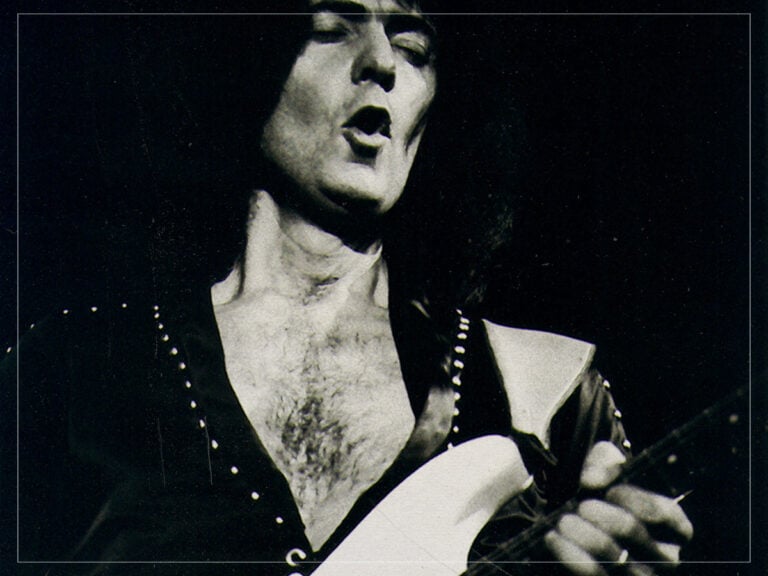
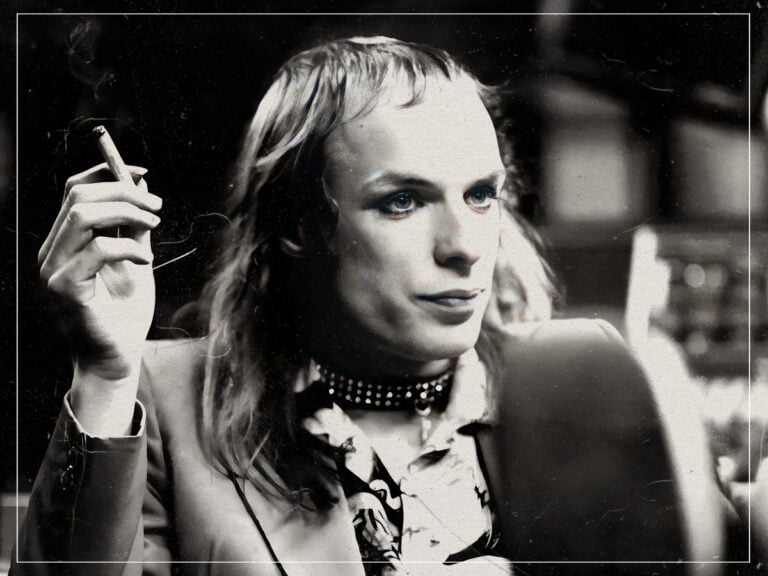

“Jimi Hendrix came from the blues, like me,” Davis later proclaimed about the late guitarist. “We understood each other right away because of that. He was a great blues guitarist.”
While two musicians don’t necessarily have to complement each other stylistically to be able to understand where they’re coming from, a shared vocabulary will go a long way in demonstrating how interconnected different strands of music can be.
As far as Davis was concerned, seeing someone like Hendrix take the same information from a deep love of the blues and apply it to his own style of music in an equally innovative way was bound to impress him, and the fact that they endured a brief friendship underlines just how similar they were despite their different ways of expressing themselves.
