


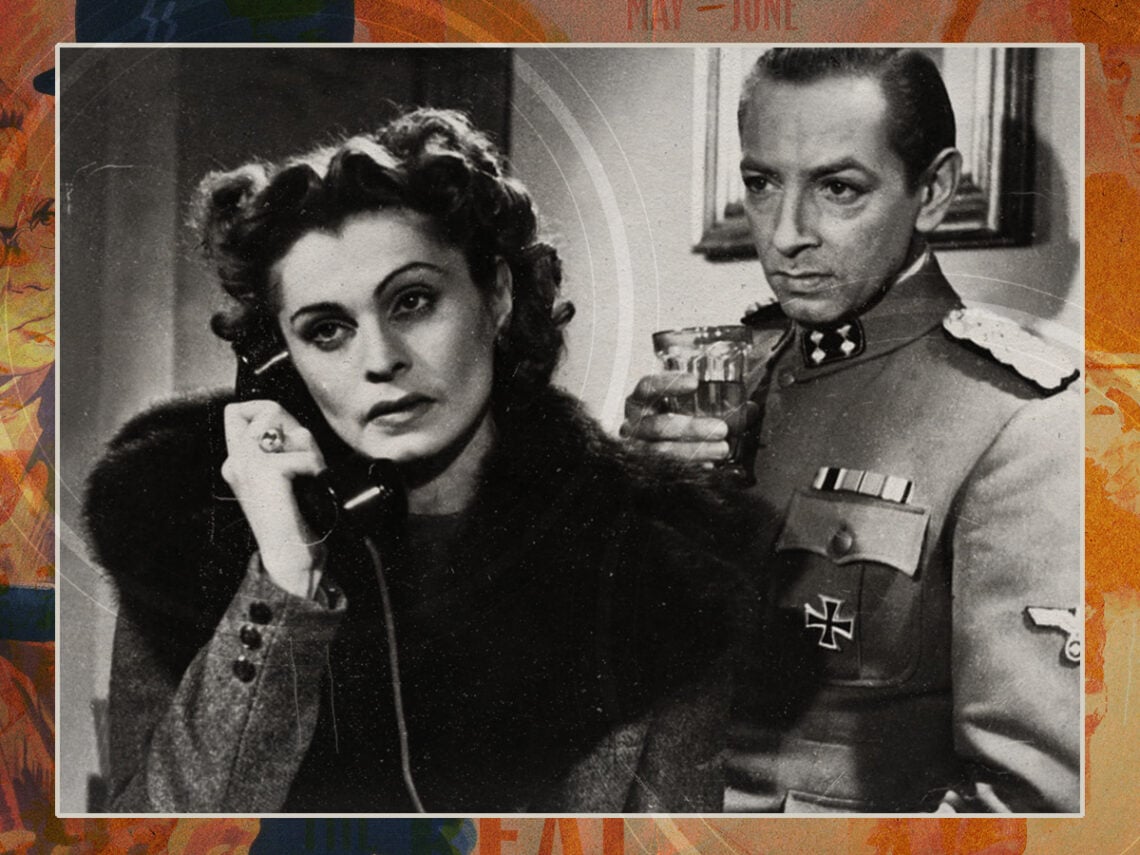
‘Rome, Open City’: Roberto Rossellini’s cinematic protest of social defiance

The fog of the Second World War took decades to settle across the globe, with the conflict leaving skeletons of once-bustling cities and vast cavities inside the European consciousness that forced nations to reevaluate their identities. As a source of collective therapy, in Italy, the neorealism movement was born from the rubble of the Fascist dictatorship, with Roberto Rossellini’s Rome, Open City being one of the very first films to assess the damage of war on the national psyche.
Released mere months after the German Army ceased its occupation of Italy in 1944, Rossellini’s film was a response to the scars that its corrupt bootprints left in the soil. Set when much of the capital city’s population remained under the thumb of German control, the story followed the pockets of resistance that provided refuge to their defiant leader, Giorgio Manfredi, shepherding him to safety across the city.
Without a traditional protagonist, Rossellini keeps his focus on the titular capital city and the simmering cauldron of anxiety and dread that either wilted or inspired those who inhaled its fumes throughout the years of Nazi occupation. Marcello Pagliero’s many-named resistance leader presents this ‘everyman’ figure of defiance, but by his side is Anna Magnani’s Pina, a forthright working-class mother and Aldo Fabrizi’s Don Pietro Pellegrini, a local priest who maintains a line of communication between the ranks of freedom fighters.
Reflecting the newfound principles of neorealism, these characters are not fantastical Hollywood protagonists, they are flawed human beings whose every fear, and indeed every joy, penetrates the celluloid. Each contributing to the struggling engine of resistance, these characters create an authentic mosaic of life in Italy during the closing stages of WWII, with the film acting as a defiant protest against the occupation itself, as well as a form of exposure therapy to help a nation process and grieve the events of the conflict.
“How will we ever forget all this suffering, anxiety, and fear? Doesn’t Christ see us?” Pina exhales to Don Pietro. Her words echo across the entire country and the wider continent as society is left to tend to the physical and mental wounds of the conflict. Yet, while some succumb to the dread that the war inspires, Rossellini’s overriding message is that hope and humanity can trump any threat.
In spite of its bleak setting and historical context, Rome, Open City is one of cinema’s purest offerings, using humour, romance and humanism to give optimism to an era shrouded in darkness. Such is likely why the great Martin Scorsese called Rossellini’s film “the most precious moment of film history,” with the masterpiece distancing itself from mainstream cinema by being a defiant pioneer of social realism, speaking to the potency of human resilience in the face of unspeakable torment.
While dealing with disastrous circumstances and wrestling with a national psyche being dented by wartime trials, Rossellini’s film is far from a tragedy. Accessing the very essence of Italian neorealism’s noble striving to reflect the realities of the working class and give voice to the voiceless, Rome, Open City is one of cinema’s greatest protests, instilling hope that any hardship can be surmounted with dignity and unity above all. As Don Pietro Pellegrini utters in the film’s final frames, “Oh, it’s not hard to die a good death. What’s hard is to live a good life.”
Chasing the Real: Italian Neorealism_ is at BFI Southbank from May 1st – June 30th, with selected films also available to watch on _BFI Player
Rome, Open City is re-released by the BFI in selected cinemas from May 17th.
