


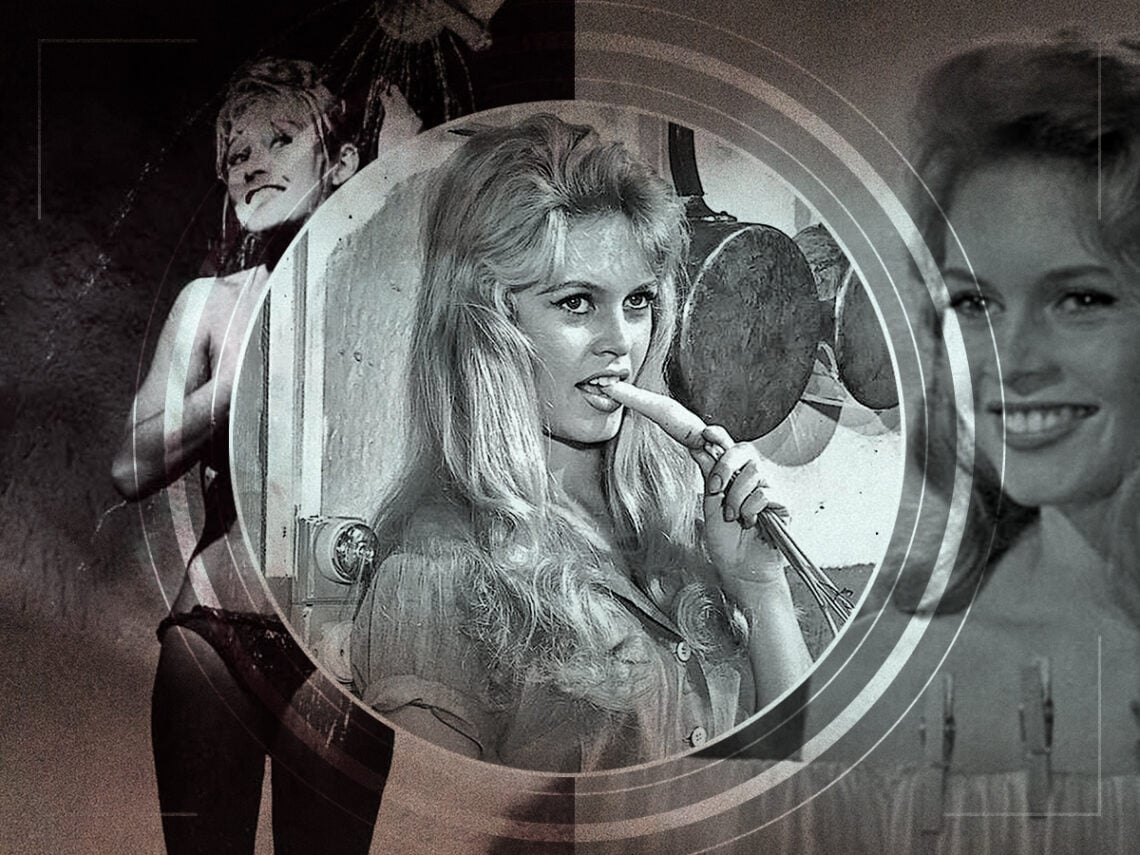
The racy Brigitte Bardot movie that was banned in several US states

There came a moment in the 1950s when a switch was flipped, and Sexy – with a capital S – emerged on the big screen unlike ever before, and of course, it was Brigitte Bardot who played a major part in this movement, rallying against post-war conservatism with her tousled blonde hair and undone look.
She represented a new era for femininity and sensuality in the ‘50s, and she continued to retain her sex symbol image into the 1960s and 1970s, often appearing scantily-clad in movies like Jean-Luc Godard’s Contempt and Roger Vadim’s Don Juan, or If Don Juan Were a Woman.
Her body was wielded as an object of lust and desire – she was no fool, she knew that people were captivated by her, and she used it to her advantage, singing the original version of ‘Je t’aime moi non plus’ – perhaps the horniest song of all time – and she appeared in many, many movies nude.
In fact, 1959’s Babette Goes to War was the first movie since she’d become famous that didn’t involve her getting naked. She really was a revolutionary figure, although she came to tarnish her reputation as a symbol of sexual liberation with frequent racial controversies. Bardot was hardly as open-minded as her behaviour in the ‘50s led many people to believe.
Still, it’s undeniable that she shaped the depiction of female sexuality in the mainstream when she emerged as an actor, and it was 1956’s And God Created Woman… that really helped to propel her into public consciousness. It was an era-defining moment – Bardot, just 21 years old, lying nude on her stomach in front of a sheet drying on the line. Her tanned skin shines in the sun as she lifts her legs behind, creating an indelible image that would send audiences into a frenzy.
The movie was a hit. It was so French. Bardot wears a wet shirt that is hardly buttoned, she dances frantically as though she is approaching something orgasmic, and she rises from her bed fully naked, although we hardly see her body due to a carefully placed sheet. For 1956, though, this was basically pornography, and a lot of people weren’t happy about it. The film challenged people’s ideas of liberated female sexuality, even if, retrospectively, it’s hard to see the film as anything more than a rather sexist and objectifying piece of work.
Bardot occupied an interesting paradox – she was, on one hand, an undeniable figure of female sexual liberation, but on the other, her image was almost exclusively sold through a voyeuristic lens, often filmed through a male gaze by filmmakers like Vadim (and he was never much of a feminist).
When the movie was released, people were so shocked that many wanted the movie banned, and unsurprisingly, officials in various US states were quick to censor it. They saw Vadim’s film as a corrupting force, possessing the potential to disrupt traditional and submissive ideas of female sexual autonomy. Bardot was in touch with her sensuality, and to many viewers, this was outrageous – disgusting, even.
So, in 1958, the film was banned in Dallas and Philadelphia, although this ban didn’t last too long, and with the idea of female sexuality rapidly changing, it seems like these movie theatres gave in to this new era, allowing Bardot to conquer – she became one of the biggest stars in the world, not just in France, and her influence was monumental, because Bardot was more than just an actor and a singer, she became a symbol, and there was no escaping her.
