


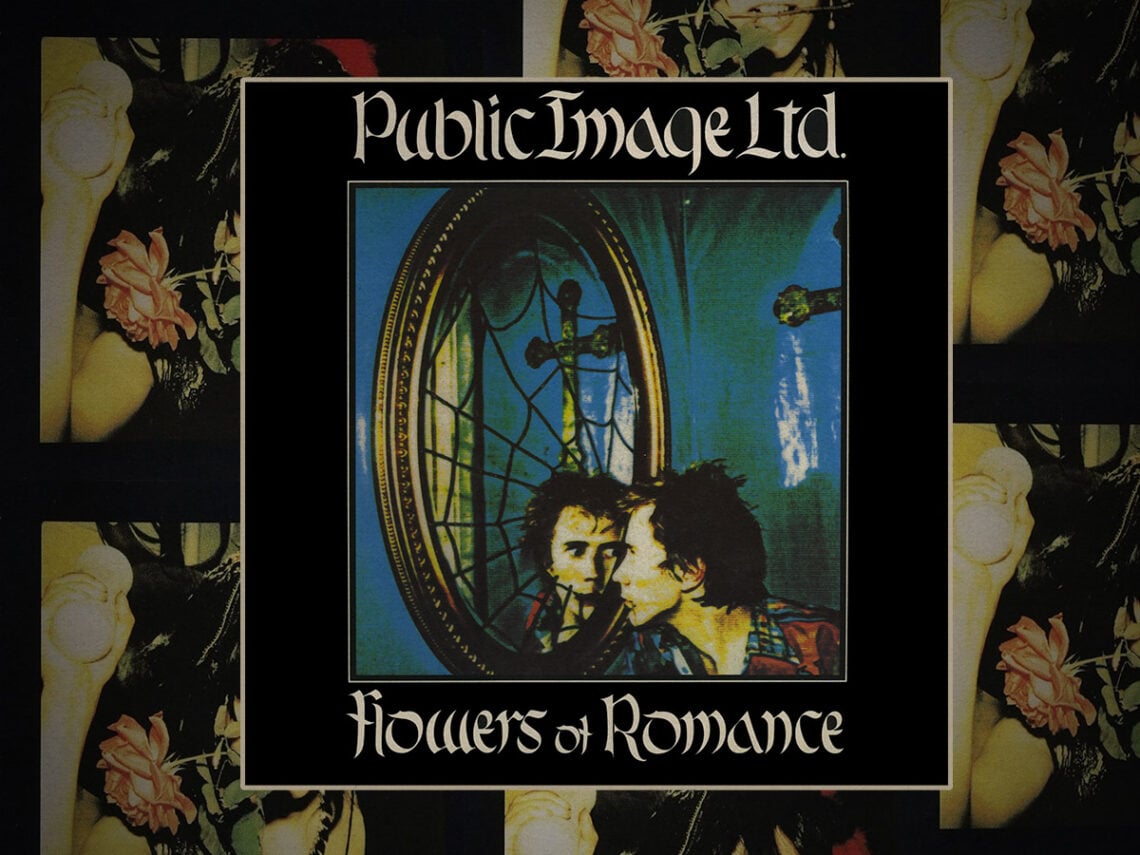
‘The Flowers of Romance’: Public Image Ltd’s final step into the unknown

Whatever creative wilderness Public Image Ltd were hacking away the thickets to, The Flowers of Romance marked the furthest away from rock and pop orthodoxy the post-punk stalwarts would ever stray when dropped 45 years ago.
John Lydon was hungry for new artistic hinterlands. After his former Sex Pistols crashed and burned in 1978, Lydon shook off the Johnny Rotten moniker and sought like-minded punks similarly fatigued with the stifling conventions and mohawk clichés punk had hurtled toward as soon as it had sparked barely two years previous.
Recruiting old college mate Jah Wobble for bass and Keith Levene on guitar, whom he’d befriended when touring with The Clash, the trio’s heady tastes for the avant-garde, dub reggae, and Afrobeat all gifted PiL with a fresh sonic palette to unleash the lessons learnt from punk in a bold new direction.
PiL weren’t the only ones eschewing punk’s curdle into self-parody. Up and down the country, an emerging cohort of bands all emerged from punk’s smoking crater of possibility as the 1970s were coming to a close, eager to harness the day’s insurrectionary spirit and urgent spark, but venturing into uncharted territory, the street-level Oi! or hardcore heads shunned as art school pretensions.
Be it Siouxsie and the Banshees’ neo-psychedelia, Joy Division’s austere minimalism, or Bauhaus’ gothic brood, the post-punk sensibility took ambiguous shape in earnest, if a quality impossible to define even nearly half a century later.
It’s PiL that stands as the exemplary post-punk band, however. Their first few releases even play out like chapters of the movement’s tapestry: 1978’s ‘Public Image’ debut single signalling the symbolic end of punk, 1979’s Metal Box opus attesting to the striking frontiers being forged as the Pistols were larking about in the stupid The Great Rock ‘n’ Roll Swindle musical, then, 1981’s The Flowers of Romance, a dissident realm where even their uncompromising frontman began to look behind him toward the faint horizon of the mainstream after its release.
Just before the recording of The Flowers of Romance, Wobble left PiL and took his booming bass grooves with him. Keeping the cavernous expanse that echoes around Metal Box, the absence of bass is instead filled with all manner of belligerent, percussive muscle, both Lydon and Levene often handling drum duties as well as semi-official member Martin Atkins picking up the sticks to anchor their wayward art-punk clamouring.

All it takes is a spin of the first 30 seconds to glean the two records’ distinct sonic character. Metal Box’s ‘Albatross’ skulks and fizzes together underneath its metallic krautrock gel, whereas The Flowers of Romance’s ‘Four Enclosed Walls’ booms out of the speakers with meaty pummel, Atkins playing over a delayed ticking of his own Mickey Mouse pocket watch.
Anything went during the Townhouse sessions in London, the studio where the majority of The Flowers of Romance was captured after a near-fruitless fortnight in Shipton-on-Cherwell’s The Manor, largely due to the fact Lydon and Levene had arrived at the sessions with little in the way of songs. Shaped by exploration and co-producer Nick Launay’s capable grasp of the state-of-the-art SSL Mixing console, the PiL team threw together anything and everything in The Flowers of Romance’s scatter gun collage. Primitive synthesisers, backwards pianos, concrète opera samples, Stroh violins, and a digital AMS sampler to add further warps and manipulations to an already aggressively strange toybox of jumbled and discarded sounds.
It worked. While imbued with a precarious air of the team fumbling in the dark, unsure of the exact creative destination, The Flowers of Romance extracts some of PiL’s finest moments amid its blindfolded haphazardness. ‘Banging the Door’ channels Lydon’s fatigue of pushy fans to an electronically coated thump of alien snarl, ‘Go Back’ takes a detour into stilted antifascist hip-hop, ‘Under the House’s martial drums slither and crawl with insectoid fever, and then there’s the title-track and sole single, a phantasmic conjuring of subterranean avant-pop so beguilingly hooky it scored a UK Top 40 and PiL’s most memorable Top of the Pops performance.
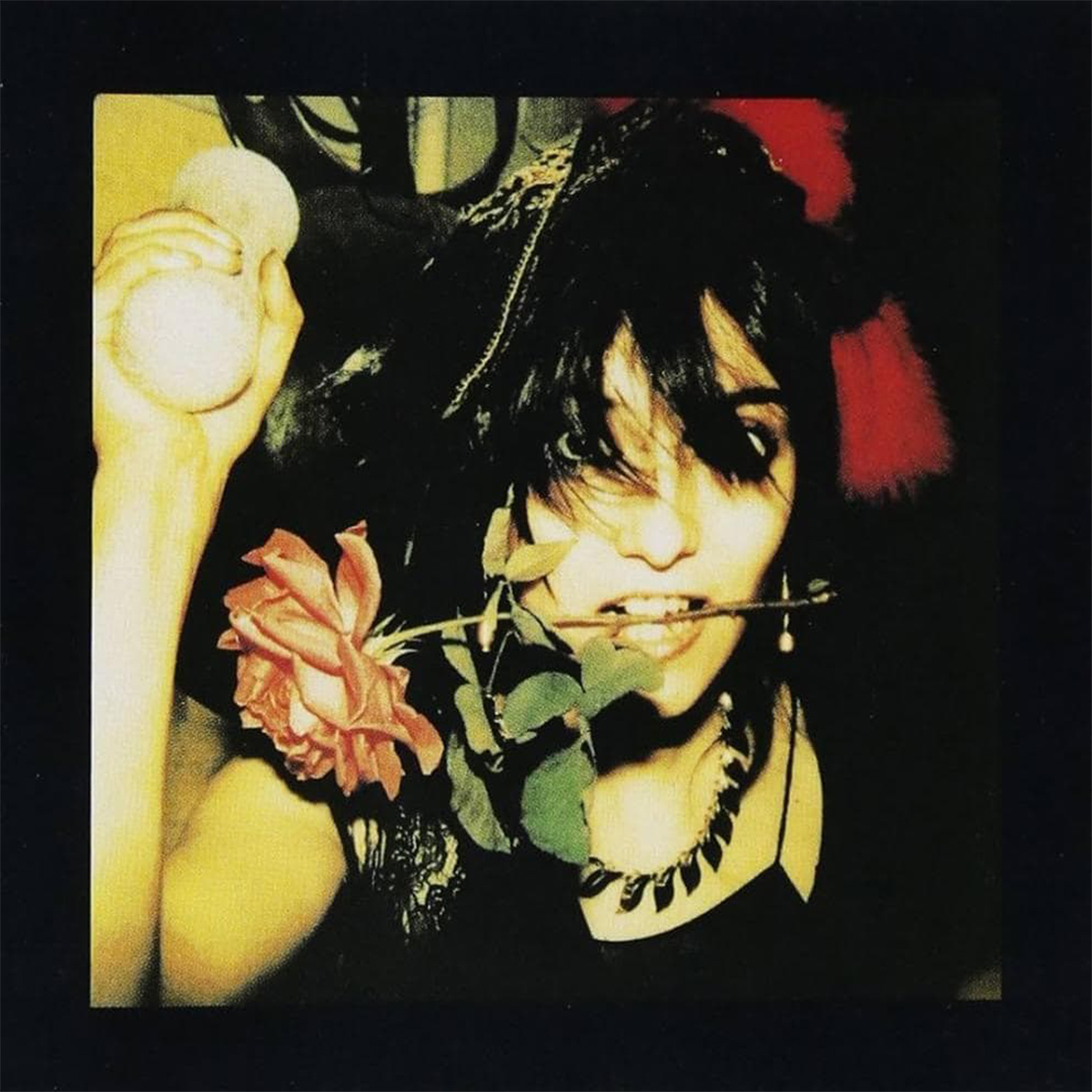
Released on April 10th, 1981, adorned with PiL’s multimedia expert Jeannette Lee on the cover and its evocative title a nod to Sid Vicious’ pre-Pistols band, The Flowers of Romance would leave another confounding stamp on the charts, as well as the band’s last creative roll of the dice. Some efforts were made to record a follow-up in New York, the sessions to be later released on the Commercial Zone collection, but by 1983, Levene had left the picture, Atkins, sticking it out for 1984’s This Is What You Want… This Is What You Get before leaving for good the following year.
But by now, PiL was Lydon’s solo project. Gone was the singer’s atonal whine, fractiously enmeshed in Levene and Atkins’ surrealist honk and pugnacious arrangements; in came ‘This Is Not a Love Song’ snarky dance number with the former Pistol now playing frontman rather than a creative force in prickly, disquieting equilibrium with the rest of the aural disharmony. It was a good song, their biggest hit yet, and 1986’s Album was a cracking LP too, but PiL now dwelled in safer territory, evolving into an alternative rock outfit until their first hiatus in the 1990s and since their 2000s reformation.
Just as their previous singles and albums placed bookmarks in the post-punk tapestry, so too did PiL’s Mk II rebirth, decamping to New York and ready to soak up the mutant disco and nascent hip-hop sounds that pulled post-punk in its vibrant and cross-pollinated direction, but the vast creative unknown was never to be plumbed again, The Flowers of Romance planted like a flag in the eerie barrens it excavated before charting a course back to the regular old world of rock and pop.
