


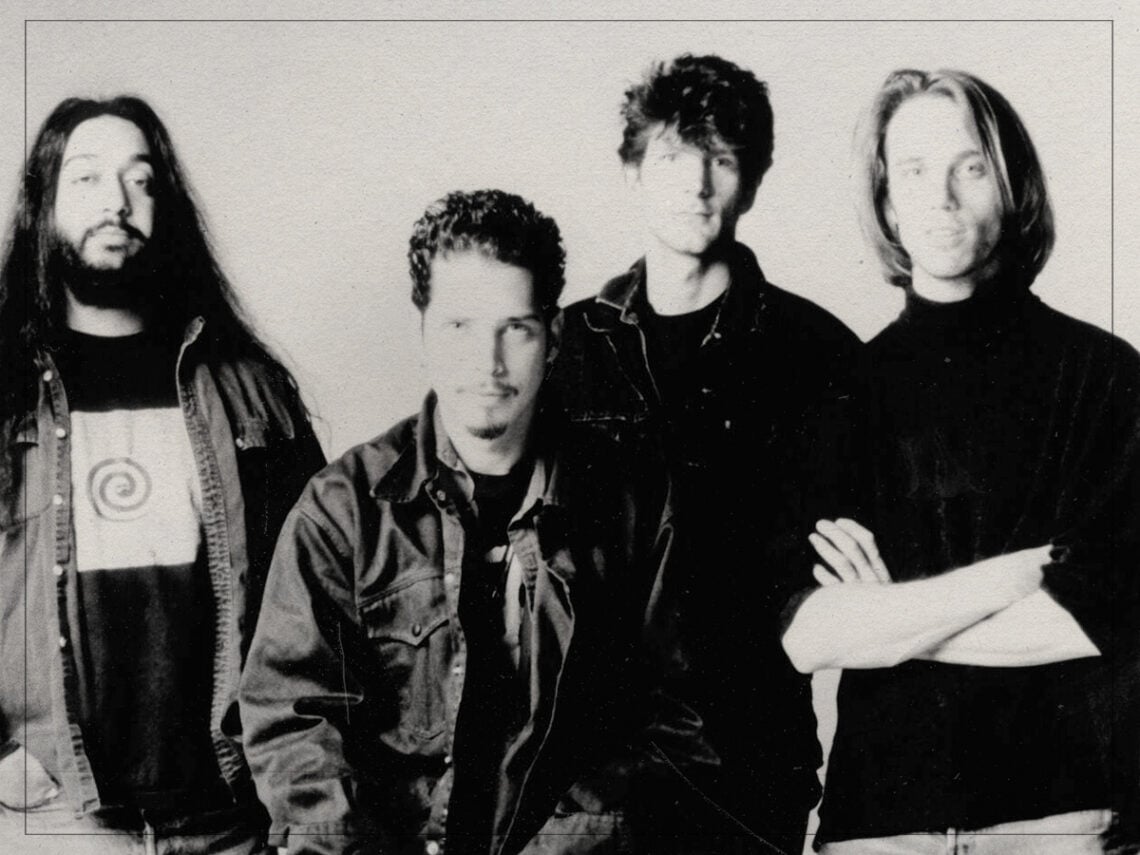
“I’m going to do it to the end”: How producer Michael Beinhorn pissed off Soundgarden

Making an album is like making a pizza from scratch—anyone can do it if they put their mind to it. Making a good one, however, is the kind of endeavour people devote their whole lives to working out. When people imagine an artist making an album, especially a respected rock band like Soundgarden, what they imagine is more a rock biopic scenario than real life.
They imagine maybe a week spent in a studio, playing the songs live in the same room together, with the record basically capturing exactly what the band sounds like in the moment. Then everyone high-fives, and we get the montage of commercial success the record enjoys. Very few things are accurate in the murky, deeply depressing world of rock biopics, but this is one of the most brazen breaks from reality of them all. Making a record is often a form of profound psychological torture.
It’s a Groundhog Day-esque parade of misery where every day is exactly the same, save for some new things that make your bandmates the single most hate-inducing people on the planet. One that reduces even the most psychologically hardy, road-honed instrumental maestros into a group of snarling man-children. The kind of people who are ready, willing, and able to shove a Telecaster down their guitarists’ throats if fucking Dean screws up that fucking solo one more fucking time.
Arguably, this leads to the producer playing the most important role in the recording process. As important as any musical input they might have is their ability to be the adult in the room and get everyone on the same page. Some, like Steve Albini, take a hands-off approach and leave the bands to it. Others take a more fatherly, encouraging role in the process. Then there’s Michael Beinhorn, who took a more drill sergeant approach to recording Soundgarden’s breakthrough album Superunkown.
How did Michael Beinhorn help Soundgarden break through?
During an interview with music YouTuber Rick Beato, Beinhorn went into great detail about how hard he pushed the band, starting from the demo tape they sent him at the start of the process. Beinhorn had to tell the band, “There were 11 pieces [of music] on it, and out of the 11, I think five were usable.”
Beinhorn goes on to explain the conversation he had with Chris Cornell about the demo tape and why he wasn’t feeling the songs. He said, “I called him up, and I spoke to him about it. I was like, ‘What are you writing these songs for?’ and immediately I got to the bottom of it. He felt that he needed to make something familiar for Soundgarden fans.” So he changed his tack immediately, asking Cornell, “‘What do you like?’ and he said, ‘The Beatles and Cream.’ I just said to him, ‘Okay, well write a song that sounds like The Beatles and Cream.'”
The next demo tape Cornell sent over to Beinhorn contained ‘Black Hole Sun’. So, I think it’s safe to say the pep talk worked. However, this was only step one of his process. Step two was putting the band through their paces in the studio and making sure the songs sounded as great as they possibly could. In an interview conducted by Kerrang regarding the album recording, Cornell didn’t sound too thrilled with Beinhorn’s production techniques.
He said: “Michael Beinhorn was so into sounds. He was so, almost, anal about it, that it took the piss out of us a lot of the time … By the time you get the sounds that you want to record the song, you’re sick and tired of playing it.” Yet, that was precisely where the band had to get to make the best record possible, and today, Beinhorn is completely unapologetic about that.
He says, “My mission was to make the best-sounding record I could with those guys… my attitude was, like, either you’re going to fire me or you’re going to let me do my job. If you want to be pissed off at me, be pissed off, but you’ve hired me to do this and I’m going to do it to the end.”
Do it, he did, and he’s a key reason for the fourth Soundgarden album being one of the best rock records of the 1990s.
