


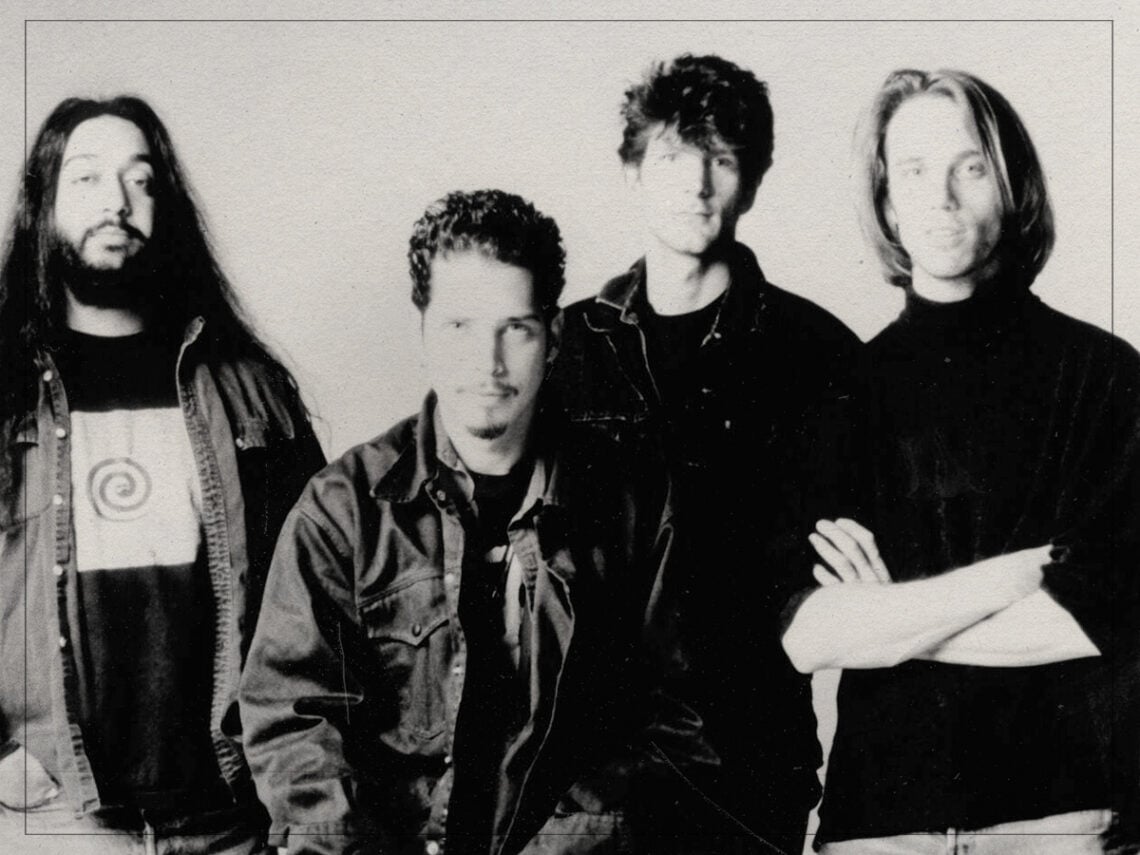
The 10 best Soundgarden songs

I didn’t see Soundgarden live for the first time until 2010, when the reunited line-up took the main stage at the Lollapalooza festival in Chicago. Chris Cornell, in his mid-40s by this point, had to battle his own lungs a bit to still hit the high wails on ‘Jesus Christ Pose’, but that delicate dynamic wound up adding an extra layer of soulfulness and vulnerability to the sound he produced all night. Nothing about the gig felt like a cynical nostalgia trip or a cash grab.
If anything, it had more of the energy of an old-school gospel revival—a sea of believers basking in the gifts of their rock gods and offering praise and thanks in return. Many Soundgarden fans never thought they’d get that opportunity after the band’s sudden split in 1996. And indeed, no one in Chicago that night knew how little time they would have left with the force of nature that was Cornell.
The news of Cornell’s suicide in 2017 marked a tragic end to the Soundgarden story and confirmed 2012’s reunion LP King Animal as their final album, one of just six full-length studio records released across the band’s long career. Formed in Seattle in 1984, Soundgarden recently marked its 40th anniversary, and despite annual snubbing by Rock n’ Roll Hall of Fame voters (edit: they were finally announced as an inductee for 2025), the band has continued a gradual ascent into higher reverence in recent years, as the dual albatrosses of “grunge” and the “Seattle sound” have fallen away to reveal a collection of songs that were as complex, exciting, and as smart as they were dark, heavy, and brooding.
Here’s a closer look at ten classic Soundgarden tracks, all of which were played during that memorable Lollapalooza set in 2010, and thus presumably band-approved as career-defining gems. One need not have memories of alt-rock’s golden age to appreciate these songs on their own merit.
The 10 best Soundgarden songs:
‘Searching with My Good Eye Closed’ – Badmotorfinger

This is how Soundgarden kicked off their 2010 Lollapalooza set, selecting a relatively deep cut from 1991’s Badmotorfinger. The album version, penned by Cornell, famously begins with a ridiculous faux-sample of a child’s Speak and Spell toy. “Do you hear a cow? (Moo) / A rooster says (Cock-a-doo) / Here is a pig (Squeal) / The devil says (Demonic roar).”
This then guides us into one of guitarist Kim Thayil’s distinctive demon riffs, as Cornell rolls out some psychedelic imagery to balance out the mood: “Painted blue across my eyes and tie the linen on / And I’m on my way, on my way / Looking for the paradigm so I can pass it off / Is it on my side, on my side?” It defines the slight sweep of surrealism in Soundgarden’s ranks.
‘Spoonman’ – Superunknown

The first single from 1994’s Superunknown is one of many with a non-traditional tuning (drop D) and time signature (7/4 time). Rather than its unusual composition hurting its radio potential, ‘Spoonman’ became one of the band’s biggest hits as they entered their primary period of mainstream chart success on both sides of the Atlantic.
It’s heavy and dense, but with enough melody to move the whole thing along with swaggering ease. There are shades of Black Sabbath and smatterings of Nirvana, but ultimately, it is profound originality that sees it soar.
‘Burden In My Hand’ – Down on the Upside

Described by Thayil as the “‘Hey Joe’ of the ‘90s,” this track off 1996’s Down on the Upside is one of the best Cornell ever wrote, and stands as a tour de force example of his full range of talents as a songwriter, singer, and musician. Its dark subject matter, unfortunately, also can’t be separated from the man who wrote it.
“It’s just that moment of somebody sitting in the dirt,” Cornell said, explaining the song to ARTISTDirect in 2011. “I had more moments like that after that song was written than I ever had before it was, so it means a lot more to me now than it did then.”
‘Black Hole Sun’ – Superunknown
The song is one that non-Soundgarden fans know best and that some diehard Soundgarden fans find somewhat unrepresentative. The band themselves didn’t quite anticipate the song’s potential in 1994, making it the third single from Superunknown, but it proved to be the biggest hit of their career, topping the US charts for seven weeks and reaching platinum status in the UK.
Described by Cornell as a “surreal dreamscape,” ‘Black Hole Sun’ is easily Soundgarden’s most psychedelic and ‘60s-inspired song (note the flower-power vibrato guitar line), and so it was up to the lyrics to communicate a darker-edged ’90s sensibility: “Stuttering, cold and damp / Steal the warm wind, tired friend / Times are gone for honest men / And sometimes far too long for snakes.”
‘Fell On Black Days’ – Superunknown
The big sad ballad and follow-up single to ‘Black Hole Sun’, this song helped anoint Superunknown as a classic album whilst also probably casting Chris Cornell permanently as a prince of darkness and unwitting spokesman for the Prozac nation.
“‘Fell on Black Days’ was like this ongoing fear I’ve had for years,” Cornell told Melody Maker in 1994. “. . . It’s a feeling that everyone gets. You’re happy with your life, everything’s going well, things are exciting—when all of a sudden you realise you’re unhappy in the extreme, to the point of being really, really scared.”
‘Flower’ – Ultramega OK

Recorded in 1988 for the Ultramega OK album, ‘Flower’ definitely belongs to its decade more so than the ‘90s at first, but as Thayil starts taking the guitar sound in unexpected directions, he claims to have blown air across the strings in front of the amp to create a sitar-like effect, something new and interesting starts to emerge; a preview of where they were headed.
However, what lay ahead was equally indebted to the new wave essence that came before. Somewhere in that makeshift sitar tone, there is the slight dreaminess of synthetic sounds, and it is oddly heartening.
‘Rusty Cage’ – Badmotorfinger
For a lot of ‘90s kids, ‘Outshined’ was the song that broke through off the Badmotorfinger record and seemed to fit in best with the sludgy, self-defeating tone of the alt-radio moment, like a companion piece to Alice in Chains’ ‘Man in the Box’. It was ‘Rusty Cage’, though, that really said more about what made Soundgarden something unto itself, with undeniable elements of Led Zeppelin to be sure, but infused with a hardcore punk energy and a relentless, almost hypnotic sort of attack mode that was much more thrilling than morose.
‘Rusty Cage’ is one of the great album-openers of the ‘90s, distinct for yet another “nutty tuning” and “weird tone,” as Thayil put it.
‘Jesus Christ Pose’ – Badmotorfinger

’Jesus Christ Pose’, is a showcase for Matt Cameron, one of the great rock drummers of his generation. The riff is killer, but it’s Cameron who creates the feeling of panic and unease like the whole band is being chased through the woods, or maybe doing the chasing.
Indeed, inspiration did find them at full tilt, as Thayil told Rolling Stone, “Matt’s drum part is insane – it’s so fast and coordinated. And I picked up my guitar, thinking, “What the hell are they doing?” It took me a while to figure out what’s going on rhythmically and where to punctuate the one, so what I start hearing is that swirling, kamikaze bat [guitar] sound at the beginning. And that was a groove.” Well, grooves don’t get much better.
‘Blow Up the Outside World’ – Down on the Upside
There is a brutal congregation of heavy metal ethics and grunge’s disposition on this tune which makes it one of their most important. This was the third single on Down On the Upside, an album that was a bit underappreciated in the midst of grunge’s slow death in ‘96, but which actually stands up very well to a modern re-visit.
Some of the best tracks on the record were actually penned by bassist Ben Shepherd, including ‘Zero Chance’, ‘Ty Cobb’, and ‘Switch Opens.’ None of those made the setlist at Lollapalooza, though, as the Cornell penned singles like ‘Blow Up’ were unsurprisingly higher in the pecking order.
‘4th of July’ – Superunknown
This roaring epic is the single most evil opening guitar riff of the so-called grunge era, which is no small statement. This one closed the initial set in Chicago in 2010, and while the encore rolled out a more emotional moment with the song ‘Like Suicide’, there is no joy to be found in hearing Cornell utter those words again.
By contrast, it’s almost strangely delightful to hear him describe the end of the entire planet, impossibly free of irony or pretence, and maybe even with a little bit of smirking disdain for the people that screwed everything up in the first place: “Pale in the flare light, the scared light cracks and disappears / And leads the scorched ones here / And everywhere no one cares, the fire is spreading / And no one wants to speak about it.”
