


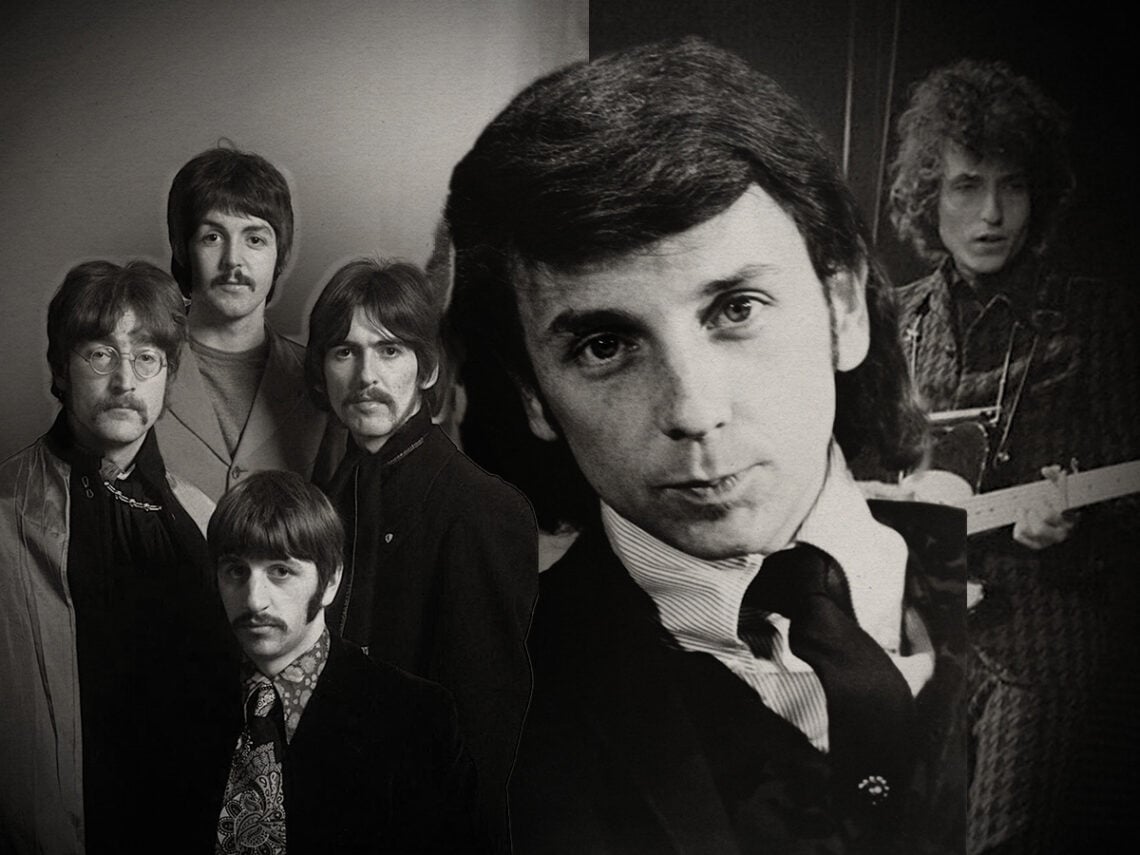
Phil Spector on the fundamental difference between Bob Dylan and The Beatles

You can easily understand why Bob Dylan and The Beatles were seen as two peas in a transatlantic pod.
They came about at the same time, with the same muses, and under the same genre: they were basically the same thing, right? Well, not so fast. Besides the fact that one was British while the other was American, and also that one was a band, and the other was a solo act, there were subtle differences in their respective craftsmanship, but only if you looked closely.
One of those with the ability to do that better than most was Phil Spector. The producer was clearly most heavily inclined towards The Beatles’ side of things, but when it came to putting the band up against their biggest American rival, his voice effectively served as a godly authority on what stood them apart from each other.
By the same token, you had to take it with a grain of salt, as in Spector’s view, not all artists were made equal. His alliances obviously lay with the Fabs, and it was fair to say he had a rather complicated relationship with Dylan over the years. Let’s just say that perhaps impartiality wasn’t particularly Spector’s strong point.
“The Beatles’ records are well-made,” he once said, admittedly rather blandly. “Dylan’s records are big because Dylan doesn’t have to make good records. He’s Dylan. He just can get his message across.” Honestly, it’s like a tennis match trying to figure out what were genuine, on-target compliments and back-handed volleys in all of this.
Yet the more Spector went on to explain, the more the pieces of the puzzle actually began to fall into place. “The Beatles enjoy making good records,” he reckoned, before adding, “I think that they like it. I think they go after technical things and I think they watch out carefully what they do and how they overdub and what they put in and what they leave out. Dylan is more of a live spontaneity and a spontaneous thing.”
While it might be a bit of an overstretch to say that Dylan lacks a sense of technicality in his artistry, Spector was right in the respect that during the height of the ‘60s, the respective intentions of the American songwriter and the British quartet were very different. Just at the point when Dylan blazed an electric new path in his live shows in 1965, by the following year, The Beatles had decided to retire exclusively to the studio.
That did, indeed, speak volumes about each of their main goals at that time. At a point where Dylan wanted to break out of a mould and make a new name for himself, primarily in front of live audiences, The Beatles had become sickened with that lifestyle and wanted to deepen their relationship with the faders and buttons of the recording booth.
Without question, that served them both well in the trajectories of their own careers, and also proves the heart of Spector’s point all along. One was not necessarily better than the other, but they both needed to follow their own paths in order to do what was right for themselves. In that sense, the artists who were seen as peas in a pod couldn’t have been more different.

Never Miss A Beat
The Far Out Beatles Newsletter
All the latest stories about The Beatles from the independent voice of culture.
Straight to your inbox.