


Exploring the origins of the Madchester movement

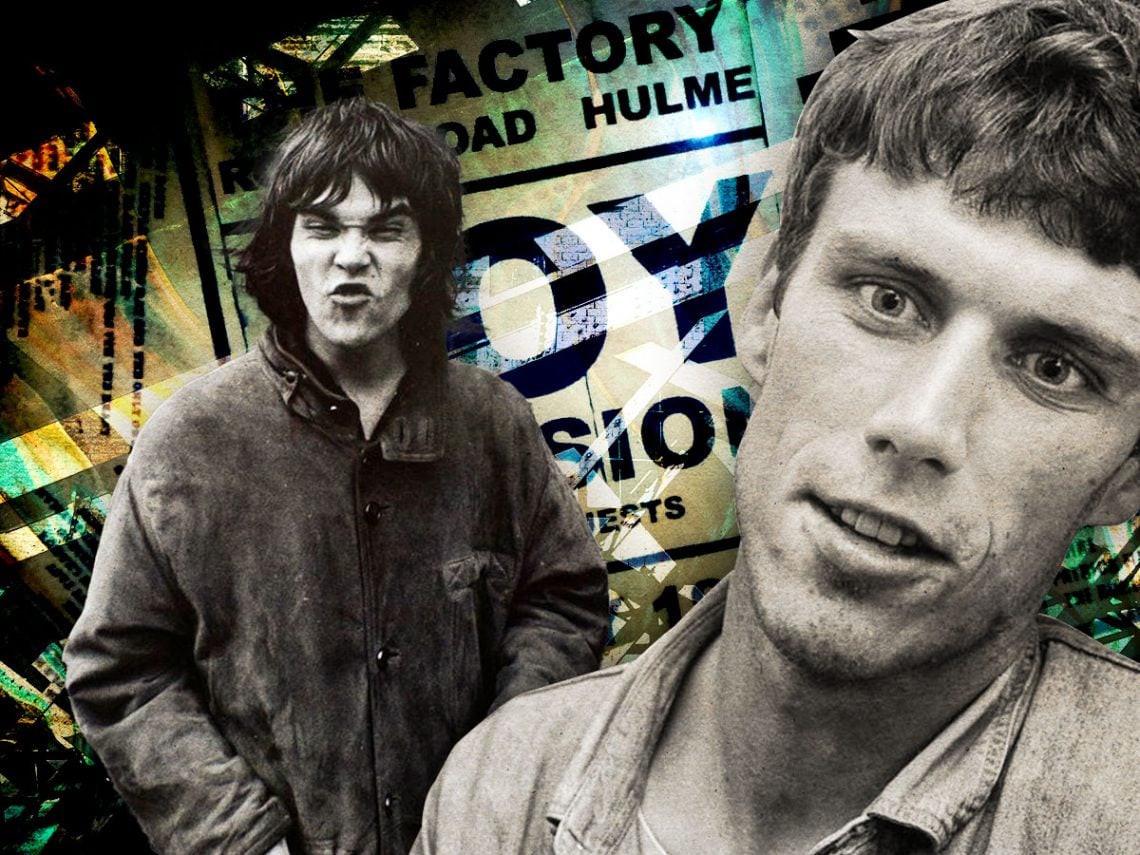
On November 29th, 1989, two groups made their television debut on Top of The Pops: The Stone Roses and Happy Mondays. Both bands came to define the sound of the burgeoning ‘Madchester’ scene, an explosion of dance-influenced guitar groups hailing from Manchester. For those who had watched the scene germinate, having two Manchester bands appear on the country’s biggest music show was a sign that things were about to go global. Just a few years previous, the city had been a cultural wasteland, so the fact that it was suddenly the beating heart of British pop must have come as something of a surprise.
So, where did it all begin? Some argue that the Madchester movement came to fruition in the spring of 1988 when The Stone Roses played a benefit gig with James at International 2. “Something was in the water that month,” Sarah Champion, a journalist for the NME at the time, told The Guardian. “My commissioning editor James Brown wanted me to move to London, but I stayed in Manchester for a while because it just felt like the place to be.”
Of course, Manchester hadn’t always been so energised. According to Joy Division and New Order member Peter Hook, before The Hacienda nightclub opened its doors, pretty much all of Manchester’s punk venues had been closed down, essentially cutting the throat of the city’s youth culture. “There was nowhere you could go in Manchester dressed how we were dressed,” Hook told Far Out for a feature on The Hacienda’s 40th anniversary. “So we were excluded by being punks, by being post-punk and by being new-romantic. If you wanted to go out, you had to dress a certain way and listen to a certain kind of music, which was very much commercial pop.”
Factory Records owner Tony Wilson decided to fill the void with a New York-style club that would serve as a “cathedral” for the people of Manchester. “I always thought in some ways it was Factory paying royalties to the city,” the label boss told Jon Savage in 1992, “Great pop comes out of cultures; there’s always culture behind it. Part of the genius of Joy Division was the culture of Manchester, and we were repaying some of those royalties building it for the city. It’s been there, feeding all the time.”
The Hacienda wasn’t an immediate hit. In the early days, the club was empty most nights and losing far more money than it was taking in. That all changed with the arrival of house music and ecstasy. “Suddenly, so many more people were interested in house music, and they all crowded into the Hacienda,” Peter Hook recalled. “And all of a sudden, it was steamy. And it was dark. And everyone was off their nut – it was the perfect place for acid house.”
The members of The Stone Roses and The Happy Mondays were frequent visitors to The Hacienda’s club nights. They were listening to music that nobody else in the UK had experienced, that nobody else had learnt to dance to. Gradually, this driving, textured electronica intermingled with the guitar-based subgenres that had once dominated the Manchester music scene, giving birth to a hybrid style nestled somewhere between psychedelia, new wave, post-punk and house. Baggy, irreverent and infectious, it was the sound of a city’s rebirth rejuvenating an entire nation.
