


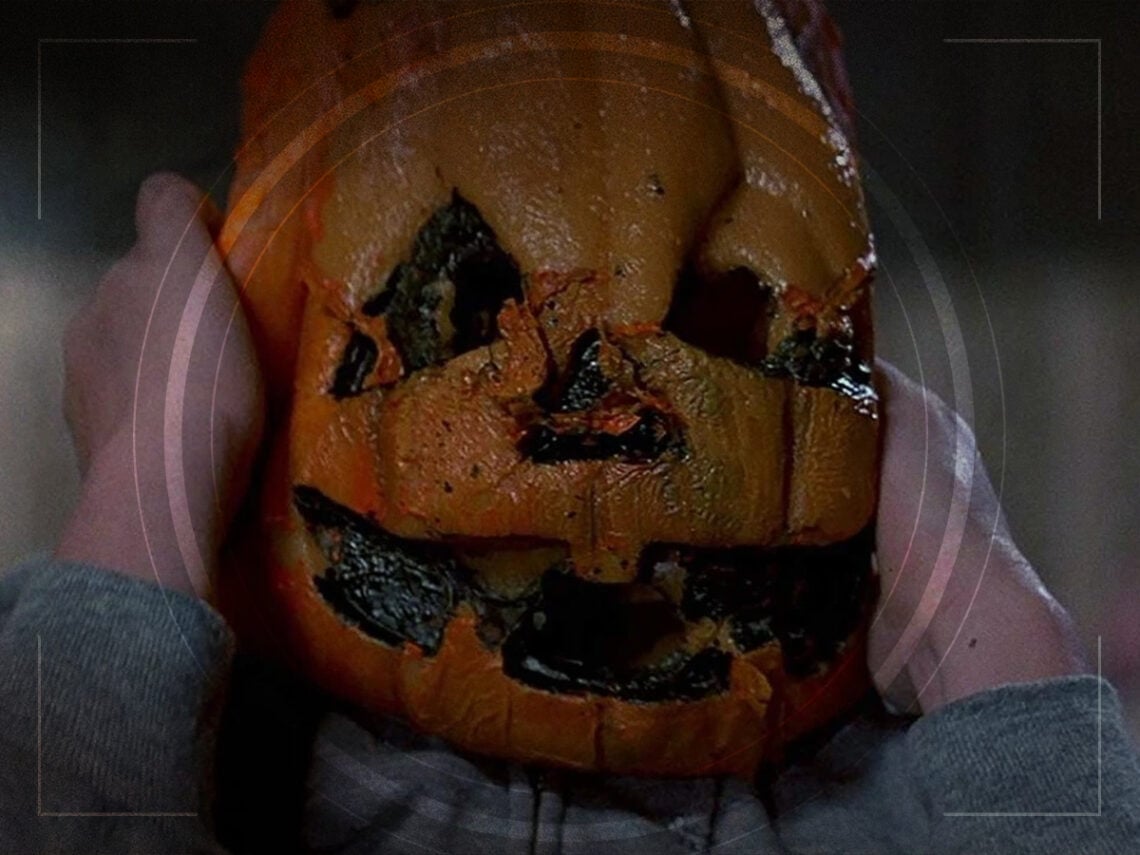
The one ‘Halloween’ movie that doesn’t feature Michael Myers

The origin of the one Halloween movie that doesn’t feature ‘The Shape’, Michael Myers, has its roots in the many long, dark nights of the soul John Carpenter experienced while writing Halloween II. After the unprecedented success of his 1978 original film, which changed horror movies forever and became the highest-grossing independent movie in history, Carpenter was soon roped into mounting a sequel.
However, the last thing Carpenter wanted to do was make a sequel to Halloween. He felt the first movie said everything there was to say about Myers, the faceless boogeyman who stalked and killed several babysitters on one fateful night. He knew the drive of a sequel would be to explain Myers’ motives, or provide more lore to his inexplicable evil, but he loved the simplicity of the first movie’s vision.
“Michael Myers was an absence of character,” Carpenter told Deadline in 2014. “And yet all the sequels are trying to explain that. That’s silliness – it just misses the whole point of the first movie, to me. He’s part person, part supernatural force. The sequels rooted around in motivation. I thought that was a mistake.”
Despite Carpenter’s reticence, the film’s producers eventually offered him enough cold, hard cash that he agreed to write the sequel alongside his ex-girlfriend Debra Hill, with whom he also collaborated on the first movie. So, Carpenter sat down in front of a typewriter to bash out Halloween II, and his overriding thought was, “What the fuck am I doing?” He had no idea where he wanted to take the story, and no matter how many six packs he drank or packs of cigarettes he smoked, he couldn’t come up with anything good.
Then, in a flash of drunken inspiration, he came up with the notion that would later power Halloween through 12 feature films containing more contradictory continuities than you can shake a stick at. Carpenter decided that Laurie Strode, the virginal victim played so beautifully by Jamie Lee Curtis in the first movie, was actually Myers’ sister, and that’s why he was so obsessed with killing her. He’d later call the twist “foolish”, but at the time, it was enough to help him crawl over the finish line with a workable Halloween II script.

After seeing Halloween II, though, directed by Rick Rosenthal, Carpenter had a change of heart and realised the sister twist was a great idea. Just kidding—he hated the movie with a passion, dubbing it “an abomination and a horrible movie” and accusing Rosenthal of having no feel for the material. However, to his chagrin, Halloween II turned a profit, if one nowhere near as substantial as the first movie. This meant another sequel was inevitable, and producers wanted Carpenter and Hill to script it again.
There were a couple of problems with making Halloween III, though. At the end of II, Myers and Dr Sam Loomis died in a blazing inferno, and Carpenter confirmed, “The Shape is dead. [Donald] Pleasence’s character is dead, too, unfortunately.” Even more troublesome was the fact that Carpenter would rather have blown his own head off than be forced to resurrect Myers in a third film. With the situation at an impasse, Carpenter and Hill made a suggestion that could keep them involved in the series, but could also put Myers to bed once and for all.
“We thought we’d come up with a new story every year,” Carpenter told The Hollywood Reporter. “We could call it Halloween, but it didn’t have anything to do with Michael Myers.” The producers were so keen to keep Carpenter involved that they agreed to this gamble, and Halloween III director Tommy Wallace explained, “It is our intention to create an anthology out of the series, sort of along the lines of Night Gallery, or The Twilight Zone, only on a much larger scale, of course.”
Halloween III: Season of the Witch, pitched by Carpenter and Hill as a “pod” movie instead of a “knife” movie, was released a year after Halloween II. While they didn’t write the script this time, they remained on board as producers and waited to see if the public responded to the movie’s bizarre tale of haunted Halloween masks that kill children, robot assassins, Stonehenge, and the pagan festival of Samhain. Perhaps unsurprisingly, though, considering most viewers were simply expecting more Myers, the reaction was a resounding, “What the hell is this?!”
Carpenter was gutted, as he believed Halloween III was “excellent.” He loved how different it was from what had come before, and in later decades, would be gratified when a cult following for the film developed. However, in the wake of decreased box office and a general wave of angry horror nerds bemoaning the lack of Myers at the time, the anthology idea was sent back from whence it came. When Halloween 4 came out six years later, it proudly boasted the subtitle The Return of Michael Myers – and that heavy-breathing, sister-killing madman has been front and centre of the franchise ever since.
