


How John Carpenter turned a blank slate into an icon: “He had no character”

Despite its initial divisive effect on critics, John Carpenter’s Halloween was one of the most lucrative independent films, earning $70million against its $300,000 budget, spawning a franchise of 12 other films. The 1978 horror, along with The Texas Chainsaw Massacre and Black Christmas, is also considered responsible for the rise of the slasher genre in the 1980s and ’90s. And, despite the extensive backstory explored in the spin-off films, it managed all of this with a villain that was virtually a blank slate, with no real backstory or logical motivation.
Michael Myers is a murderer who doesn’t speak or threaten. He doesn’t make contact with his victims beyond lurking behind them and eventually stabbing them; he doesn’t even run. The only thing we know about him is that he murdered his older sister at age six while wearing a clown costume and was subsequently committed to a psychiatric facility for 15 years. But still, his silent, looming presence is considered by many to be one of the most terrifying committed to the silver screen.
Critics have long tried to ascribe a moral character to the film. Some believe it to be a tale of the consequences of unbridled teenage sexuality or a cautionary tale of absentee parents; for others, it’s nothing more than a gratuitous depiction of violent misogyny and violence against women. Many writers and directors have spent hours figuring out his story for the franchise: why does he kill, where do his violent urges come from, is it supernatural or psychological?
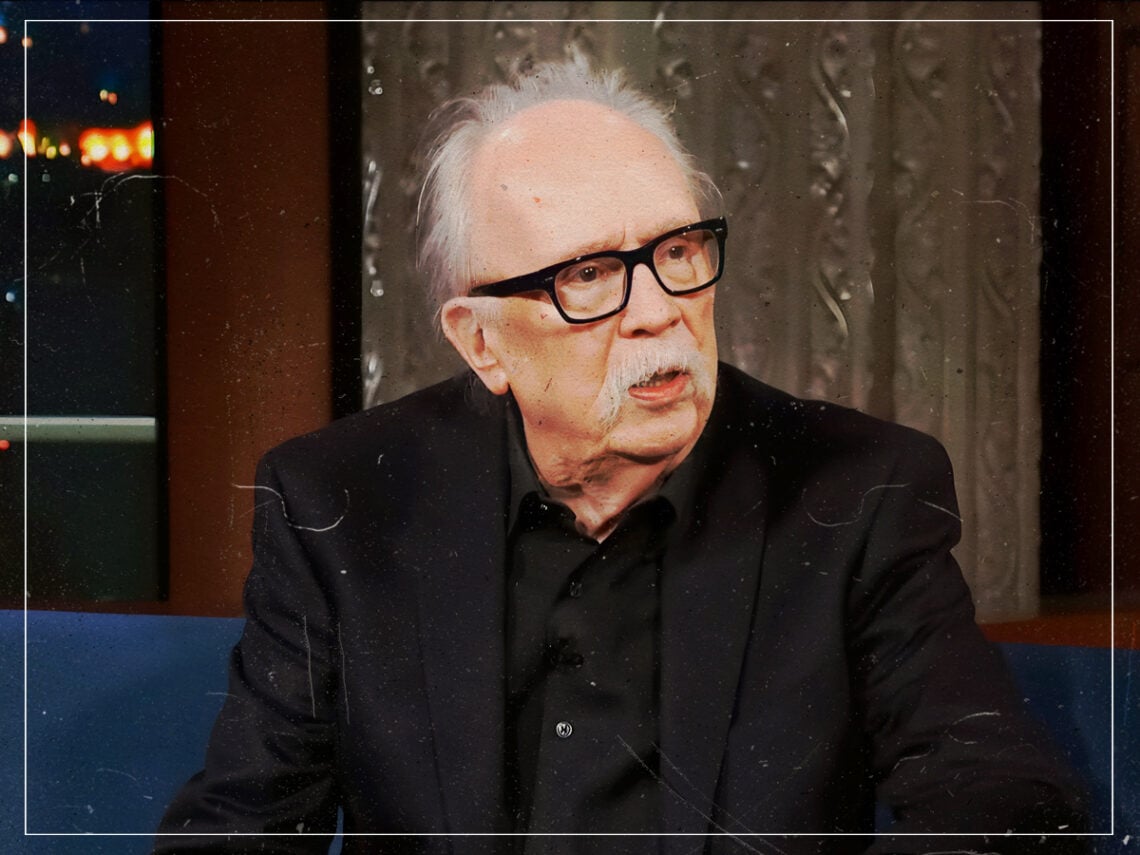
But to its director and co-writer, John Carpenter, it’s much simpler than that. “I wanted the audiences not to know whether he was human or supernatural,” he told CBS News. “He had no character. He was blank.” To Carpenter, Myers was “simply evil. And that was all he was as a character”, and that was enough to terrify and enthral audiences. The stripped-back, bare-bones style of the film might have been criticised by a few at the time, but it’s one of the elements that has made it such an enduring terror.
Carpenter’s combination of delayed scares, peripheral glimpses, unrelenting slow chases and, of course, that creeping piano melody created a sense of tension and suspense that was unlike the most violent, spooky and bloody tales of horror. The uncanny nature of Michael Myers’ mask and his absolute silence make for a blank slate on which audiences can transpose their own fears. It’s exactly our lack of knowledge of the murderer and his intentions that makes him so terrifying because there’s no way to humanise or understand his actions.
If Myers is pure evil, then there’s no stopping him, as evidenced by the end of the film, and there’s no telling where or what he could be doing next. Like Bob from Twin Peaks or ‘The First Evil’ in Buffy the Vampire Slayer, Michael Myers reflects our own fears back to us and demonstrates that evil can be anywhere. Even Carpenter’s gliding POV steadicam shots, which were initially used to avoid setting up tracks, allow the audience to identify with the killer, proving that evil is everywhere—even in us.
Whether or not that was Carpenter’s intention is a different story, but the director is clear that there was no moral to the tale. This is perhaps why it’s the most successful of all the subsequent films with a backstory and exposition. It’s Myers’ essential unknowability that makes him so scary, or as Carpenter so cryptically puts it, “I can’t tell you why he came to this small town to kill people. But it doesn’t matter. He’s like the wind. He’s out there. He’s gonna get you.”
