


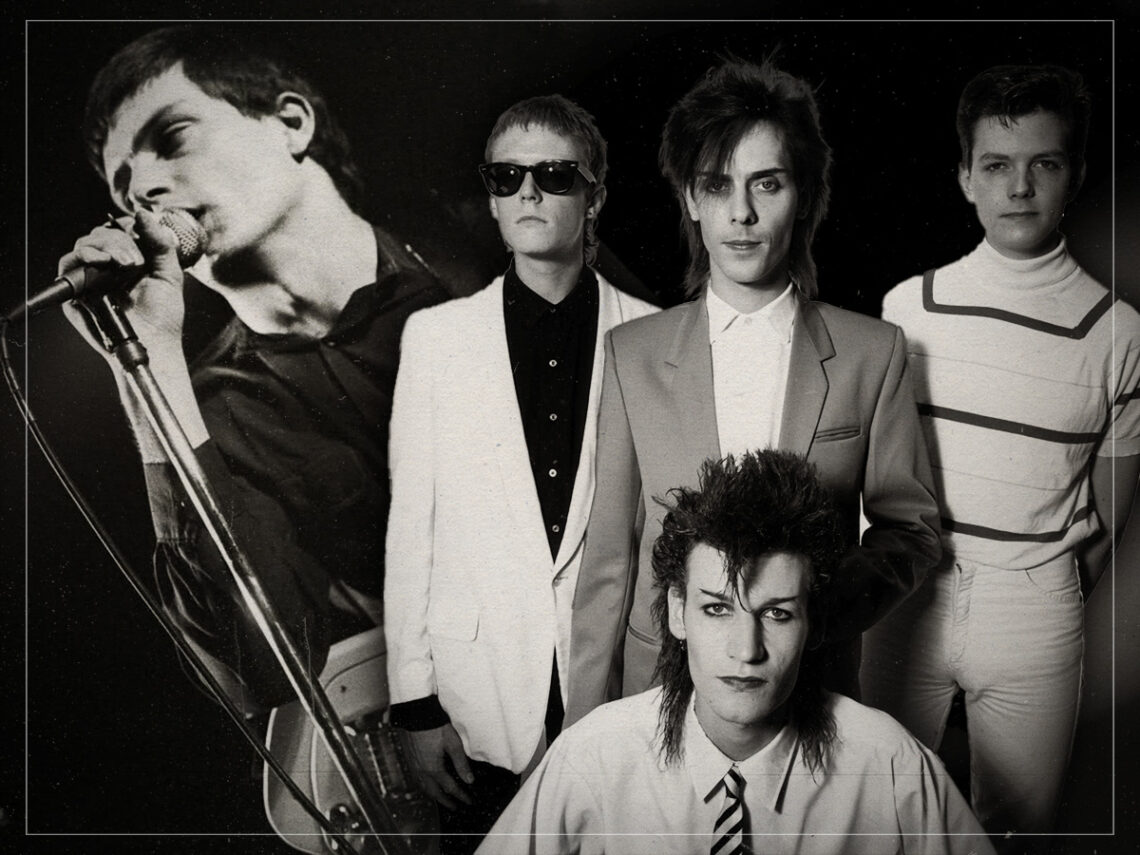
The night Bauhaus met Ian Curtis

When it comes to UK post-punk, few would argue against Joy Division and Bauhaus’ exemplary standing.
It’s always been a curious genre term, one that marks its sound acutely while being near impossible to nail down definitionally. Devo’s colourful bounce, Public Image Ltd’s acrid dub, or Talking Heads’ hypnotic Afrobeat all disparately swirl as gems of the original late 1970s post-punk era, embracing punk’s DIY urgency while clamouring at new creative terrain limited only by their imagination.
Yet, even for the layman, post-punk typically sparks a certain sonic impression. Furious guitar attack and on-stage belligerence are replaced with an introspective mood, an eye on preceding psychedelic and electronic influences, and an eagerness to venture further than the scene’s famed three chords. Over in Britain, Manchester’s Joy Division seemed to encapsulate such new frontiers, orchestrating stinging sparks of serrated minimalism and funereal wander amid producer Martin Hannett’s austere expanse.
Fronted by troubled vocalist Ian Curtis’ dark lyrical ruminations and baritone croon, such arresting yet atmospheric conjurings across their Unknown Pleasures and Closer LPs would beckon many an intrepid music fan’s first gateway into post-punk’s unwieldy world.
The gothic end of post-punk’s shroud across the UK music underground also counted Bauhaus in its midst. While later blooming across a myriad of musical flavours and fancies, across 1979/early 1980, the Northampton quartet was dwelling firmly in similarly skeletal realms as their Manchester peers, counting the vampiric nine-minute skulker ‘Bela Lugosi’s Dead’ and ‘Dark Entries’ martial explosion under their belt.
Before even an album was out, Bauhaus had caught Curtis’ attention. Speaking to Burnley Musician’s Collective’s ‘Spyda’ before their set at Preston Warehouse on February 28th, 1980, and broadcast on BBC Radio Blackburn’s Spinoff programme, the Joy Division frontman offered a less than impressed assessment of the general new wave dominating the charts, making expectations for fellow Factory Records labelmates A Certain Ratio and Section 25 before singling out the erroneously localed “London group” Bauhaus as having particularly impressed him.
It turned out, Curtis was such a fan that he’d quietly hoped for the Closer sessions at London’s Britannia Row to coincide with Bauhaus’ shows at Billy’s Club in Soho, the site of later Batcave nights and early centre of the New Romantics before their decamp to Covent Garden’s Blitz club. According to bassist David J’s Who Killed Mr Moonlight? Bauhaus, Black Magick and Benediction book, Curtis caught Bauhaus during a volatile set involving the destruction of the club’s wall mirrors via frontman Peter Murphy’s feral theatrics. While Factory boss Tony Wilson allegedly left after one song due to the band’s use of make-up, Curtis sought to witness their entire set and chat to the band afterwards.
“‘It were ’is fooking loss, man,’ he told us,” J recalled Curtis confessing on Wilson’s early departure. “He really missed out tonight. Fook him. He’s a cunt, anyway!”
Bauhaus’ Billy’s February dates don’t align with Closer’s March studio sessions, but whatever the case, Curtis made those shows and reportedly told the band he thought the gig was “great” and praised their two singles. Such a mutual fandom and friendship, sadly, was never able to blossom.
“Although Ian was cheery and warm that night at Billy’s, I remember a look in his watery blue eyes that was so sad and haunted,” J revealed. “Three months later, he hung himself in his kitchen.”
