


The movie that made Roger Ebert forgive David Lynch: “A movie to surrender yourself to”

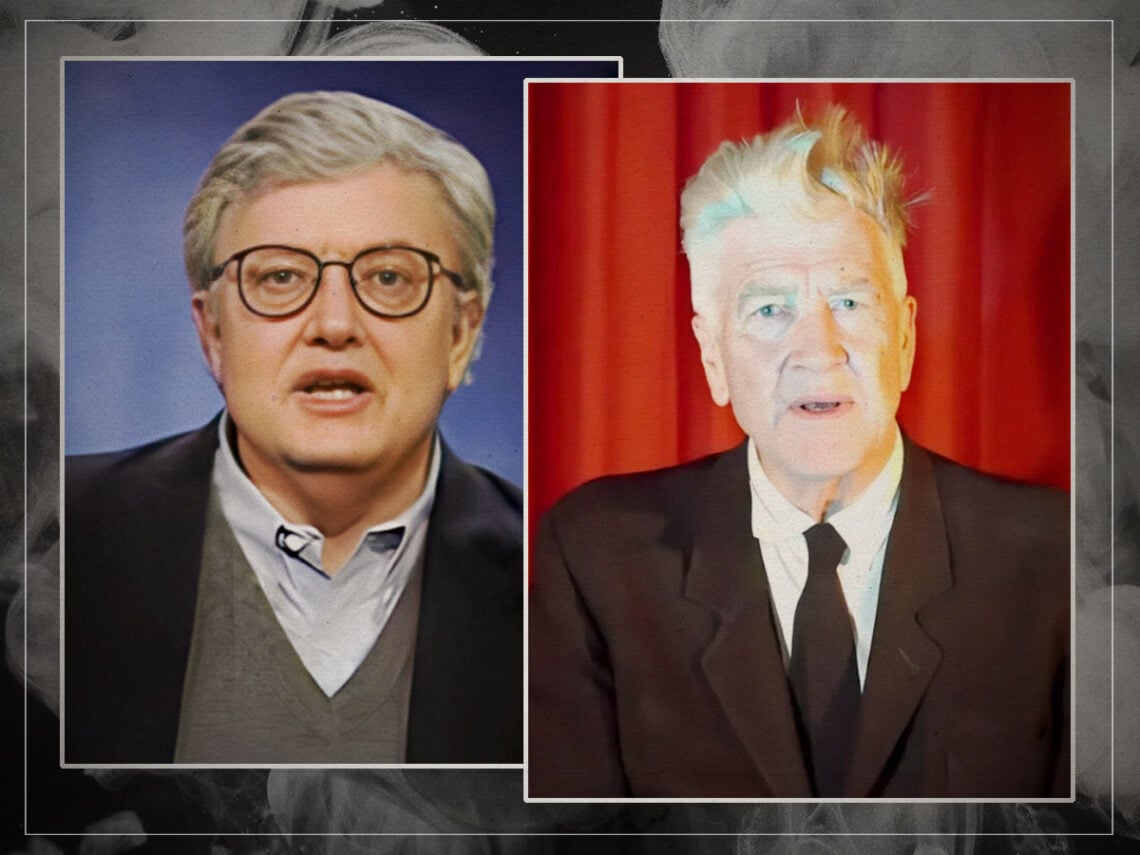
There’s no objective way of evaluating a cinematic masterpiece. Even if some of the greatest filmmakers come together to create the kind of movie that will put all others to shame, there’s a good chance that some audiences might either not get the idea or simply see the director’s vision in a completely different way. In the case of Roger Ebert, arguably one of the greatest movie critics of all time, though, his relationship with David Lynch’s work has been a touch complicated.
The truth is, Lynch was never known to take the easy route with his films. Aside from his eccentric style in making every one of his films, his maverick attitude towards filmmaking made him so inspiring to artists who had nothing else except dreams in their heads and a camera in their hands. Unfortunately, that didn’t always lead to the best turnouts in the movie theatres.
Although Hollywood garnered praise for Lynch’s style in films like Eraserhead, films such as Dune were met with a huge box office flop before he began scaling back up with classics like Blue Velvet. And yet, even in his prime, some of his best movies always alluded Ebert, having some fairly harsh criticism for Blue Velvet and awarding it one out of four stars. The picture is considered one of Lynch’s best, and that harsh ranking likely speaks to Ebert’s devotion to the cinematic spectacle.
Though Wild at Heart and Lost Highway were also somewhat surrealist takes on cinema, Ebert didn’t truly understand what Lynch was going for until he saw his work in Mulholland Drive. Outside of being a brilliantly crafted mystery, the beauty of the film is the world that it puts the viewer in, constantly at the side of Naomi Watts’s Betty Elms as she works her way through Los Angeles trying to unravel parts of her memory.
And while most people might rely on certain pieces of character development to get them through the film, Ebert thought that the immersion in the movie was enough to owe Lynch an apology, saying, “David Lynch has been working toward Mulholland Drive all of his career, and now that he’s arrived there I forgive him Wild at Heart and even Lost Highway. At last his experiment doesn’t shatter the test tubes. The movie is a surrealist dreamscape in the form of a Hollywood film noir, and the less sense it makes, the more we can’t stop watching it.”
Then again, anyone looking for a straightforward mystery would be out of luck watching the movie. The whole point behind the film is about staying in a constant state of unease when looking through the characters’ eyes, so it’s better to be in the same mindset as Elms, where every scene is another puzzle piece in figuring out the plot.
Whereas most people could find this tedious, Ebert knew there was no other way that Lynch could have pulled it off any better, adding, “This is a movie to surrender yourself to. If you require logic, see something else. Mulholland Drive works directly on the emotions, like music. Individual scenes play well by themselves, as they do in dreams.”
But that’s what filming was all about to true artists like Lynch. As much as people liked the idea of making something surreal for the sake of making something surreal, Ebert could see that there was still a visionary behind everything, trying to bring to life the things that were only available to people in their dreams.
