


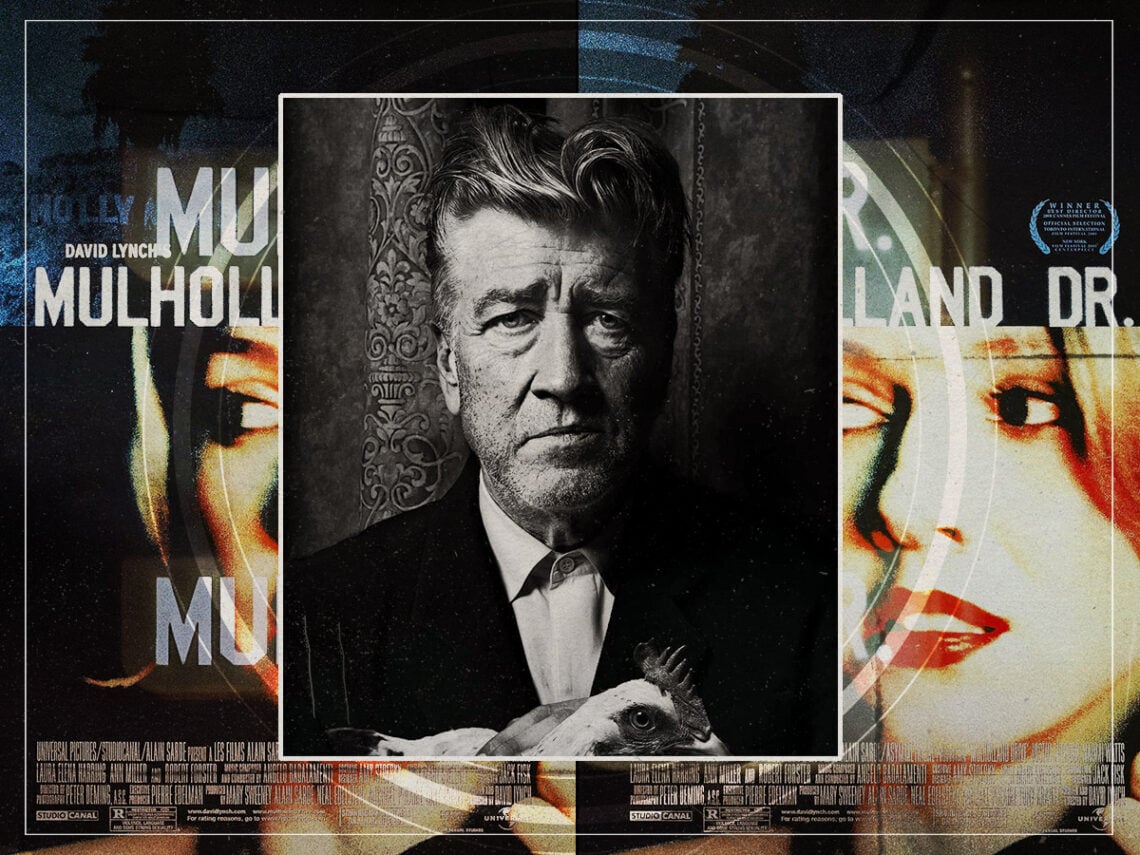
The movies of David Lynch ranked from worst to best

“The concept of absurdity is something I’m attracted to“—David Lynch
Multi-talented American filmmaker David Lynch, who was also a painter, musician, sound designer, actor, singer and photographer, was revered for his brilliant films like Eraserhead, The Elephant Man, Blue Velvet, Mulholland Drive, as well as his cult classic television series Twin Peaks. His career ins one that will likely shine on for decades to come.
His work is critically acclaimed, and Lynch is labelled as the “first popular surrealist”. In a career that spanned numerous decades, Lynch pushed himself forward as perhaps the ultimate outsider auteur. Unconcerned with conformity, Lynch’s view of the world was unique, unadulterated, and rarely watered down.
Lynch’s trademark surreal horror was much influenced by his surroundings. Early in his life, he lived with his family in a Philadelphia neighbourhood with a high crime rate. He often cited that experience as a source of artistic inspiration, “We lived cheap, but the city was full of fear. A kid was shot to death down the street,” he once said. “We were robbed twice, had windows shot out and a car stolen. The house was first broken into only three days after we moved in … The feeling was so close to extreme danger, and the fear was so intense. There was violence and hate and filth. But the biggest influence in my whole life was that city”.
Given his early life struggles, that continued into his formative steps into filmmaking. It took him five years to make Eraserhead because his team kept running out of money. Since the midnight movie classic, though, Lynch was met with both critical and commercial success, pushing himself forward through a range of idiosyncratic pictures as one of the greatest filmmakers of his generation.
Here, we take a look back at some of the strangest films directed by David Lynch.
Every David Lynch movie ranked:
10. Dune (1984)
The 1984 adaptation of Frank Herbert’s classic sci-fi novel is perhaps the least strange work in the filmography of David Lynch. There are moments of staggering visual power in the film, but as a whole, the plot comes across as disorderly and hard to follow. Lynch’s powerful imagery is reduced to a fleeting formation of a coherent artistic statement due to the lack of a symbiotic relationship with the story.
Although the film does not properly explain the legacy of Herbert’s science fiction masterpiece, Lynch’s Dune is worth watching just because of his unique vision. The picture was a critical and box-office flop, only recouping $30million from a $40m budget. Lynch went on to distance himself from the project, claiming that pressure from the producers and financiers stopped his process—even denying him the final cut on the film.
With other major offers on the table at the time, in retrospect, Lynch accepted that making Dune was a mistake: “I started selling out on Dune. Looking back, it’s no one’s fault but my own,” he once said. “I probably shouldn’t have done that picture, but I saw tons and tons of possibilities for things I loved, and this was the structure to do them in.”
9. Wild at Heart (1990)
David Lynch’s exploration of the erotic, this 1990 film features lovers on the run, elements of noir mysteries through the characters of a detective and a hitman, countless depictions of the grotesque and a lot of explicit sex. Wild at Heart wasn’t a success on release, but with subsequent revisits, it has become much more appreciated by a newer audience.
Starring the likes of Nicolas Cage, Laura Dern, Willem Dafoe, Harry Dean Stanton, and Isabella Rossellini, the film was based on Barry Gifford’s 1989 novel of the same name and follows a young couple on the run from her mother and the chasing gangsters hired to find them.
It is comic, scary and full of startling images in true Lynchian fashion. It should be noted that to have such a movie so low in the position of Lynch’s filmography that his résumé is one of the most critically robust in modern cinema.
8. The Straight Story (1999)
Lynch’s 1999 film portrays one man’s 260-mile journey from Iowa to Wisconsin. A modern American odyssey, The Straight Story has none of the “in-your-face” surrealism often associated with Lynch’s works. Surrealism takes a backseat to sentimentality, and it paints Lynch’s career in a light less often used.
Lynch, once again teaming up with his longtime partner and collaborator Mary Sweeney, who produced and edited the project, would later call the film “my most experimental movie” after basing the story on the true story of Alvin Straight’s journey across Iowa and Wisconsin on a lawnmower.
It is Lynch’s deviation from the cult of the bizarre, a melancholic film that lacks Lynchian sensibility. However, while the movie doesn’t quite hit the peaks of the director’s career, it is still a movie worthy of your time.
7. Twin Peaks: Fire Walk With Me (1992)
A prequel to the extremely successful television series, Twin Peaks: Fire Walk With Me is a welcome addition to the legacy of Twin Peaks. It does not answer many of the questions that the original series asked but the narrative was never the defining trait of the Lynchian oeuvre. The 1992 film is an experience, more than anything else.
Rather than providing closure, the film layers more ambiguity and surrealism onto the Twin Peaks mythos. The haunting imagery, unsettling sound design, and moments of stark horror push the boundaries of conventional storytelling, making Fire Walk With Me a polarising yet essential piece of the Lynchian puzzle. It invites viewers to immerse themselves in its strange, foreboding atmosphere, offering an unflinching exploration of trauma, loss, and the uncanny.
While divisive upon release, the film has since been re-evaluated as a crucial and daring extension of the Twin Peaks universe.
6. Inland Empire (2006)
A product of Lynch’s characteristic experimentation and intentional obscurity, this 2006 film is a carnivalesque celebration of the absurd. A sitcom featuring humans in bunny suits, a parallel story set in a wintry Poland, a houseful of dancing streetwalkers, screwdrivers in stomachs, and menacing Polish carnival folk are some of the surreal situations that Inland Empire subjects you to.
The film marked a number of changes for the director. Moving away from film for a motion picture for the first time, Lynch filmed the entire project in digital. Inland Empire also saw Lynch opt not to work with Mary Sweeney because “there wasn’t a real organised script to go by and no one knew what was going on except”.
“I’ve never worked on a project in this way before,” Lynch said at the time of its creation. “I don’t know exactly how this thing will finally unfold. This film is very different because I don’t have a script. I write the thing scene by scene and much of it is shot and I don’t have much of a clue where it will end. It’s a risk, but I have this feeling that because all things are unified, this idea over here in that room will somehow relate to that idea over there in the pink room.”
If you are a fan of Lynch’s works, this is a terrifying nightmare that will linger in your mind even after you shut your eyes.
5. The Elephant Man (1980)
This 1980 film is a historical drama about the physically deformed 19th-century Londoner John Merrick (played by John Hurt), also known as “The Elephant Man”. While it might not technically act as Lynch’s best movie, it certainly ranks among his most important, using a brutally sensitive subject to open doors to wider discussion of humanity.
Lynch brilliantly manages to normalise the surreal and exposes the inherent psychological prejudices in our collective attitude towards the “Uncanny Other”. Lynch’s powerful portrayal of Merrick challenges our voyeuristic sensibilities by transforming the repulsive into an object of unabashed empathy.
Starring the likes of John Hurt, Anthony Hopkins, Anne Bancroft, Freddie Jones and more, The Elephant Man marked major critical and commercial success for Lynch, a project which would later be nominated for no fewer that eight Academy Awards.
4. Lost Highway (1997)
With critics describing it as “a prototypically baffling David Lynch picture”, Lost Highway is a subversive neo-noir film that is way ahead of its time. The demented darkness of the 1997 film reveals its own truths while following parallel stories and mysterious turn of events in a city that feels a lot like Los Angeles.
The film offered Lynch new ways of creating his vision, including on-set mind games to keep the fluidity of the project moving forward. According to actor Balthazar Getty, who was chosen for the role of Pete Dayton, the plan was to add a new layer to their work: “Part of David’s technique is to keep his actors guessing because it creates a certain atmosphere on set,” he explained.
The haunting soundtrack, curated by Lynch and featuring artists like David Bowie, Nine Inch Nails, and Angelo Badalamenti, complements the film’s surreal mood and showed off Lynch’s love of music. Many of the scenes, with their disorienting lighting and cryptic dialogue, challenge audiences to question reality itself. As a hideous exploration of guilt, obsession, and the fractured psyche, Lost Highway has become a cult classic, its chilling ambiguities and innovative storytelling making it one of Lynch’s most compelling works.
3. Mulholland Drive (2001)
David Lynch’s disturbing Hollywood horror film, Mulholland Drive is a schizophrenic blend of innocent ambitions and corrupt desires. Lynch masterfully constructs a labyrinth for the viewer to navigate through. We keep pushing forward through the nightmarish world of Los Angeles until we arrive at an intersection of hopes and fears.
The film, a 2001 neo-noir mystery, is regarded by many as one of the best modern cinematic pictures. Starring Watts, Laura Harring, Justin Theroux and more, Mulholland Drive tells the story of an aspiring actress newly arrived in Los Angeles who meets a woman with memory loss after wandering away physically unharmed by a car accident.
“One night, I sat down, the ideas came in, and it was a most beautiful experience,” Lynch once commented on the film’s creation. “Everything was seen from a different angle … Now, looking back, I see that [the film] always wanted to be this way. It just took this strange beginning to cause it to be what it is.”
The 2001 film is a powerful psycho-sexual exploration of the very nature of our existence.
2. Blue Velvet (1986)
The hallucinogenic Blue Velvet masquerades as a crime thriller while tearing away the mask of civility donned by suburban Americans; it lays bare the underlying vices from sadomasochistic violence to drug abuse and perversion, all depicted through the surreal excesses of Lynch’s penetrating vision.
For Lynch, the film arrived following the disappointing work on Dune and offered him the opportunity to fully express his vision, releasing the shackles that had previously held him back. “After Dune I was down so far that anything was up! So it was just a euphoria,” the director once said. “And when you work with that kind of feeling, you can take chances. You can experiment.”
Decades after its release, Blue Velvet has lost none of its potential to expose the viewer to an all-encompassing insanity. There is little in this movie to leave you in avoidance of doubt that Lynch is one of the greatest filmmakers of his generation. Few directors could pull off such a picture, and even fewer could make it successful.
1. Eraserhead (1977)
One of the most powerful and unique films of the last century, David Lynch’s remarkable first film is an unparalleled inquiry into the subject of male paranoia and the anxieties of becoming a parent. Set in a universe that looks like an amalgamation of Eliot’s Waste Land and Kafka’s Metamorphosis, Eraserhead launches a scathing attack on enforced reproductive expectations in a world where everyone is impotent.
Released in 1977, the experimental body horror was Lynch’s first foray into a feature-length production following a few short films. Having completed the film while studying at the American Film Institute, the project has since gone on to typify the director’s vision. Dark and confounding, the film didn’t grab attention right away, instead, Lynch made waves when the film took off after being run as a ‘midnight movie’.
In what took five years to make and shot entirely in black and white, the film tells the story of Henry Spencer, a “man who is left to care for his grossly deformed child in a desolate industrial landscape.” It’s said that the script of Eraserhead is thought to have been inspired by Lynch’s fear of fatherhood, while the film’s themes were a direct reflection of Lynch’s experiences living in a troubled neighbourhood in Philadelphia, describing it as ridden with “violence, hate and filth”.
“I saw so many things in Philadelphia I couldn’t believe,” Lynch once said. “I saw a grown woman grab her breasts and speak like a baby, complaining her nipples hurt. This kind of thing will set you back”.
While the reception of Eraserhead was mute upon its initial release, its legacy continues to grow. In 2004, it was selected for preservation in the National Film Registry by the United States Library of Congress, deemed “culturally, historically, or aesthetically significant”.
The filming was gruelling, the production arduous, and the results disturbing. That said, with all great things comes significant difficulties. Eraserhead will live on as one of the most significant moments in film history.
Beautifully disgusting, Lynch’s masterpiece solidifies his status as one of the greatest filmmakers of all time.
