


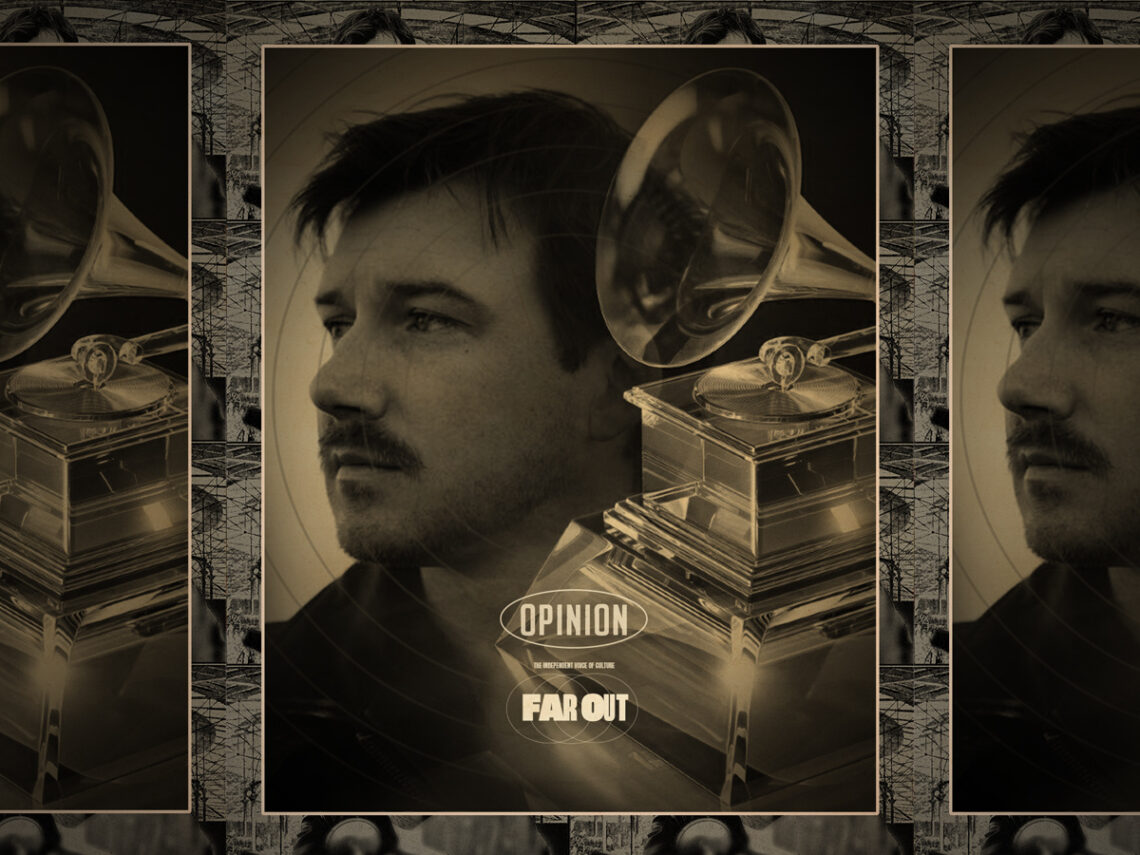
Morgan Wallen doesn’t care about the Grammy Awards, and neither should you

Allow me to provide you with the nominations list for the 2025 Grammys ‘Best Rock Album’.
The Black Crowes’ Happiness Bastards, Fontaines DC’s Romance, Green Day’s Saviors, Idles’ Tangk, Pearl Jam’s Dark Matter and Jack White’s No Name all populated the list. But of course, none of them won. They were all beaten by The Rolling Stones’ 24th studio album, Hackney Diamonds.
It’s not that it was a bad album. It’s also not that it was their 24th, for that is irrelevant in the merit of a piece of art. But let’s be truly frank about that situation and all admit that in no way, shape, or form was this album the top rock album of 2024. Nor were at least three of its fellow nominees, which were all legacy acts wheeling out a revamped brand of their previously successful model.
Only Fontaines DC and Idles represented a generation of new music that directly engaged with the modern world in which we find ourselves. A catalogue of underappreciated records was cast aside for the swift ego stroke of commercial and legacy powerhouses, whose success in these award categories goes no way towards positively impacting contemporary culture.
It had finally confirmed something that I had long suspected. That the Grammys hold no cultural weight, no longer do they represent the genuine authenticity of musical merit, but rather play to the commercial galleries that are largely interested in protecting their grip on the wildly disproportional financial landscape of music.
So I had resigned to the fact that there is a societal divide in music. An ‘us and them’ mentality that put chart topping mega stars in one corner, and DIY artists in another. But now, an unlikely olive branch has been extended in the form of Morgan Wallen, who while currently sitting on 2025’s best selling album has chosen to withdraw himself from any Grammy 2026 entries.
His record, I’m the Problem, has held the number one on the Billboard 200 chart on 11 nonconsecutive weeks since its release in May and has smashed commercial figures, making it prime pickings for an award ceremony as commercially focused as the Grammys. And largely, Wallen is happy to market himself within that sphere, avoiding any anti-establishment leanings.
So his withdrawal is both bemusing and refreshing in equal measures. But artists like Drake, the Weeknd, Frank Ocean and Zach Bryan have all made similar withdrawals, citing their dismay with the nomination process as the reason, which only brings my initial point back into focus. Even artists at the very top of the tree are watching the wild oversight of genuine artistic merit in their nomination process, and its trickle-down effect on the music industry.
Not only does it continue to be exclusive to the higher echelons of success, it ultimately homogenises the landscape. Big label clones are wheeled out one after the other, creating carbon copies of their respective bubblegum pop and thus refusing to commend the emergence of genres that come from their grass roots beginnings.
So, is it time we stop caring about the Grammys?
The simple answer is yes. The glory days of punk, hip-hop and blues didn’t come from the manufactured worlds of record labels. They came from communities that navigated the various chapters of historic oppression and ultimately used music as a tool of protest through that.
In fact, let’s go back to 2015, when Kendrick Lamar’s iconic To Pimp A Butterfly was beaten to the ‘Record of the Year’ prize. Despite his intensely detailed narrative, which wove references to CIA corruption, slavery emancipation and tax fraud through the overarching theme of a caterpillar’s metamorphosis into a butterfly, Taylor Swift’s 1989 came out trumps.
Now, while Swift’s work may be a magnum opus through the lens of her own catalogue, it’s simply hard to argue against the cultural and artistic impact Lamar’s work had. It was an album that packaged centuries of American history and societal discourse into a soundscape still palatable for the charts. ‘Alright’ became a protest song amongst subcultures disillusioned with the newly announced Trump presidency, and it highlighted the positive impact hip-hop has on the fabric of American culture.
The Grammys are entirely occupied with playing to a money-driven gallery, in order to maintain American pop’s place within the commercial eco-system. No one seemed to listen when artists representing urban communities withdrew themselves from the ceremony, but now that the new golden boy of the American charts has done so, maybe the message might stick. And the message is, simply that the Grammys don’t matter.
