


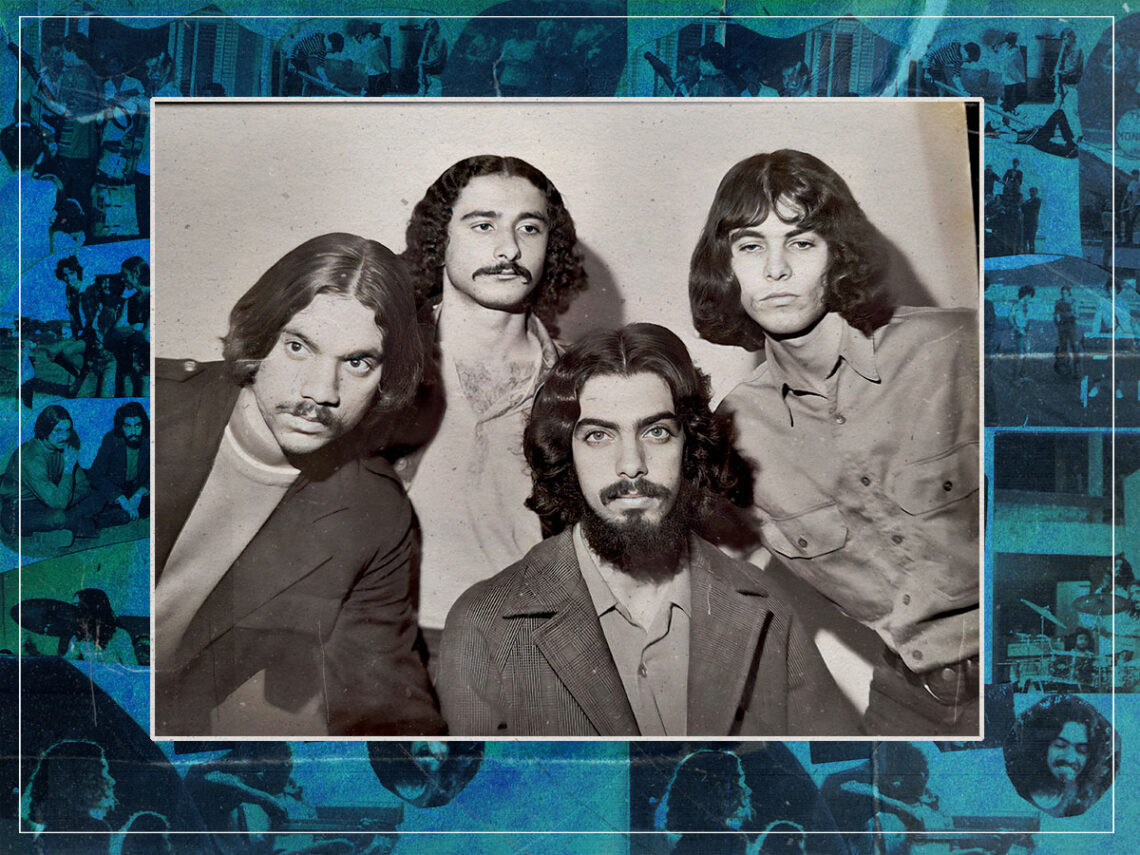
Módulo 1000: The forgotten pioneers of Brazilian experimental music

The psychedelic rock boom of the late 1960s inspired countless spaced-out musicians to begin experimenting with the limits of rock music. While the genre’s biggest names – the likes of Hendrix, The Byrds and Jefferson Airplane – predominantly hailed from the USA, some of the most radical experimentation came from a little further south.
South America embraced the counterculture hippie revolution with open arms, spawning countless psychedelic artists with their own unique Latin twang. Hailing from the musical haven of Brazil, Módulo 1000 were among the most original and experimental psychedelic groups worldwide. Formed in 1969, the group began as a cover band, performing Hendrix and Led Zeppelin covers within the bars and restaurants of São Paulo, but the band really took off once they began to record original material.
Releasing their first and only album, Não Fale Com Paredes, in 1972, the group set themselves apart from all other combos of the same ilk. Whereas much of the psych and progressive rock scene across South America included the influence of traditional folk styles and, in Brazil, bossa nova music, Módulo 1000 carved out their own unique sound.
Meaning ‘Don’t Talk to Walls’ in English, the album is a rollercoaster of moods and influences. At points, it feels almost akin to Kraftwerk, whereas elsewhere, it seems to take inspiration from the hard rock of groups like Black Sabbath and Led Zeppelin. Não Fale Com Paredes endlessly heavy, perfectly toeing the line between the hardcore psychedelic rock of the 1960s and the complex progressive sounds of the early 1970s.
The time was right for Módulo 1000; the Brazilian experimental scene had just exploded, and the band gained some brief notoriety after playing at the Rio International Song Festival. With production duties handed over to popular DJ Ademir Lemos and a tripped-out gatefold sleeve offering the kind of psychedelic imagery fans were yearning for, it seemed to be a perfect storm. However, like many pioneering figures within Latin rock music, Módulo 1000 were largely ignored during their time and have since drifted off into the ether.
Their debut album proved too extreme and experimental for mainstream tastes in 1970s Brazil, a time in which the country’s scene was dominated by MPB and post-bossa nova tunes. Testament to their fearless experimentation, even their own record label, Top Tape Records, did not understand Não Fale Com Paredes, and so did little to promote or distribute the album, meaning it was also ignored by the Brazilian underground.
Other than a couple of seven inch singles here and there, the band did not record anything after the failure of Não Fale Com Paredes. As is the case with many artists who are far ahead of their time, it was only years later that Módulo 1000 became cult favourites among psychedelic and experimental record collectors, with original copies of their debut album fetching up to £2,000 online.
