


Piedra Roja: South America’s Woodstock Festival

There are few music festivals as legendary as Woodstock. The iconic “Three Days of Peace and Music” captured the zeitgeist of the 1960s counterculture and anti-war movements. With a line-up boasting the likes of Jimi Hendrix, The Who and Joni Mitchell, to name a few, it is no surprise that the event went down in history as perhaps the greatest festival of all time. Speaking to its influence, Woodstock also birthed a variety of similar events across the world, one of which was Piedra Roja.
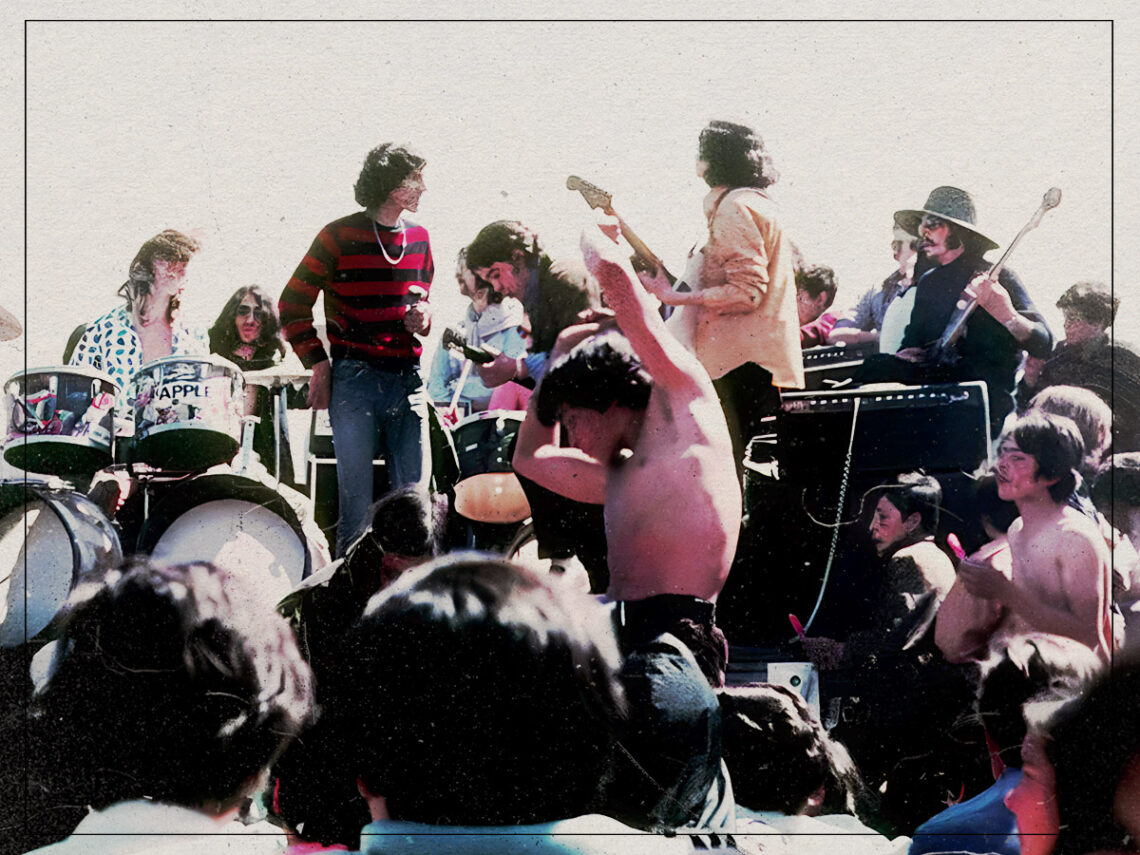
After watching the documentary Woodstock in cinemas, a group of young students in Chile were inspired to put on a festival of their own. Led by Jorge Gómez Ainslie, the festival, which eventually became Piedra Roja (Red Stone, in English), took place in October 1970 in the Las Condes commune to the northeast of Santiago.
Much like the hippie festival that it was based upon, Piedra Roja faced multiple challenges over the course of its weekend. Plagued by technical difficulties, crime and the influence of psychedelics, the festival was chaotic, to say the least. The line-up for the Chilean festival was much less noteworthy than that of Woodstock, featuring only a handful of Chilean rock bands and one group from Argentina. Such was the chaos of the weekend, though, that it is unknown exactly how many artists took to the stage.
Upwards of eight bands were announced to be playing Piedra Roja, but some reports claim that as few as four ended up actually playing. One of the bands that definitely played was the popular Chilean folk-rock group Los Jaivas, but even their set remains shrouded in mystery. Claudio Parra, the pianist for Los Jaivas, later revealed, “I don’t even remember which groups played, I don’t even remember what we played; I know that we must have made pure improvisations because it was that period.”
Despite the lacklustre line-up, or rather the inability of anyone there to remember anybody who played, it was reported that 3,000 to 5,000 young people had gathered to attend the three-day event. This was the largest gathering of young hippies in Chile and signified a growing movement among the youth of the country. Although the Chilean newspaper La Nación were quick to claim that the attendees of Piedra Roja “does not represent the current Chilean youth”, the very fact the festival took place begs to differ.
Sex, drugs and rock and roll were rife throughout the weekend, so much so that the security force Carabineros de Chile ordered crowds to disperse due to the consumption of alcohol by underage kids. The festival also caused a full-blown investigation to be held into marijuana consumption among Chile’s youth by the Chamber of Deputies, and the mayor of Las Condes launched an official complaint against the organisers.
It would be easy to write Piedra Roja off as a poorly organised festival that went wrong, akin to the 1999 incarnation of Woodstock. However, it must be said that the event was hugely successful in uniting the divided youth of Chile in the early 1970s. The festival showed that young people in Chile were a powerful force to be reckoned with, a sentiment that would remain until the military overthrow of Chile’s democratically elected government in 1973.
