


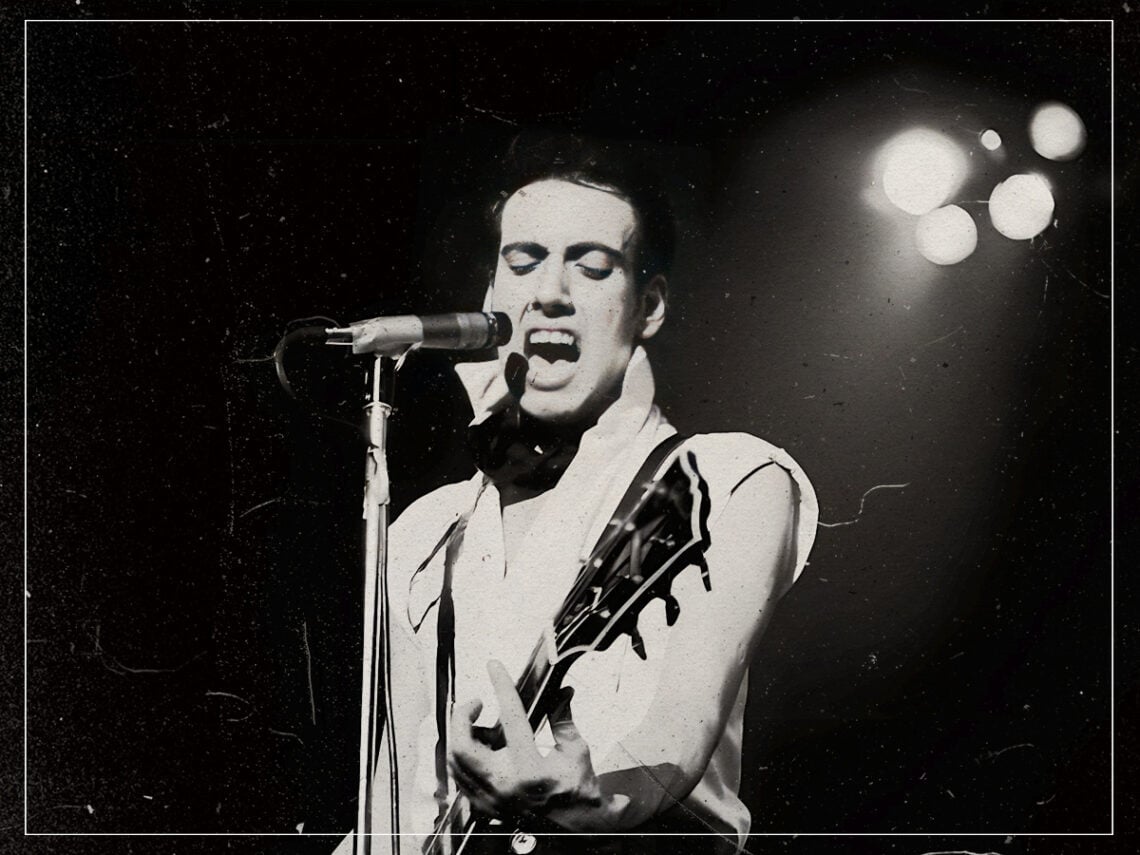
Mick Jones’ favourite song from ‘Combat Rock’

From the original UK punk wave that struck the music underground in the mid-1970s, nobody saw such a commercial stature as The Clash.
Spending the decade broadening their fierce garage attack with a broader canvass of reggae, rocksteady dub and old-school R&B, The Clash entered the 1980s in the critical glow of London Calling not just as one of new wave’s biggest names, but leading the fore of the second British invasion as an America conquering stadium-seller only just behind The Police.
In 2009, The Clash’s lead guitarist and shared songwriter, Mick Jones, loaned his exhaustive music memorabilia to the Chelsea Space Gallery. As part of its unveiling, Jones treated the small crowd to an acoustic solo set of three favourite numbers from his former band’s oeuvre. Playing Give ‘Em Enough Rope‘s ‘Stay Free’ and London Calling‘s ‘Train in Vain’, Jones looked to 1982’s Combat Rock for his third number, ‘Should I Stay or Should I Go’.
After the triple-LP Sandinista!, the creative scope explored was refined for their fourth and most successful LP. Keen to further consolidate their Billboard presence, co-producer Glyn Johns pushed The Clash’s sound toward a polished pop shine that married spiky lyrical attacks on failed US foreign policy and imperial decline with God-given radio appeal that boosted the likes of ‘Rock the Casbah‘ to the top of the charts both sides of the Atlantic.
Combat Rock‘s final single and double A-side with the haunting ‘Straight to Hell’ was the enduring ‘Should I Stay or Should I Go’, the rollicking swaggerer that took a U-turn away from political bite and jumped to the stripped-down garage of The Kinks or The Kingsmen, replete with Joe Strummer’s curious Spanish backing vocals.
“On the spur of the moment, I said ‘I’m going to do the backing vocals in Spanish’, Strummer revealed to The Austin Chronicle in 2000. “We needed a translator, so Eddie Garcia, the tape operator, called his mother in Brooklyn Heights and read her the lyrics over the phone, and she translated them. But Eddie and his mum are Ecuadorian, so it’s Ecuadorian Spanish that me and Joe Ely are singing on the backing vocals”.
Possessed with a 1960s beat character, Jones was reaching into yesteryear’s archetypes for a sound both vintage yet untrapped by time. “It wasn’t about anybody specific, and it wasn’t pre-empting my leaving The Clash,” Jones revealed in 1991’s Clash on Broadway‘s liner notes. “It was just a good rockin’ song, our attempt at writing a classic…when we were just playing, that was the kind of thing we used to like to play”.
The Clash would never hit such a home run again. The last album from the classic line-up, drummer Topper Headon was fired shortly before Combat Rock‘s release, and Jones was dismissed in 1983 after its supporting tour. Strummer and bassist Paul Simonon limped on with 1985’s maligned Cut the Crap, but it was Combat Rock that bookmarked the end of the official canon as far as the fans were concerned.
