


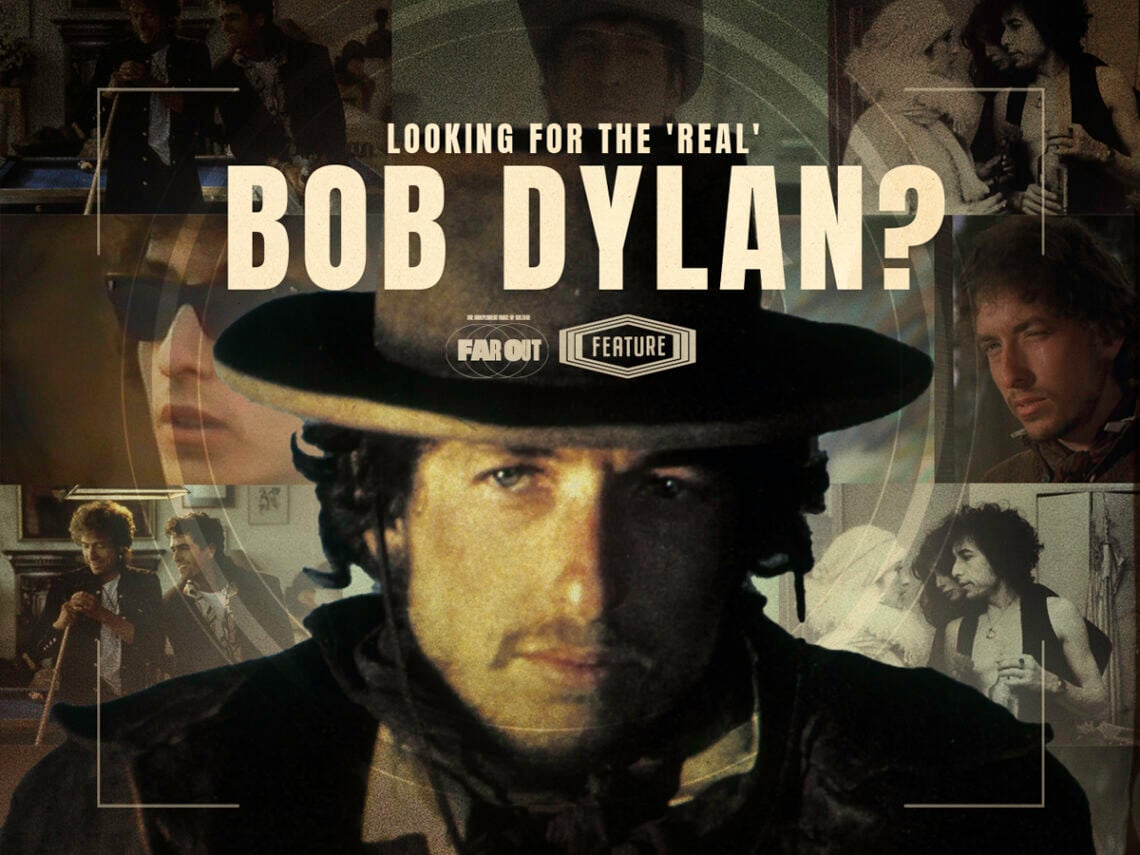
‘Masked and Anonymous’: Is the ‘real’ Bob Dylan on display more in his movies than in his music?

At the end of a press statement in 2011 addressing an allegation that his setlists had been censored by the government when playing in China, Bob Dylan threw down the gauntlet to all existing and budding authors around the world.
He said, “Everybody knows by now that there’s a gazillion books on me either out or coming out in the near future. So I’m encouraging anybody who’s ever met me, heard me or even seen me, to get in on the action and scribble their own book. You never know, somebody might have a great book in them.”
Plenty of us who heard that challenge have attempted to rise to it, myself included, and Dylan’s right. It really does seem like there are always new books about him on the way, or just released. There are more books out there about each and every aspect of Bob Dylan’s life and career than there are alternate versions and variations of any given Taylor Swift album in recent years. We’ve been particularly lucky lately, with plenty of new releases covering areas that have been until now under-represented, under-discussed and under-examined in the study of Dylan’s work.
He was right when he said that some of us “might have a great book in them”. Steven Rings did, with What Did You Hear?: The Music of Bob Dylan, a fascinating study on the musicology of Dylan’s idiosyncratic, unique and revolutionary singing and playing. Robert Polito certainly did with After the Flood: Inside Bob Dylan’s Memory Palace, which is a labyrinthine exploration of his later works, and Michael Glover Smith does, as well, with his recent release Bob Dylan as Filmmaker: No Time to Think.
Over the years, countless books have examined his biographical history (in more-than-minute detail), his music, his inspirations and his influence, his theology and his message, his literary merit and his fans; his live concerts (guilty) and his studio sessions. Plenty of books even examine his relation to the places that he’s been to, lived and played concerts in. But, until now, very few pages have been blackened with ink about his cinematic output. Ironically, this might just be an area that can help us explore the questions of ‘just who exactly is Bob Dylan?’ and ‘what is he trying to tell us?’ better than any of the examinations of his music or interviews.
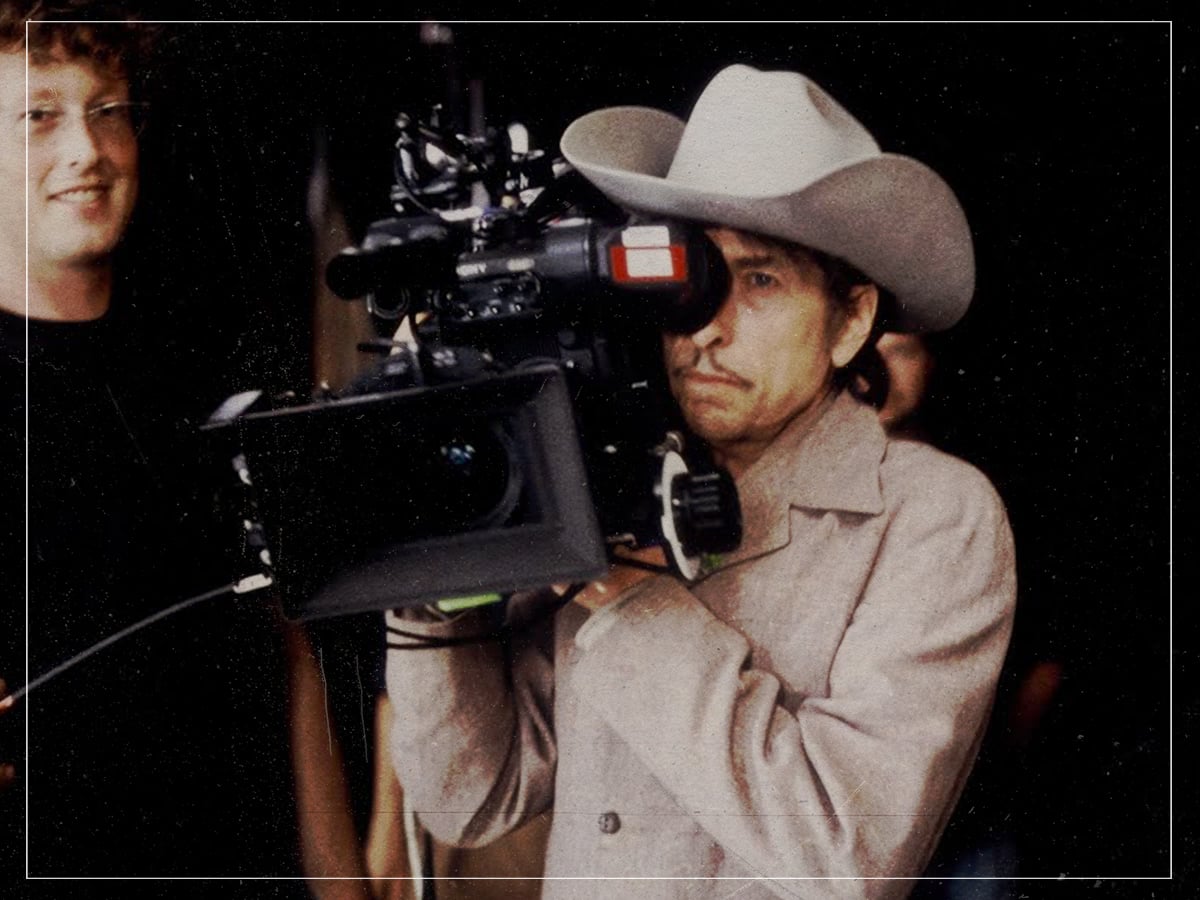
So, it really was about time that somebody got around to writing about this comparatively unexplored and unexamined area of Dylan’s life-work. He has had a lifelong affinity for and connection with the silver screen, born from the countless hours of his childhood spent inside the Lybba Theatre in Hibbing, Minnesota, a cinema run by his uncles and named after his grandmother.
He has always had an affinity with and connection to actors like James Dean, Charlie Chaplin, Humphrey Bogart and Gregory Peck, and has lived and worked under the influence of auteurs like Marcel Carné, Federico Fellini and François Truffaut. In putting all that together, Dylan has repeatedly presented his own mystical, captivating, and oftentimes confounding creative vision in films such as Eat the Document, Renaldo and Clara, and, I think, best of all, Masked and Anonymous. If you want to learn about all that, more, and then some, then you need to try the long-overdue study of Dylan’s screenwork, Bob Dylan as Filmmaker: No Time To Think, by Michael Glover Smith, and go from there.
The book offers fascinating insights into the intention and planning, filming and editing of each of those films mentioned above, as well as Shadow Kingdom and A Complete Unknown, and, owing to Smith’s own history of filmmaking (he has directed Mercury in Retrograde, Relative and Paper Planes, each of them multi-award winning, and has another movie on the way this year titled HEKLA), as well as his decades-long fascination with Dylan and his work, offers invaluable, enlightening and perceptive comments on the artist, his work, methods and what it all amounts to.
But don’t just take my word for it. Here’s what another writer who had a great recent Bob Dylan book in them, Ray Padgett (Pledging My Time: Conversations with Bob Dylan Band Members), had to say about the new release: “I’ll give it the highest praise possible: It made me want to watch Renaldo and Clara again”.
Each chapter features fascinating background on the respective movies, as well as vivid descriptions of the work, expert and insightful analysis, and comparisons, with not just each other, but with other, older titles which inspired Dylan, including works by Jean-Luc Godard, Orson Welles, François Truffaut, Agnès Varda, Marcel Carné and more. Smith will have you adding more than just Dylan’s own movies to your Letterboxd watchlist as you make your way through the book.
The chapters then reflect on the (usually mixed) reception and (usually complicated) legacies of each film in conclusion. Glover Smith’s style is incredibly accessible and yet incredibly expansive, as throughout, he unpicks and unpacks how each movie came to be, what they’re all about, and brings the kind of keen eye and depth of perception usually reserved for works focused on Dylan’s musical output and place in the cultural plane taken up by the likes of Michael Gray, Richard F Thomas, Greil Marcus or the aforementioned Robert Polito.
Smith argues throughout that it is in Dylan’s films when and where the great artist really interrogates the idea of the self; where he really grapples with the iconography of celebrity, fame, identity and, ultimately, life itself. Dylan famously quoted George Bernard Shaw in the 2019 fever-dream ‘documentary’ Rolling Thunder Revue: A Bob Dylan Story by Martin Scorsese, saying that “Life isn’t about finding yourself. Life is about creating yourself”.
In Eat the Document, Renaldo and Clara and again in Masked and Anonymous, Dylan created and reinvented himself again and again for all the world to see. He put himself together in front of us, and he took himself apart before doing it all over again. On stages around the world, this is something that he does to his songs night after night on his Never Ending and Rough and Rowdy Ways World Wide tours, but on any given night, only a few thousand people can experience him interrogating his music.
“Life isn’t about finding yourself. Life is about creating yourself”.
On film, though, his interrogations and investigations of his fame, his identity and his celebrity are captured for posterity and, if you know where to look (Eat the Document and Renaldo and Clara have never received an official home-release but that hasn’t ever stopped those who really wanted to see them from seeing them), they are available for all to see. In Masked and Anonymous, Dylan’s character, Jack Fate, is asked if he’s ever “let it all hang out?”, to which Dylan dryly responds, “It always has been hanging out”.
And in his movies, it has been. Ever the walking contradiction, he has spent his whole life hiding in plain view.
He’s so reclusive, but he makes a hundred public appearances every year. He doesn’t talk to the press, except to give potentially thousands of interviews over the course of his career. He never plays the same song twice, but lately, his setlist never changes. He is maddeningly unknowable, and yet, he has made multiple movies over the years, letting us know exactly who he is, where he sees himself in the grand scheme of the world, how he thinks the world works and what he thinks of things like love and man and God and law.
Maybe we should have listened to Dylan, or at least to Jack Fate, in his closing monologue from Masked and Anonymous, when he said that “I was always a singer and maybe no more than that”, but he’s also a philosopher.
“Sometimes it’s not enough to know the meaning of things, sometimes we have to know what things don’t mean as well”, he adds, “Like, what does it mean to not know what the person you love is capable of? Things fall apart, especially, all the neat order of rules and laws. The way we look at the world is the way we really are. See it from a fair garden, and everything looks cheerful. Climb to a higher plateau, and you’ll see plunder and murder. Truth and beauty are in the eye of the beholder. I stopped trying to figure everything out a long time ago.”

Never Miss A Tale
The Far Out Bob Dylan Newsletter
All the latest stories about Bob Dylan from the independent voice of culture.
Straight to your inbox.